
Filters:
Philip II’s Retreat from Damme and the …
Years: 1213 - 1213
June
Philip II’s Retreat from Damme and the English Naval Victory (1213 CE)
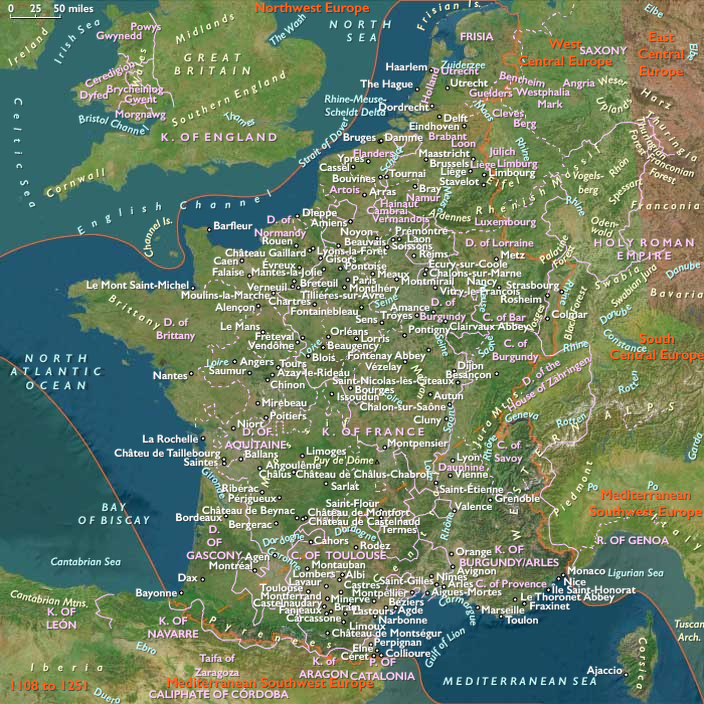
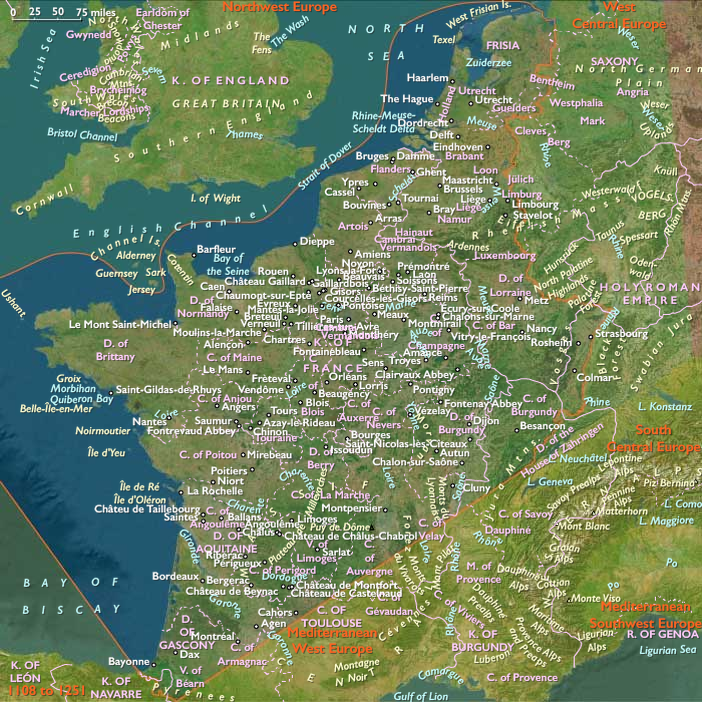
As news of the English blockade and capture of his fleet at Damme reached him, Philip II of France swiftly retraced his steps from Ghent, marching his army back toward the harbor town in just two days. However, upon arrival, he found his naval forces trapped and beyond rescue.
Philip’s Destruction of His Own Fleet and the Town of Damme
- Unable to recapture his ships, Philip ordered them burned to prevent them from falling into English hands.
- To further deny the English a foothold, he also commanded the destruction of Damme, razing the town to the ground.
- These actions effectively ended French naval ambitions in the war, forcing Philip to rely solely on land forces.
The First Major Victory of the Royal Navy
- The English fleet under William Longespée, 3rd Earl of Salisbury, secured what was effectively the first major naval victory for the fledgling English Royal Navy.
- This established English dominance in the Channel, ensuring that Philip could no longer threaten England with invasion.
Philip’s Brutal Retaliation in Flanders
- Enraged by his naval defeat and forced retreat, Philip took vengeance upon Flanders, ordering:
- The burning and razing of every town in his path.
- The killing or enslavement of the Flemish peasantry as punishment for their support of Count Ferdinand and the English.
Consequences of Philip’s Retreat from Damme
- Philip’s burning of Damme and loss of his fleet marked the failure of his naval campaign and permanently ended his ambitions of invading England.
- The destruction of Flemish towns and villages further alienated Flanders, strengthening the anti-French coalition of John of England, Otto IV of Germany, and the Flemish nobles.
- The campaign’s failure at sea and Philip’s brutal reprisals on land set the stage for the decisive Battle of Bouvines in 1214, where Philip would seek to redeem his setbacks with a land victory over his enemies.
Philip’s failed naval engagement at Damme and his subsequent retreat marked a turning point in the Capetian-Plantagenet conflict, demonstrating England’s growing naval strength while exposing Philip’s reliance on land-based warfare.
Locations
People
- Frederick II
- Infante Ferdinand of Portugal
- John of England
- Louis VIII of France
- Otto IV of Brunswick
- Pandulf Verraccio
- Philip II of France
- Pope Innocent III
Groups
- Papal States (Republic of St. Peter)
- Flemish people
- Flanders, County of
- Holy Roman Empire
- France, (Capetian) Kingdom of
- Christians, Roman Catholic
- Portugal, Burgundian (Alfonsine) Kingdom of
- England, (Plantagenet, Angevin) Kingdom of
Topics
Commodoties
Subjects
Regions
Subregions
Years: 1213 - 1213
June
Locations
People
- Frederick II
- Infante Ferdinand of Portugal
- John of England
- Louis VIII of France
- Otto IV of Brunswick
- Pandulf Verraccio
- Philip II of France
- Pope Innocent III
Groups
- Papal States (Republic of St. Peter)
- Flemish people
- Flanders, County of
- Holy Roman Empire
- France, (Capetian) Kingdom of
- Christians, Roman Catholic
- Portugal, Burgundian (Alfonsine) Kingdom of
- England, (Plantagenet, Angevin) Kingdom of
Topics
Commodoties
Subjects
Regions
Subregions