
Philip of Alsace on July 1 dies …
Years: 1191 - 1191
July
Philip of Alsace on July 1 dies in the camp.
This creates a major crisis for the French king, since Philip, the Count of Flanders and Vermandois and one of the most important men in the king’s retinue, has no heirs and settling his inheritance is an urgent matter, yet a very difficult one so far away from France.
A sufficiently large breach is again created in the walls on July 3, but the Christian attack is repelled.
The city on July 4 offers its surrender, but Richard rejects the conditions.
This time Saladin does not make a large-scale attack on the Christian camp.
The city sends an embassy to Saladin on July 7 asking for assistance one last time, and threatens to surrender if he does not help.
There is one final battle on July 11, in which Saladin's nephew fails to fight his way into the city, and on July 12, the city once more offers terms of surrender to the Crusaders, who find their offer acceptable this time.
Conrad of Montferrat, who had returned to Tyre because of Richard's support for Guy of Lusignan as king of Jerusalem, is recalled to act as negotiator, at Saladin's request.
Saladin is not personally involved in the negotiations, but accepts the surrender, which provides for an exchange of prisoners and the restoration of the relic of the True Cross, which he had captured in 1187.
The Christians enter the city and the Muslim garrison is taken into captivity.
Conrad raises the banners of the Kingdom of Jerusalem and of France, England and the Duchy of Austria over the city.
Richard supports his vassal Guy in his political struggle, while Conrad is supported by his cousins Leopold of Austria and Philip of France.
After the surrender of Acre, the parties attempt to come to an agreement.
Guy is confirmed as king of Jerusalem, and Conrad is made his heir.
Conrad is to retain the cities of Tyre, Beirut, and Sidon, and his heirs are to inherit Jerusalem on Guy's death.
As the crusaders enter the city, there are disputes over the disposal of areas.
Leopold leaves shortly after the capture of the city, after quarreling with Richard: as the surviving leader of the German Imperial contingent, he has demanded the same position as Philip and Richard, but has been rejected and his flag torn down, by Richard, from the ramparts of Acre.
Philip, who feels that he has fulfilled his crusader's vow and who is unwell, on July 31 also returns home, to settle the succession in Vermandois and Flanders, and Richard is left solely in charge of the Christian expeditionary forces.
Locations
People
- Amalric II of Jerusalem
- Conrad of Montferrat
- Eleanor of Aquitaine
- Frederick I, Holy Roman Emperor
- Frederick VI
- Guy of Lusignan
- Henry II, Count of Champagne
- Humphrey IV of Toron
- Isaac II Angelos
- Isaac Komnenos of Cyprus
- Isabella I of Jerusalem
- Leopold V
- Philip I, Count of Flanders
- Richard I of England
- Saladin
- Sibylla
Groups
- Arab people
- Armenian people
- Kurdish people
- Germans
- Christians, Miaphysite (Oriental Orthodox)
- Frisians
- Greeks, Medieval (Byzantines)
- Muslims, Sunni
- Muslims, Shi'a
- Syrian people
- Danes (Scandinavians)
- Flemish people
- Flanders, County of
- Abbasid Caliphate (Baghdad)
- Holy Roman Empire
- Cyprus, East Roman (Byzantine)
- French people (Latins)
- France, (Capetian) Kingdom of
- Pisa, (first) Republic of
- Genoa, (Most Serene) Republic of
- Christians, Roman Catholic
- Christians, Eastern Orthodox
- Armenia, Baronry of Little, or Lesser
- Roman Empire, Eastern: Komnenos dynasty, restored
- Antioch, Principality of
- Jerusalem, Latin Kingdom of
- Palestine, Frankish (Outremer)
- English people
- Italians (Latins)
- Tripoli, County of
- Hospitallers of St. John of Jerusalem
- Templar, Knights (Poor Knights of Christ and of the Temple of Solomon)
- Sicily, Kingdom of
- Jaffa and Ascalon, County of
- England, (Plantagenet, Angevin) Kingdom of
- Austria, Archduchy of
- Egypt, Ayyubid Sultanate of
- Teutonic Knights of Acre (House of the Hospitalers of Saint Mary of the Teutons in Jerusalem)
Topics
Commodoties
Subjects
Regions
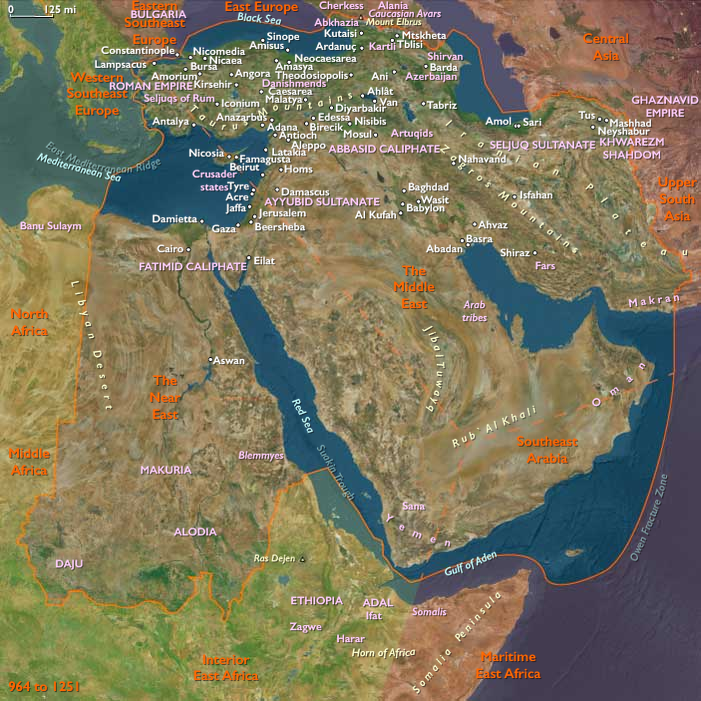
Subregions
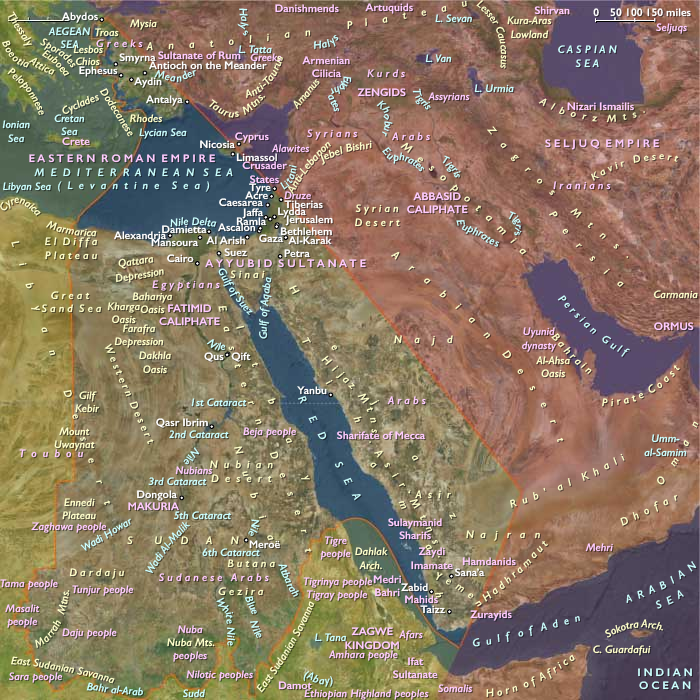
Related Events
Showing 10 events out of 47892 total
Years: 1191 - 1191
July
Locations
People
- Amalric II of Jerusalem
- Conrad of Montferrat
- Eleanor of Aquitaine
- Frederick I, Holy Roman Emperor
- Frederick VI
- Guy of Lusignan
- Henry II, Count of Champagne
- Humphrey IV of Toron
- Isaac II Angelos
- Isaac Komnenos of Cyprus
- Isabella I of Jerusalem
- Leopold V
- Philip I, Count of Flanders
- Richard I of England
- Saladin
- Sibylla
Groups
- Arab people
- Armenian people
- Kurdish people
- Germans
- Christians, Miaphysite (Oriental Orthodox)
- Frisians
- Greeks, Medieval (Byzantines)
- Muslims, Sunni
- Muslims, Shi'a
- Syrian people
- Danes (Scandinavians)
- Flemish people
- Flanders, County of
- Abbasid Caliphate (Baghdad)
- Holy Roman Empire
- Cyprus, East Roman (Byzantine)
- French people (Latins)
- France, (Capetian) Kingdom of
- Pisa, (first) Republic of
- Genoa, (Most Serene) Republic of
- Christians, Roman Catholic
- Christians, Eastern Orthodox
- Armenia, Baronry of Little, or Lesser
- Roman Empire, Eastern: Komnenos dynasty, restored
- Antioch, Principality of
- Jerusalem, Latin Kingdom of
- Palestine, Frankish (Outremer)
- English people
- Italians (Latins)
- Tripoli, County of
- Hospitallers of St. John of Jerusalem
- Templar, Knights (Poor Knights of Christ and of the Temple of Solomon)
- Sicily, Kingdom of
- Jaffa and Ascalon, County of
- England, (Plantagenet, Angevin) Kingdom of
- Austria, Archduchy of
- Egypt, Ayyubid Sultanate of
- Teutonic Knights of Acre (House of the Hospitalers of Saint Mary of the Teutons in Jerusalem)
Topics
Commodoties
Subjects
Regions
Subregions