
Filters:
Philip II’s Final Preparations for the Invasion …
Years: 1213 - 1213
February
Philip II’s Final Preparations for the Invasion of England (1213 CE)
By 1213, Philip II of France was making final preparations for his long-planned invasion of England, seeking to depose King John and install his own son, Prince Louis (the future Louis VIII), on the English throne. To ensure full support from his vassals and papal legitimacy, Philip carefully framed his attack as a religious crusade, denouncing John as an enemy of the Church.
Philip’s Assembly at Soissons and the Resistance from Flanders
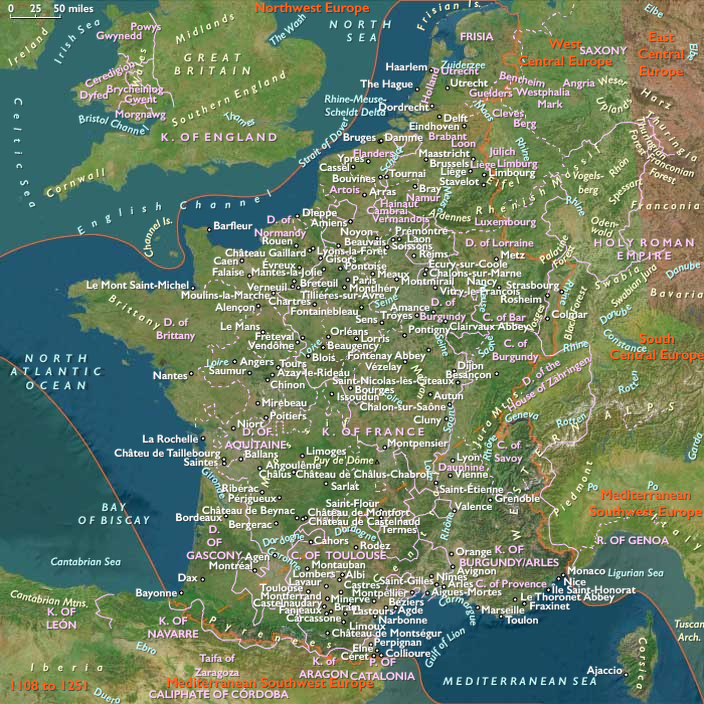
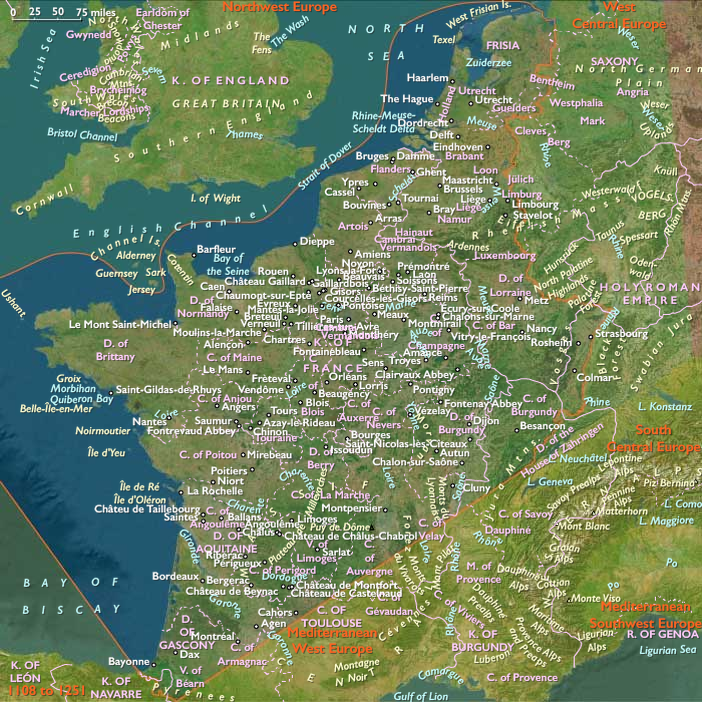
- Philip summoned his French barons to an assembly at Soissons, presenting the invasion as a holy war sanctioned by the Pope.
- The meeting was well attended, but Ferdinand, Count of Flanders, refused to participate, still furious over the loss of Aire and Saint-Omer, which had been seized by Philip’s son, Prince Louis (Louis the Lion).
- Ferdinand demanded the return of his lost towns before committing his forces, creating a diplomatic challenge for Philip.
Philip’s Political Maneuvering: Reconciling with Ingeborg of Denmark
- To bolster his claim to the English throne, Philip announced his reconciliation with his estranged wife, Ingeborg of Denmark, whom he had rejected since their marriage in 1193.
- This move was not driven by sentiment, but by calculated political strategy:
- The Popes had been pressuring Philip to take her back, and this move would win papal favor for his invasion.
- Ingeborg’s Danish royal connections provided Philip with a potential claim to the English throne, as England and Denmark had historical ties through Cnut the Great's North Sea Empire.
Support from the French Nobility and the Papacy
- The French barons fully backed Philip’s plan, agreeing to gather their forces for the campaign.
- Throughout this time, Philip remained in close contact with Pandulf Masca, the Papal Legate, who encouraged the invasion, as John had already been declared deposed by Pope Innocent III.
Outcome: The Collapse of the Invasion Plans
- Despite Philip’s meticulous preparations, his planned invasion was abruptly halted when John made a dramatic submission to the Pope in May 1213.
- John surrendered his kingdom to Pope Innocent III, making England a papal vassal state, thereby removing Philip’s justification for invasion.
- The Pope revoked Philip’s permission to attack, leaving the assembled French forces without a target.
- Instead of invading England, Philip redirected his forces to fight against Flanders, leading to the Battle of Bouvines in 1214, where he won one of his greatest victories.
Philip’s assembly at Soissons in 1213 marked the peak of Capetian ambitions for the conquest of England, but John’s unexpected submission to the Pope forced Philip to abandon his plans, shifting his focus back to the conflict in continental Europe.
Locations
People
- Frederick II
- Guillaume de Nogaret
- Infante Ferdinand of Portugal
- John of England
- Louis VIII of France
- Pandulf Verraccio
- Philip II of France
- Pope Innocent III
Groups
- Denmark, Kingdom of
- Papal States (Republic of St. Peter)
- Flanders, County of
- Holy Roman Empire
- France, (Capetian) Kingdom of
- Christians, Roman Catholic
- Portugal, Burgundian (Alfonsine) Kingdom of
- England, (Plantagenet, Angevin) Kingdom of
Topics
Commodoties
Subjects
Regions
Subregions
Related Events
Showing 1 events out of 1 total
Years: 1213 - 1213
February
Locations
People
- Frederick II
- Guillaume de Nogaret
- Infante Ferdinand of Portugal
- John of England
- Louis VIII of France
- Pandulf Verraccio
- Philip II of France
- Pope Innocent III
Groups
- Denmark, Kingdom of
- Papal States (Republic of St. Peter)
- Flanders, County of
- Holy Roman Empire
- France, (Capetian) Kingdom of
- Christians, Roman Catholic
- Portugal, Burgundian (Alfonsine) Kingdom of
- England, (Plantagenet, Angevin) Kingdom of
Topics
Commodoties
Subjects
Regions
Subregions