
Atlantic Southwest Europe (1540–1683 CE): Political Transformation, …
Years: 1540 - 1683
Atlantic Southwest Europe (1540–1683 CE): Political Transformation, Maritime Expansion, and Cultural Flourishing
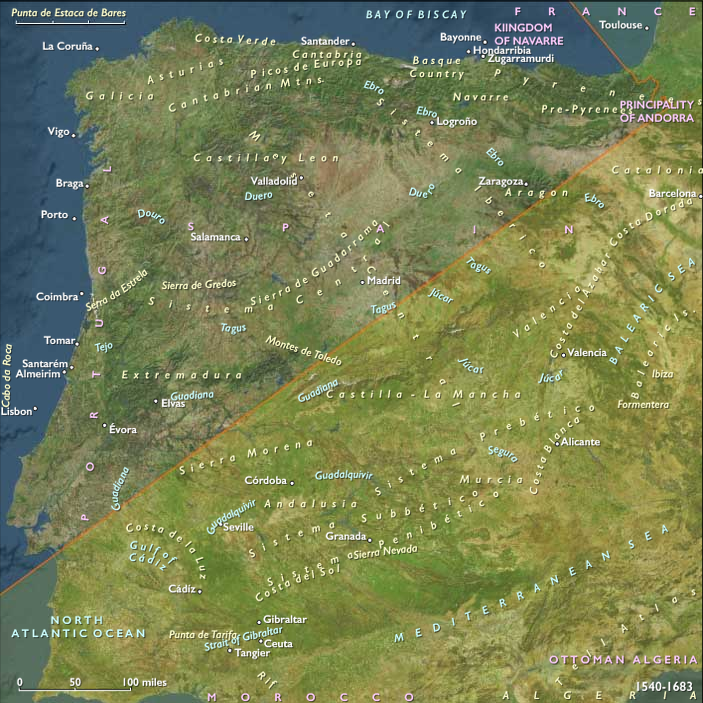
Between 1540 and 1683, Atlantic Southwest Europe—including northern and central Portugal (Lisbon and Porto), Galicia, Asturias, Cantabria, northern León and Castile, northern Navarre, northern Rioja, and the Basque Country—underwent a transformative era marked by political upheaval, economic prosperity through maritime commerce, intense religious reform, and dynamic cultural expression. The region developed distinctive identities deeply influenced by the Renaissance and later the Baroque era, significantly shaping its trajectory toward modernity.
Political and Military Developments
The Iberian Union and Portuguese Restoration
In 1580, Portugal’s succession crisis resulted in the Iberian Union (1580–1640) under the Spanish Habsburg monarchy. This union initially strained the economies of northern Portuguese cities, notably Porto and Lisbon, which experienced intensified taxation and restrictions on trade. Dissatisfaction intensified, culminating in Portugal’s successful Restoration of Independence (1640) led by King João IV (House of Braganza). This pivotal moment restored political autonomy and stability, revitalizing regional governance structures and economic dynamism.
Autonomy and Fueros in Northern Spain
Throughout this period, regions such as the Basque Country and Navarre staunchly defended their traditional fueros, which guaranteed local autonomy, taxation privileges, and self-governance. These institutions effectively insulated the northern territories from the Spanish Crown's centralizing policies, sustaining political stability even as Spain faced broader imperial challenges.
In contrast, Galicia, Asturias, and Cantabria were more integrated within Castilian governance yet retained significant local autonomy. Their administrative flexibility enabled them to balance central demands and local interests effectively.
Military Pressures and Regional Stability
Atlantic Southwest Europe occasionally found itself at the forefront of broader military conflicts, notably during England’s maritime confrontations with Spain and Portugal. Despite such external pressures—including the disastrous defeat of the Spanish Armada (1588), which deeply impacted Basque and Cantabrian ports—the region largely maintained internal stability, enabling sustained economic recovery and growth in subsequent decades.
Economic Developments: Maritime and Commercial Expansion
Portuguese Maritime and Commercial Prosperity
Northern and central Portugal, especially cities like Lisbon, Porto, and Viana do Castelo, benefited enormously from maritime trade expansion. Porto, in particular, flourished as international demand surged for Port wine from the Douro Valley, becoming a key commercial hub for exports to England and the Low Countries. Shipbuilding along the northern Portuguese coast simultaneously expanded, driven by this booming maritime economy.
Northern Spain’s Industrial and Maritime Growth
The Basque provinces and Cantabria witnessed substantial economic prosperity driven by industrial growth, particularly shipbuilding, iron production, fisheries, and robust maritime commerce. The city of Bilbao became a major iron exporter, enhancing its economic importance within European trade networks. Santander similarly prospered through increased transatlantic and northern European maritime trade.
Galicia notably revitalized its maritime economy with strengthened fishing industries and expanded commercial ties through ports like Vigo and A Coruña, reinforcing regional economic resilience.
Religious Developments: Counter-Reformation and Local Identity
Counter-Reformation Orthodoxy
Following the Council of Trent (1545–1563), Atlantic Southwest Europe firmly embraced Counter-Reformation Catholicism, reinforced by inquisitorial tribunals and revitalized ecclesiastical institutions. Cities such as Valladolid, Braga, Coimbra, Santiago de Compostela, and Pamplona became prominent centers of religious orthodoxy, significantly shaping local educational, cultural, and spiritual life.
Pilgrimage routes, notably the Camino de Santiago, experienced renewed popularity, underscoring regional religious identity and promoting cultural cohesion, especially in Galicia.
Influence of the Jesuits
The establishment of Jesuit colleges significantly impacted regional intellectual life, fostering robust Catholic education in cities like Lisbon, Coimbra, Porto, and Valladolid. These institutions contributed significantly to the region’s intellectual vitality, while simultaneously ensuring adherence to Counter-Reformation doctrine.
Cultural and Artistic Flourishing
Transition from Renaissance to Baroque
Initially influenced by Renaissance humanism, cities like Braga, Santiago de Compostela, Burgos, Bilbao, and Lisbon sponsored art and architecture that reflected classical ideals and humanist values. By the late sixteenth century, the Baroque aesthetic profoundly reshaped the region, with elaborate cathedrals, palaces, and public buildings adorning urban landscapes, exemplified by iconic structures in Braga, Lisbon, and Santiago.
Literary and Linguistic Vibrancy
The period witnessed a notable literary flourishing across languages—Portuguese, Castilian, and Galician—strengthening regional identities and promoting linguistic diversity. Literature often subtly asserted local pride, reflecting broader political and cultural autonomy movements emerging across the region.
Social and Urban Developments
Urban Expansion and Merchant Ascendancy
Significant urban growth characterized this era, driven by maritime commerce, industrial expansion, and the increasing wealth of merchant classes. Cities like Porto, Lisbon, Bilbao, Santander, and Vitoria-Gasteiz expanded substantially, providing enhanced infrastructure, vibrant marketplaces, and burgeoning civic institutions.
The rising merchant and artisan classes became influential in urban governance, shifting social structures toward increased social mobility, prosperity, and localized political power.
Strengthened Regional Autonomy and Identity
Throughout Atlantic Southwest Europe, particularly in the Basque Country, Navarre, Galicia, and northern Portugal, traditional rights (fueros) were persistently reaffirmed. These protections solidified local identities, empowering regional governance against centralized imposition from Madrid, ensuring sustained political resilience and autonomy.
Notable Regional Groups and Settlements
-
Portuguese (Central and Northern): Experienced political restoration, maritime prosperity, and cultural renaissance in cities like Lisbon and Porto.
-
Galicians and Asturians: Balanced maritime economic prosperity with persistent rural challenges, fostering strong regional identities.
-
Basques, Navarrese, and Cantabrians: Leveraged local autonomy for economic growth, maintaining distinctive political and cultural identities despite imperial pressures.
-
Northern Castilians and Riojans: Maintained effective local governance, contributing to regional stability despite broader Spanish imperial decline.
Long-Term Significance and Legacy
From 1540 to 1683, Atlantic Southwest Europe:
-
Achieved critical political transformations, notably Portugal’s restoration of independence and northern Spain’s affirmation of regional autonomy.
-
Experienced significant maritime and economic prosperity, firmly integrating the region into European and global trade networks.
-
Fostered vibrant cultural expressions through Renaissance humanism and Baroque aesthetics, enriching regional identities and artistic legacies.
-
Strengthened local governance structures, particularly via the preservation of fueros, ensuring lasting political stability and regional resilience.
This formative period profoundly influenced Atlantic Southwest Europe's historical trajectory, embedding a legacy of economic vibrancy, cultural distinctiveness, and enduring regional autonomy that would persist well beyond the seventeenth century.
People
- Charles V, Holy Roman Emperor
- Diego Velázquez
- Fernando Álvarez de Toledo, 3rd Duke of Alba
- John IV of Portugal
- Miguel de Cervantes
- Philip II of Spain
- Sebastian of Portugal
Groups
- Jews
- Portuguese people
- Basque people
- Christians, Roman Catholic
- Portuguese Empire
- Moriscos
- Christians, New
- Spaniards (Latins)
- Protestantism
- Inquisition, Portuguese
- Jesuits, or Order of the Society of Jesus
- Spain, Habsburg Kingdom of
- Portugal, Habsburg (Philippine) Kingdom of
- Iberian Union
Topics
- Baroque Literature
- Italian War of 1542-6, or Italian War between Charles V and Francis I, Fourth
- Italian War of 1551–1559, or Habsburg-Valois War
- Eighty Years War (Netherlands, or Dutch, War of Independence)
- Portuguese Succession, War of the
- Anglo-Spanish War of 1585-1604
- Spanish Armada, Defeat of the
- Thirty Years' War
- Franco-Spanish War of 1635-59
- Portuguese Restoration War
Commodoties
Subjects
- Commerce
- Writing
- Watercraft
- Painting and Drawing
- Conflict
- Faith
- Government
- Custom and Law
- Cartography
- Philosophy and logic
Regions
Subregions
Related Events
Showing 10 events out of 10 total
Years: 1540 - 1683
People
- Charles V, Holy Roman Emperor
- Diego Velázquez
- Fernando Álvarez de Toledo, 3rd Duke of Alba
- John IV of Portugal
- Miguel de Cervantes
- Philip II of Spain
- Sebastian of Portugal
Groups
- Jews
- Portuguese people
- Basque people
- Christians, Roman Catholic
- Portuguese Empire
- Moriscos
- Christians, New
- Spaniards (Latins)
- Protestantism
- Inquisition, Portuguese
- Jesuits, or Order of the Society of Jesus
- Spain, Habsburg Kingdom of
- Portugal, Habsburg (Philippine) Kingdom of
- Iberian Union
Topics
- Baroque Literature
- Italian War of 1542-6, or Italian War between Charles V and Francis I, Fourth
- Italian War of 1551–1559, or Habsburg-Valois War
- Eighty Years War (Netherlands, or Dutch, War of Independence)
- Portuguese Succession, War of the
- Anglo-Spanish War of 1585-1604
- Spanish Armada, Defeat of the
- Thirty Years' War
- Franco-Spanish War of 1635-59
- Portuguese Restoration War
Commodoties
Subjects
- Commerce
- Writing
- Watercraft
- Painting and Drawing
- Conflict
- Faith
- Government
- Custom and Law
- Cartography
- Philosophy and logic
Regions
Subregions