
Filters:
Philip I’s Marital Scandal, Excommunication, and the …
Years: 1096 - 1096
May
Philip I’s Marital Scandal, Excommunication, and the Role of Hugh of Vermandois in the First Crusade (1092–1096)
By 1092, Philip I of France had become entangled in a scandalous affair that led to his excommunication and further complicated his relationship with Pope Urban II. His brother, Hugh of Vermandois, however, emerged as a key figure in the First Crusade, despite Philip’s own inability to participate due to his excommunication. Meanwhile, the Crusade triggered widespread anti-Jewish violence in France and the Rhineland, as religious fervor and millenarian expectations fueled persecution.
Philip I’s Marital Scandal and Excommunication (1092–1095)
- Philip married Bertha of Holland in 1072, and she bore him the necessary heir, Louis VI.
- However, in 1092, Philip fell in love with Bertrade de Montfort, who was already married to Fulk IV of Anjou.
- Philip repudiated Bertha (claiming she was “too fat”) and married Bertrade on May 15, 1092, despite her existing marriage.
- In 1094, Hugh, Archbishop of Lyon, excommunicated Philip for adultery and bigamy.
- At the Council of Clermont in November 1095, Pope Urban II renewed the excommunication, formally severing Philip from the Church.
Philip’s Position on the First Crusade and Hugh of Vermandois’ Role (1096)
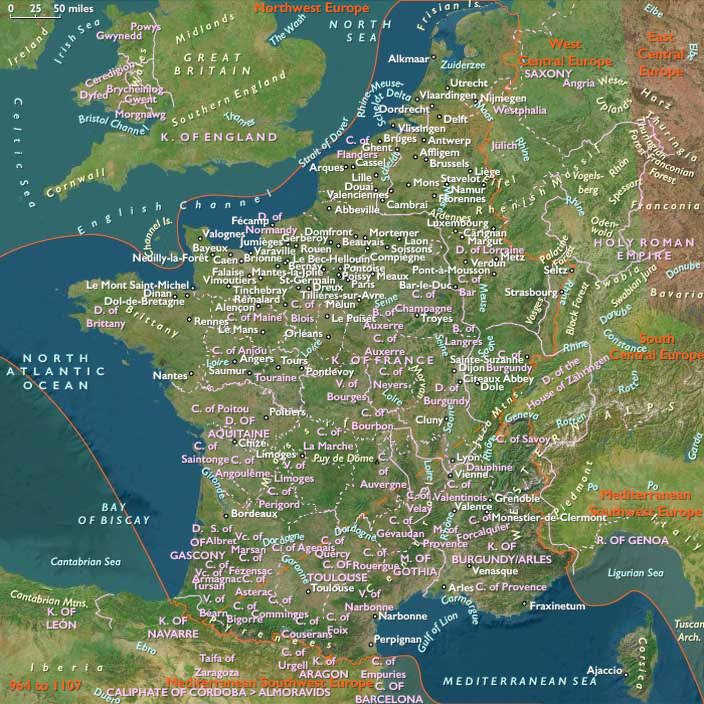
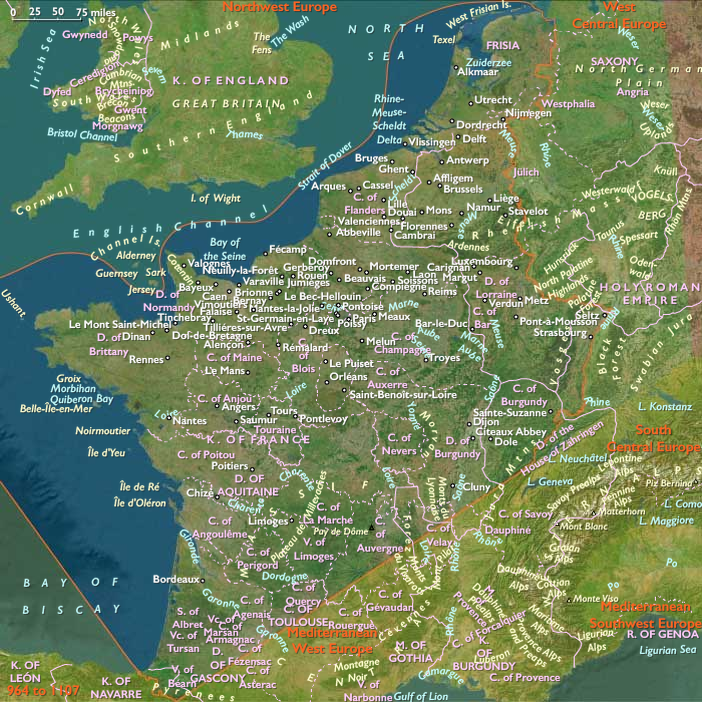
- Because of his excommunication, Philip was unable to join the First Crusade, despite its origination at the Council of Clermont in his own kingdom.
- However, Philip’s brother, Hugh of Vermandois, became a leading participant in the Crusade, possibly to restore the family’s standing with the Church.
- In early 1096, Philip and Hugh discussed the Crusade, but Philip remained politically distant due to his conflict with the pope.
- Hugh was reportedly influenced to take the cross after witnessing a lunar eclipse on February 11, 1096, which he interpreted as a divine sign.
- Unlike other Crusader leaders who traveled by land, Hugh’s army departed France in the summer of 1096, crossed into Italy, and sailed across the Adriatic to reach the Byzantine Empire.
Jewish Persecutions in France and the Rhineland (1096)
- The Crusade triggered widespread anti-Jewish violence, beginning in France before spreading to the Rhineland.
- Sigebert of Gembloux wrote that Crusaders believed Jewish communities should convert before the war for the Lord began.
- The first outbreaks of violence occurred in France, where Crusaders attacked Jewish communities in Rouen, Paris, and other cities.
- A contemporary chronicle from Mainz describes how the Jews of France, fearing for their safety, sent letters to the Jewish communities along the Rhine, warning them of impending danger.
- The Jewish leaders in Mainz responded with a call for fasting and prayer, recognizing the grave threat posed by the Crusaders.
Significance and Consequences
- Philip’s excommunication prevented him from playing a major role in the First Crusade, but his brother Hugh of Vermandois ensured Capetian representation in the campaign.
- The anti-Jewish violence of 1096 marked one of the first large-scale massacres of European Jews, setting a precedent for future Crusader attacks on Jewish communities.
- Philip’s marital scandal and subsequent fallout with the papacy weakened his political authority, but he remained King of France, eventually reconciling with the Church years later.
Although Philip I himself could not join the First Crusade, his brother Hugh of Vermandois played a prominent role, while the Crusade’s religious fervor fueled devastating Jewish persecutions across France and Germany.
Locations
People
- Adhemar of Le Puy
- Baldwin I of Jerusalem
- Baldwin II of Jerusalem
- Bohemond I of Antioch
- Emicho
- Eustace III
- Fulk IV
- Godfrey of Bouillon
- Henry IV, Holy Roman Emperor
- Hugh I
- Kalonymus Ben Meshullam
- Philip I of France
- Pope Urban II
- Raymond IV
- Robert II, Count of Flanders
- Sigebert of Gembloux
Groups
- Jews
- Germans
- Mainz, Electoral Archbishopric of
- Worms, Bishopric of
- Speyer, Prince-Bishopric of
- Cologne, Electorate of
- German, or Ottonian (Roman) Empire
- French people (Latins)
- France, (Capetian) Kingdom of
- Lorraine (Lothier), Lower, (second) Duchy of
- Christians, Roman Catholic
Topics
Commodoties
Subjects
Regions
Subregions
Years: 1096 - 1096
May
Locations
People
- Adhemar of Le Puy
- Baldwin I of Jerusalem
- Baldwin II of Jerusalem
- Bohemond I of Antioch
- Emicho
- Eustace III
- Fulk IV
- Godfrey of Bouillon
- Henry IV, Holy Roman Emperor
- Hugh I
- Kalonymus Ben Meshullam
- Philip I of France
- Pope Urban II
- Raymond IV
- Robert II, Count of Flanders
- Sigebert of Gembloux
Groups
- Jews
- Germans
- Mainz, Electoral Archbishopric of
- Worms, Bishopric of
- Speyer, Prince-Bishopric of
- Cologne, Electorate of
- German, or Ottonian (Roman) Empire
- French people (Latins)
- France, (Capetian) Kingdom of
- Lorraine (Lothier), Lower, (second) Duchy of
- Christians, Roman Catholic
Topics
Commodoties
Subjects
Regions
Subregions