
…Petar II marches on Thessalonica, where the …
Years: 1040 - 1040
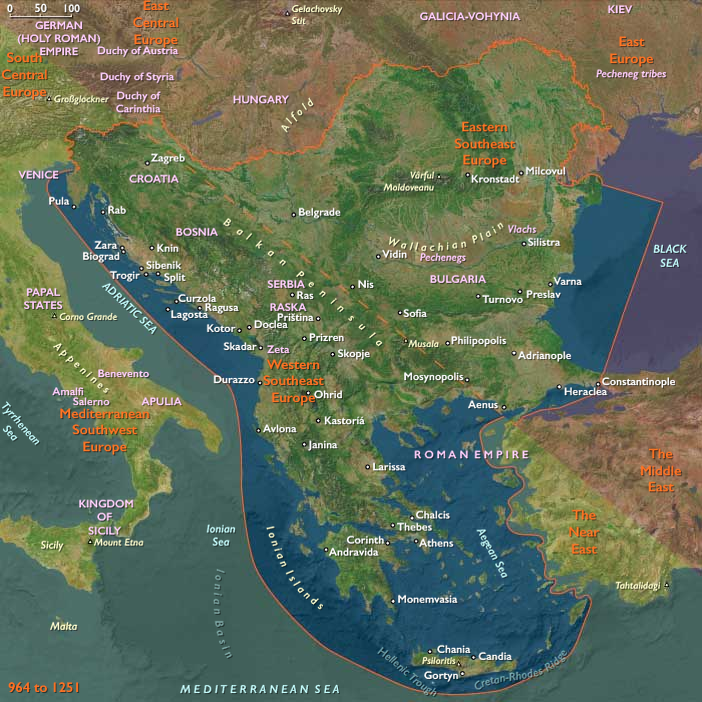
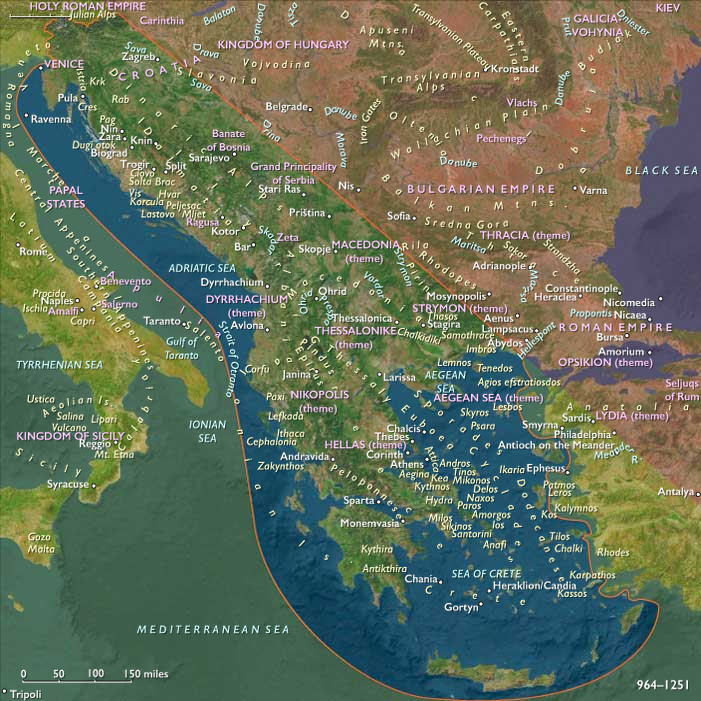
…Petar II marches on Thessalonica, where the Emperor Michael IV is staying.
Defeated, he flees, leaving his treasury to a certain Michael Ivač.
The latter, who is probably a son of Ivač, a general under Samuel of Bulgaria, promptly turns over the bulk of the treasury to Petar outside the city.
Thessalonica remains in imperial hands, but …
Locations
People
Groups
- Slavs, South
- Greeks, Medieval (Byzantines)
- Bulgarians (South Slavs)
- Thessalonica, East Roman Theme of
- Dyrrhachium, East Roman Theme of
- Roman Empire, Eastern: Macedonian dynasty
- Albanians
- Bulgaria, Theme of
Topics
Commodoties
Subjects
Regions
Subregions
Related Events
Showing 10 events out of 51398 total
Years: 1040 - 1040
Locations
People
Groups
- Slavs, South
- Greeks, Medieval (Byzantines)
- Bulgarians (South Slavs)
- Thessalonica, East Roman Theme of
- Dyrrhachium, East Roman Theme of
- Roman Empire, Eastern: Macedonian dynasty
- Albanians
- Bulgaria, Theme of
Topics
Commodoties
Subjects
Regions
Subregions