
Persian poet Ferdowsi of Khorasan (whose original …
Years: 1010 - 1010
Persian poet Ferdowsi of Khorasan (whose original name is Abolqasem Mansur) was born into a family of Iranian landowners (dehqans) in 940 in the village of Paj, near the city of Tus in the province of Khorasan, now in northeastern Iran.
Little is known about Ferdowsi's early life.
The poet had a wife, who was probably literate and came from the same dehqan class.
He had a son, who died aged thirty-seven, and was mourned by the poet in an elegy that he inserted into the Shahnameh, his magnum opus.
Ferdowsī is a Shi'ite Muslim, which is apparent from the Shahnameh itself and confirmed by early accounts.
(In recent times, however, some have cast doubt on his religion and his Shi'ism.)
The class of dehqans to which Ferdowsi belongs are landowning Iranian aristocrats who had flourished under the Sassanid dynasty (the last pre-Islamic dynasty to rule Iran) and whose power, though diminished, had survived into the Islamic era which followed the Arab conquests of the seventh century.
The dehqans are intensely patriotic (so much so that dehqan is sometimes used as a synonym for "Iranian" in the Shahnameh) and see it as their task to preserve the cultural traditions of Iran, including the legendary tales about its kings.
The Muslim conquests of the seventh century had been a watershed in Iranian history, bringing the new religion of Islam, submitting Iranians to the rule of the Arab caliphate and promoting Arabic culture and language at the expense of Persian.
By the late ninth century, the power of the caliphate had weakened and local Iranian dynasties emerged.
Ferdowsi had grown up in Tus, a city under the control of one of these dynasties, the Samanids, who claimed descent from the Sassanid general Bahram Chobin (whose story Ferdowsi recounts in one of the later sections of the Shahnameh).
The Samanid bureaucracy used the New Persian language rather than Arabic and the Samanid elite had a great interest in pre-Islamic Iran and its traditions and commissioned translations of Pahlavi (Middle Persian) texts into New Persian.
Abu Mansur ʿAbd-al-Razzāq, a dehqan and governor of Tus, had several local scholars compile a prose Shahnameh ("Book of Kings"), which was completed in 957.
Although it no longer survives, Ferdowsi used it as one of the sources of his epic.
Samanid rulers were patrons of such important Persian poets as Rudaki and Daqiqi.
Ferdowsi followed in the footsteps of these writers.
Details about Ferdowsi's education are lacking.
Judging by the Shahnameh, there is no evidence he knew either Arabic or Pahlavi.
Although New Persian was permeated by Arabic vocabulary by Ferdowsi's time, there are relatively few Arabic loan words in the Shahnameh.
This may have been a deliberate strategy by the poet.
It is possible that Ferdowsi wrote some early poems which have not survived.
He began work on the Shahnameh around 977, intending it as a continuation of the work of his fellow poet Daqiqi, who had been assassinated by a slave.
Like Daqiqi, Ferdowsi employed the prose Shahnameh of ʿAbd-al-Razzāq as a source.
He received generous patronage from the Samanid prince Mansur and completed the first version of the Shahnameh in 994.
After the Turkic Ghaznavids overthrew the Samanids in the late 990s, Ferdowsi had continued to work on the poem, rewriting sections to praise the Ghaznavid Sultan Mahmud, to whom the weork is dedicated.
Mahmud's attitude to Ferdowsi and how well he rewarded the poet are matters which have long been subject to dispute and have formed the basis of legends about the poet and his patron.
The Turkic Mahmud may have been less interested in tales from Iranian history than the Samanids.
The later sections of the Shahnameh have passages which reveal Ferdowsi's fluctuating moods: in some he complains about old age, poverty, illness and the death of his son; in others, he appears happier.
Ferdowsi completes his enormous heroic epic, nearly sixty thousand couplets long, on March 8, 1010.
Ferdowsi narrates the fortunes of Persia dynasty by dynasty, from the dawn of man to the Arab conquest of the Sassanid Empire in the mid-seventh century.
Today the most popular and influential national epic in Iran and other Persian-speaking nations, the Shahnameh is the only surviving work by Ferdowsi regarded as indisputably genuine.
Locations
People
Groups
Topics
Subjects
Regions
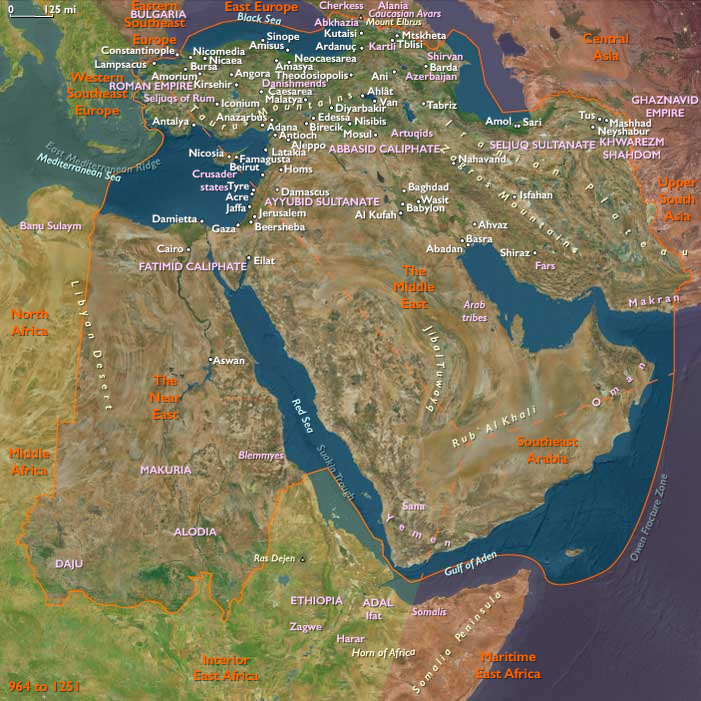
Subregions
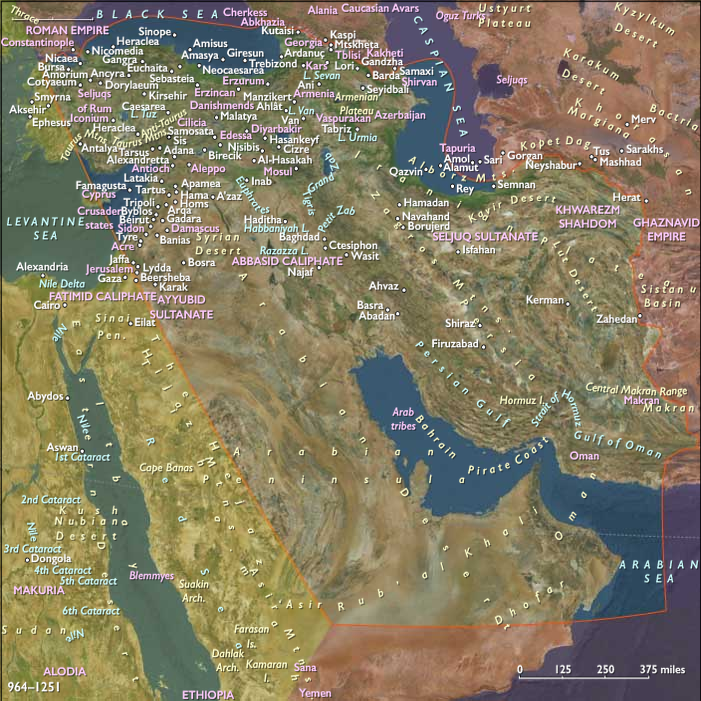
Years: 1010 - 1010
Locations
People
Groups
Topics
Subjects
Regions
Subregions