Penda invades Bernicia and besiege Oswiu at …
Years: 652 - 652
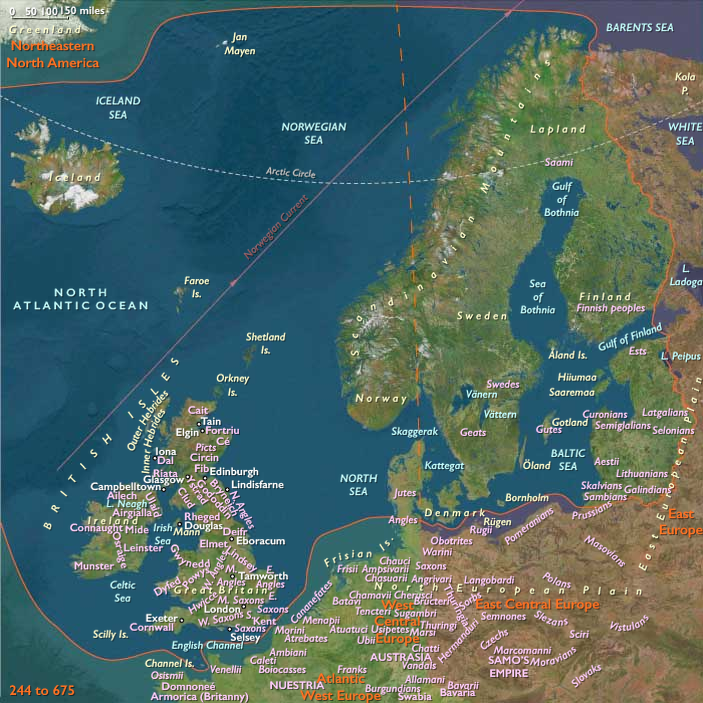
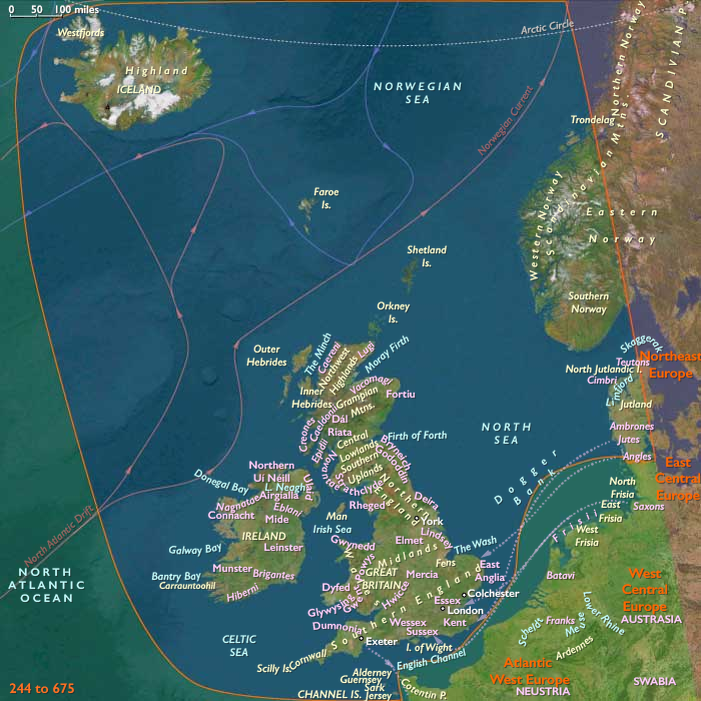
Penda invades Bernicia and besiege Oswiu at Bamburgh.
Locations
People
Groups
Topics
Subjects
Regions
Subregions
Related Events
Filter results
Showing 10 events out of 56415 total
Naka assumes the position of minister of the center, and Kamatari is granted a new family name—Fujiwara—in recognition of his great service to the imperial family.
Fujiwara Kamatari becomes the first in a long line of court aristocrats.
Another, long-lasting change is the use of the name Nippon or Nihon, or sometimes Dai Nippon (Great Japan) in diplomatic documents and chronicles.
Following the reigns of Naka's uncle and mother, Naka assumes the throne as Emperor Tenji in 662, taking the additional title tenno (heavenly sovereign).
This new title is intended to improve the Yamato clan's image and to emphasize the divine origins of the imperial family in the hope of keeping it above political frays, such as those precipitated by the Soga clan.
Within the imperial family, however, power struggles continue as the emperor's brother and son vie for the throne.
The brother, who later reigns as Emperor Temmu, consolidates Tenji's reforms and state power in the imperial court.
Koreans have always viewed such victories as sterling examples of resistance to foreign aggression.
Had Goguryeo not beaten back the invaders, all the states of the peninsula might have fallen under long-term Chinese domination.
Thus commanders such as Eulji Mundeok will become models for emulation hereafter, especially during the Korean War (1950-53).
Baekje cannot hold out under combined Silla and Tang attack, however.
The latter land an invasion fleet in 660, and Baekche quickly falls.
Tang pressure also has weakened Goguryeo, which, after eight successive years of battle, succumbs to a combination of external attack, internal strife, and several famines.
Goguryeo retreats to the north, enabling Silla forces to advance and consolidate their control up to the Taedong River, which flows through P'yongyang.
The Tang dynasty’s conquest of the Western Turks results in the dissolution of the Western Turkic Khaganate in 657 and the transfer to Tang suzerainty of all regions formerly under Turkish control.
Tang strengthens its rule over Xinjiang.
King Muyeol of Silla, after repelling numerous attacks by Baekje and Goguryeo, seeks help from Emperor Gaozong of Tang to defend his exhausted kingdom against the attacks.
Emperor Gaozong receives and grants his request.
He launches the invasion of Baekje in 660.
East Central Europe (652–663 CE): Fragmentation after Samo, Dissolution of Old Great Bulgaria, and Continuing Thuringian Autonomy
Between 652 and 663 CE, East Central Europe—encompassing Poland, Czechia, Slovakia, Hungary, and those portions of Germany and Austria lying east of 10°E and north of a line stretching from roughly 48.2°N at 10°E southeastward to the Austro-Slovenian border near 46.7°N, 15.4°E—entered a period of fragmentation and realignment. Following King Samo’s death (ca. 658 CE), his unified Slavic federation began to fracture into smaller regional principalities, particularly in Bohemia and Moravia, reshaping the political landscape. Concurrently, Old Great Bulgaria faced internal instability after the death of Khan Kubrat (ca. 650s CE), leading to the dispersal of Bulgar groups. Some Bulgars migrated southward into the Balkans, where they would eventually establish the later Bulgarian state, becoming heavily Slavicized in subsequent centuries. Meanwhile, the Frankish Duchy of Thuringia, under Duke Radulf, continued to assert its practical autonomy from weakened Merovingian rule, further emphasizing the fragmentation of Frankish authority.
Political and Military Developments
Fragmentation of Samo’s Slavic Federation
-
Following Samo’s death (ca. 658 CE), the unified West Slavic federation dissolved into multiple independent or semi-independent tribal entities, particularly in Bohemia, Moravia, and surrounding regions. This political fragmentation allowed localized leadership structures to re-emerge, setting the stage for future distinct medieval Slavic principalities.
Dissolution and Migration of Old Great Bulgaria
-
After Khan Kubrat’s death (mid-650s CE), internal rivalries among his sons fractured Old Great Bulgaria. This led to the dispersal of various Turkic-speaking Bulgar groups:
-
Asparuh’s Bulgars migrated southwestward toward the Danube, laying the foundations for the later medieval Bulgarian state in the Balkans, which became predominantly Slavic in language and culture.
-
Other Bulgar groups migrated northward or eastward, contributing to ongoing regional ethnic shifts in Eastern Europe.
-
Continued Autonomy of Thuringia under Radulf
-
Duke Radulf of Thuringia maintained practical independence from Merovingian kings, who proved increasingly unable to reassert centralized control. This sustained autonomy clearly reflected the Merovingian monarchy’s diminishing power during this era of the rois fainéants.
Avar Re-consolidation Efforts
-
The Avar Khaganate, previously weakened by Bulgar and Slavic uprisings, took advantage of regional fragmentation to modestly reconsolidate and stabilize its reduced territory within the Carpathian Basin.
Economic and Technological Developments
Adaptation and Continuity in Regional Trade
-
Despite political instability, economic exchange and regional trade persisted, linking fragmented Slavic principalities, Thuringia, Bavaria, Avar territories, and Byzantine markets. Trade in agricultural goods, luxury textiles, metal products, and regional crafts continued actively.
Localized Defensive Infrastructure
-
Fragmentation spurred Slavic and Bulgar communities to maintain and further enhance local defensive systems, including fortified settlements and earthwork fortifications, essential to regional security in the absence of centralized authority.
Cultural and Artistic Developments
Emergence of Distinct Slavic Regional Cultures
-
With the dissolution of Samo’s federation, Bohemian and Moravian communities developed distinct localized identities, characterized archaeologically by varied styles in pottery, jewelry, and settlement designs.
Transition of Bulgar Identity
-
Following the collapse of Old Great Bulgaria, the migrating Bulgar groups, particularly those moving into the Balkans, gradually absorbed Slavic influences, initiating a transition toward the predominantly Slavic cultural identity associated with later medieval Bulgaria.
Persistence of Avar Cultural Influence
-
The Avars retained notable influence across the region, particularly through their distinctive styles in metalwork and decorative arts, maintaining continued cultural interactions despite earlier territorial losses.
Settlement and Urban Development
Fragmented Slavic and Bulgar Settlements
-
The dissolution of political unity under Samo and Kubrat’s successors resulted in numerous smaller fortified settlements rather than larger centralized urban centers, reflecting localized governance structures.
Thuringian and Bavarian Urban Stability
-
Thuringia under Radulf and Bavarian territories remained stable and prosperous frontier zones, benefiting from ongoing regional trade and reduced direct military pressures from weakened Merovingian central authority.
Social and Religious Developments
Decentralized Leadership Structures
-
After Samo’s death, decentralized Slavic political leadership emerged prominently across Bohemia, Moravia, and adjacent territories. Leadership became increasingly local and tribal, with limited overarching regional authority.
Thuringian Autonomy and Aristocratic Rule
-
Thuringia under Radulf maintained robust aristocratic governance, further illustrating the diminished practical authority of Merovingian kings, who became symbolic figureheads dependent upon powerful regional dukes.
Long-Term Consequences and Historical Significance
The era 652–663 CE represented a pivotal transitional period marked by political fragmentation and realignment across East Central Europe. The end of Samo’s federation and Old Great Bulgaria reshaped the regional geopolitical landscape, creating smaller, localized entities that would eventually evolve into distinct medieval states. Radulf’s continued autonomy in Thuringia underscored the declining authority of the Merovingian monarchy, providing early evidence of the shift toward powerful local aristocratic rule. These developments set enduring patterns for future ethnic identities, state formations, and cultural trajectories in East Central Europe.
The first major civil war within the Islamic Caliphate is caused by the controversial assassination of Caliph Uthman Ibn Affan and begins as a series of revolts against his successor, Ali ibn Abi Talib, the fourth of the Sunni Rightly Guided Caliphs.
It lasts for the entirety of Ali's reign, and its end is marked by Muawiyah's assumption of the caliphate (founding the Umayyad dynasty), and the subsequent recorded peace treaty between him and Hassan ibn Ali.
Eastern Southeast Europe (652–663 CE): Political Tensions and Administrative Reforms
Settlement and Migration Patterns
Demographic Stability and Urban Adaptations
Between 652 and 663 CE, Eastern Southeast Europe maintained demographic stability despite ongoing migratory pressures. Urban centers like Constantinople, Philippopolis, Adrianople, and Serdica continued enhancing fortifications and infrastructure, effectively managing and integrating migrant populations.
Political and Military Developments
Relocation of Emperor Constans II
Emperor Constans II, widely unpopular in Constantinople due to fratricide and internal political tensions, relocated his imperial court to Syracuse, Sicily, in 663 CE. This significant move highlighted deepening internal divisions and dissatisfaction within the empire.
Religious Persecutions and Political Repressions
Constans II's reign witnessed significant religious and political tensions, exemplified by the arrest and public humiliation of Pope Martin I in 654 CE, and severe persecution of the theologian Maximus the Confessor between 653 and 662 CE. These actions reflected intensified imperial efforts to assert control over theological debates and church affairs.
Establishment of the Thema System
Around 659 CE, Constans II initiated significant administrative and military reforms through the establishment of the themata, or themes. This new territorial and administrative system reorganized Anatolia into large, militarily governed regions, strengthening regional defense capabilities and laying a foundation that persisted for centuries.
Temporary Truce with the Arabs
Capitalizing on internal conflicts within the Arab world following the assassination of Caliph 'Uthman ibn 'Affan, Constans secured a critical nonaggression treaty with Muawiyah, governor of Syria, in 659 CE. This temporary truce provided essential breathing space for the empire to strengthen defenses and implement administrative reforms.
Economic and Technological Developments
Economic Stability Amidst Political Unrest
Despite internal tensions and external threats, the economy remained relatively stable, supported by continued agricultural productivity and active trade networks centered around Constantinople.
Military Reforms and Technological Adaptation
Technological developments, particularly related to military fortifications and strategic defense logistics, continued. These improvements reinforced regional security and preparedness.
Cultural and Artistic Developments
Cultural Resilience
Cultural and artistic activities persisted robustly, showcasing the integration of classical and emerging Christian influences. Artistic production continued to reinforce regional identity and community cohesion.
Intellectual Continuity
Scholarly institutions continued actively preserving classical and theological knowledge, adapting to contemporary challenges and maintaining intellectual vibrancy.
Social and Religious Developments
Governance and Administrative Adaptation
Administrative systems showed ongoing adaptability and efficiency, effectively managing regional challenges, civic responsibilities, and strategic defense requirements.
Deepening Christian Influence
Christianity continued its integration into regional social, cultural, and political structures, significantly shaping community cohesion and resilience amidst political instability.
Long-Term Consequences and Historical Significance
The era from 652 to 663 CE was marked by notable administrative reforms, political upheavals, and religious tensions. The establishment of the theme system significantly strengthened regional defenses, and despite internal discord, the period contributed substantially to the long-term resilience and governance stability of Eastern Southeast Europe.

Roman emperor Constans II, detested as a fratricide by his subjects in Constantinople, moves his court to Syracuse, Sicily.
The Bulgars, Turkic-speaking nomads from Central Asia, arrive in the region of present Bulgaria in the mid-seventh century.
The Middle East: 652–663 CE
Consolidation of Islamic Rule and Cultural Transformations
Stabilization of the Islamic Caliphate
Between 652 and 663 CE, the Islamic Caliphate, now firmly established across Persia and Mesopotamia, moves towards stabilizing its administrative control over newly conquered regions. The caliphs, particularly Uthman ibn Affan (644–656 CE) and Ali ibn Abi Talib (656–661 CE), strive to centralize authority and standardize governance practices across vast territories. Administrative structures from the former Sassanian and Byzantine empires are adapted and refined, incorporating Persian bureaucratic expertise to enhance the efficiency of the burgeoning Islamic state.
Emergence of Internal Conflicts
This period, however, also sees significant internal strife within the Caliphate. Following the assassination of Caliph Uthman in 656 CE, political instability escalates into the first major internal conflict in Islamic history, known as the First Fitna (656–661 CE). Caliph Ali faces substantial opposition, particularly from prominent figures such as Muawiya ibn Abi Sufyan, governor of Syria, leading to intense civil discord and several notable battles, including the inconclusive Battle of Siffin (657 CE).
Establishment of the Umayyad Dynasty
The internal divisions culminate in the establishment of the Umayyad Dynasty under Muawiya in 661 CE, marking the end of the Rashidun Caliphate. Muawiya shifts the capital from Medina to Damascus, reflecting the growing influence and strategic importance of Syria. This transition signals the beginning of a hereditary monarchy, significantly transforming the political landscape of the Islamic world.
Cultural Integration and Continuity
Despite internal conflicts, the era witnesses continuing cultural synthesis, as Persian intellectuals and administrators profoundly influence the development of Islamic governance and culture. Persian scholars and officials contribute significantly to literature, philosophy, science, and administrative reforms, laying foundational structures that enrich Islamic civilization.
By the close of this era, the Middle East experiences both consolidation and dramatic political restructuring under Islamic rule, with the Umayyad Dynasty setting the stage for an expansive and influential epoch in regional and global history.