
Filters:
Foreign maritime trade in China is regulated …
Years: 1792 - 1792
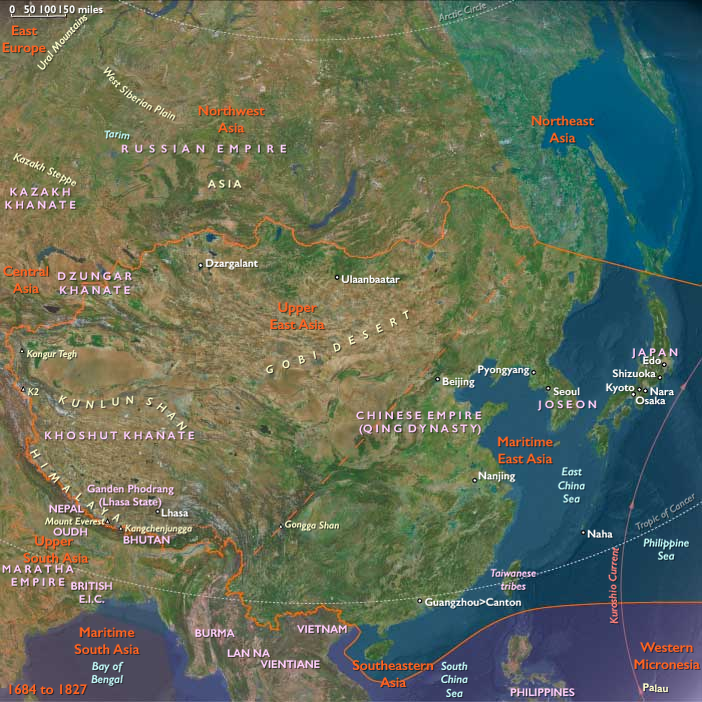
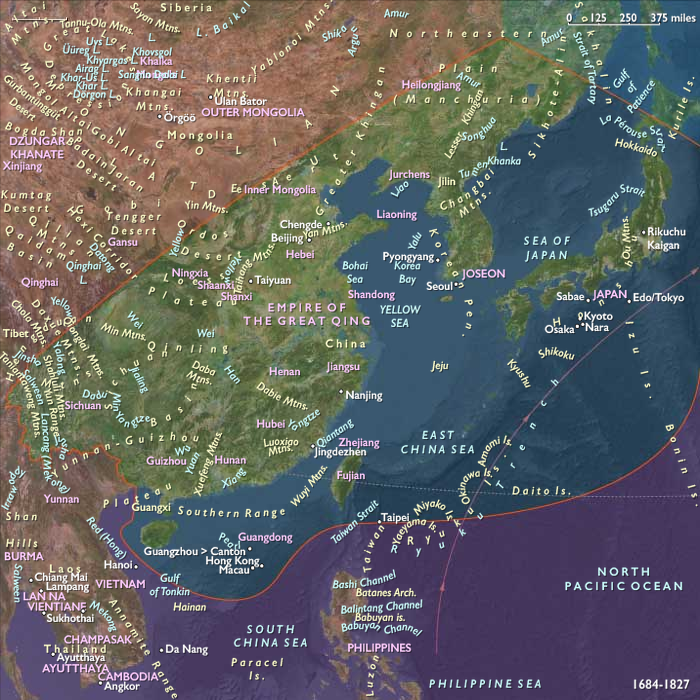
Foreign maritime trade in China is regulated through the Canton System, which had emerged gradually through a series of imperial edicts in the seventeenth and eighteenth centuries.
This system channels formal trade through the Cohong, a guild of thirteen trading companies (known in Cantonese as "hong") selected by the imperial government.
In 1725, the Yongzheng Emperor had given the Cohong legal responsibility over commerce in Guangzhou.
By the eighteenth century, Guangzhou, known as Canton to British merchants, had become the most active port in the China trade, thanks partly to its convenient access to the Pearl River Delta.
In 1757, the Qianlong Emperor confines all foreign maritime trade to Guangzhou.
Qianlong, who rules the Qing dynasty at its zenith, is wary of the transformations of Chinese society that might result from unrestricted foreign access.
Chinese subjects are not permitted to teach the Chinese language to foreigners, and European traders are forbidden to bring women into China.
By the late eighteenth century, British traders feel confined by the Canton System and, in an attempt to gain greater trade rights, they have lobbied for an embassy to go before the emperor and request changes to the current arrangements.
The need for an embassy is partly due to the growing trade imbalance between China and Great Britain, driven largely by the British demand for tea, as well as other Chinese products like porcelain and silk.
The East India Company, whose trade monopoly in the East encompasses the tea trade, is obliged by the Qing government to pay for Chinese tea with silver.
To address the trade deficit, efforts are made to find British products that can be sold to the Chinese.
At the time of Macartney's mission to China, the East India Company is beginning to grow opium in India to sell in China.
The Company had made a concerted effort starting in the 1780s to finance the tea trade with opium.
George Macartney, who had served in India as Governor of Madras (present-day Chennai), is ambivalent about selling the drug to the Chinese, preferring to substitute "rice or any better production in its place".
An official embassy will provide an opportunity to introduce new British products to the Chinese market, which the East India Company had been criticized for failing to do.
This system channels formal trade through the Cohong, a guild of thirteen trading companies (known in Cantonese as "hong") selected by the imperial government.
In 1725, the Yongzheng Emperor had given the Cohong legal responsibility over commerce in Guangzhou.
By the eighteenth century, Guangzhou, known as Canton to British merchants, had become the most active port in the China trade, thanks partly to its convenient access to the Pearl River Delta.
In 1757, the Qianlong Emperor confines all foreign maritime trade to Guangzhou.
Qianlong, who rules the Qing dynasty at its zenith, is wary of the transformations of Chinese society that might result from unrestricted foreign access.
Chinese subjects are not permitted to teach the Chinese language to foreigners, and European traders are forbidden to bring women into China.
By the late eighteenth century, British traders feel confined by the Canton System and, in an attempt to gain greater trade rights, they have lobbied for an embassy to go before the emperor and request changes to the current arrangements.
The need for an embassy is partly due to the growing trade imbalance between China and Great Britain, driven largely by the British demand for tea, as well as other Chinese products like porcelain and silk.
The East India Company, whose trade monopoly in the East encompasses the tea trade, is obliged by the Qing government to pay for Chinese tea with silver.
To address the trade deficit, efforts are made to find British products that can be sold to the Chinese.
At the time of Macartney's mission to China, the East India Company is beginning to grow opium in India to sell in China.
The Company had made a concerted effort starting in the 1780s to finance the tea trade with opium.
George Macartney, who had served in India as Governor of Madras (present-day Chennai), is ambivalent about selling the drug to the Chinese, preferring to substitute "rice or any better production in its place".
An official embassy will provide an opportunity to introduce new British products to the Chinese market, which the East India Company had been criticized for failing to do.
Locations
People
- George Macartney, 1st Earl Macartney
- Henry Dundas, 1st Viscount Melville
- Qianlong Emperor
- William Pitt the Younger
Groups
- Chinese Empire, Qing (Manchu) Dynasty
- Britain, Kingdom of Great
- East India Company, British (United Company of Merchants of England Trading to the East Indies)
Topics
Commodoties
Subjects
Regions
Subregions
Years: 1792 - 1792
Locations
People
- George Macartney, 1st Earl Macartney
- Henry Dundas, 1st Viscount Melville
- Qianlong Emperor
- William Pitt the Younger
Groups
- Chinese Empire, Qing (Manchu) Dynasty
- Britain, Kingdom of Great
- East India Company, British (United Company of Merchants of England Trading to the East Indies)
Topics
Commodoties
Subjects
Regions
Subregions