
Filters:
Bands of Spaniards set out from Cartagena …
Years: 1528 - 1539
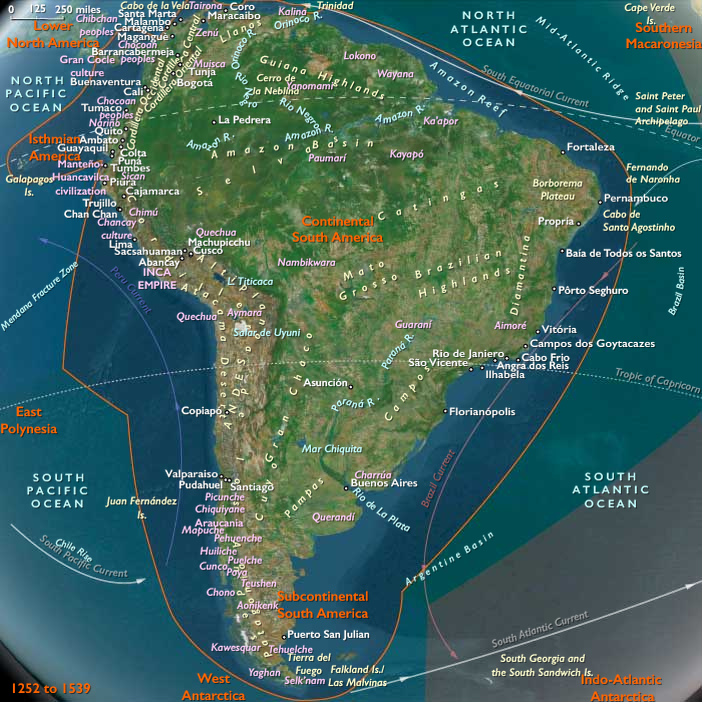
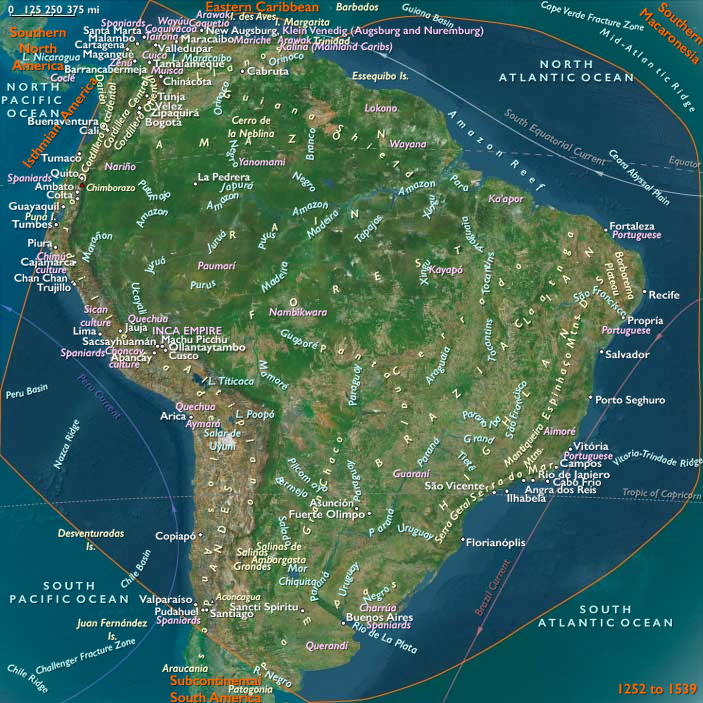
Bands of Spaniards set out from Cartagena and Santa Marta for the exploration and conquest of both coastal lowlands and the Andean interior.
In 1536 Gonzalo Jiménez de Quesada, a lawyer turned military commander who is comparable to Hernán Cortés, the conqueror of Mexico, or Francisco Pizarro in Peru, launches the most important of these expeditions.
He heads inland up the Magdalena toward the land of the Muiscas, which he reaches early in 1537 after losing more than half of his party to shipwreck at the mouth of the Magdalena and to disease, insects, and hunger on the march.
After easily overcoming armed resistance, Jiménez de Quesada and his lieutenants occupy the entire Muisca territory and on August 6, 1538, found the city of Santa Fe (present-day Bogotá, known as Santa Fe during the colonial period), as capital of the New Kingdom of Granada, as he calls this new possession after his birthplace in Spain.
In 1536 Gonzalo Jiménez de Quesada, a lawyer turned military commander who is comparable to Hernán Cortés, the conqueror of Mexico, or Francisco Pizarro in Peru, launches the most important of these expeditions.
He heads inland up the Magdalena toward the land of the Muiscas, which he reaches early in 1537 after losing more than half of his party to shipwreck at the mouth of the Magdalena and to disease, insects, and hunger on the march.
After easily overcoming armed resistance, Jiménez de Quesada and his lieutenants occupy the entire Muisca territory and on August 6, 1538, found the city of Santa Fe (present-day Bogotá, known as Santa Fe during the colonial period), as capital of the New Kingdom of Granada, as he calls this new possession after his birthplace in Spain.
Locations
People
Groups
- Tairona
- Arawak peoples (Amerind tribe)
- Kalinago (Amerind tribe)
- Castillian people
- Muisca (Amerind tribe)
- Castile, Crown of
- Granada, New Kingdom of (Spanish colony)
Topics
Commodoties
Subjects
Regions
Subregions
Years: 1528 - 1539
Locations
People
Groups
- Tairona
- Arawak peoples (Amerind tribe)
- Kalinago (Amerind tribe)
- Castillian people
- Muisca (Amerind tribe)
- Castile, Crown of
- Granada, New Kingdom of (Spanish colony)
Topics
Commodoties
Subjects
Regions
Subregions