
Filters:
The regulations for colonial administration set forth …
Years: 1396 - 1539
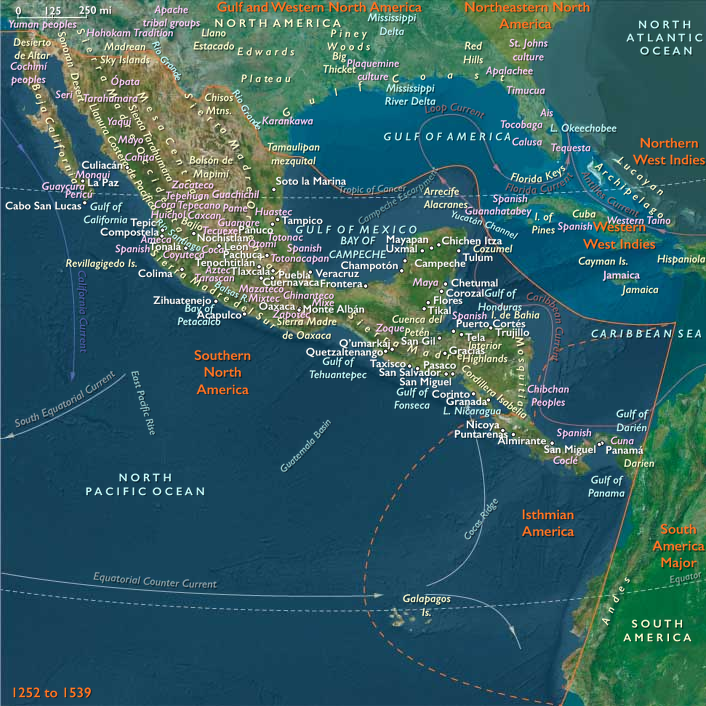
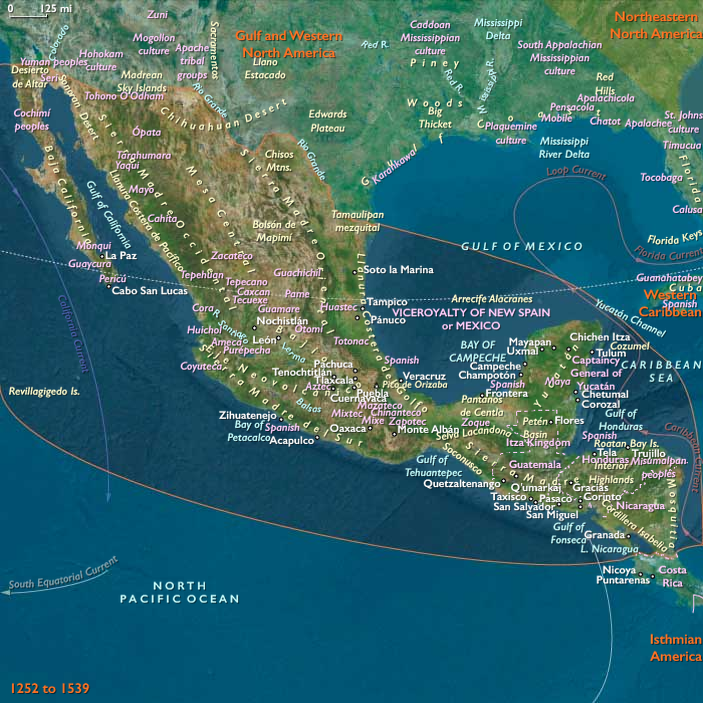
The regulations for colonial administration set forth by the Spanish king's Council of the Indies decrees that the natives are to be protected and converted to Christianity.
The colonies, however, are far from the seat of ultimate responsibility, and few administrators are guided by the humane spirit of those regulations.
The Roman Catholic Church, and particularly the Franciscan order, show some concern for the welfare of the natives, but on the whole, church efforts are inadequate to the situation.
The natives, nevertheless, find one effective benefactor among their Spanish oppressors.
Bartolome de las Casas, the first priest ordained in the West Indies, is outraged by the persecution of the natives.
He frees his own slaves, returns to Spain, and persuades the council to adopt stronger measures against enslaving the natives.
He makes one suggestion that he will later regret—that Africans, whom the Spaniards consider less than human, be imported to replace the natives as slaves.
In 1517 King Charles V (1516-56) grants a concession for exporting four thousand enslaved Africans to the Antilles.
Thus the slave trade begins, and will flourish for more than two hundred years.
The colonies, however, are far from the seat of ultimate responsibility, and few administrators are guided by the humane spirit of those regulations.
The Roman Catholic Church, and particularly the Franciscan order, show some concern for the welfare of the natives, but on the whole, church efforts are inadequate to the situation.
The natives, nevertheless, find one effective benefactor among their Spanish oppressors.
Bartolome de las Casas, the first priest ordained in the West Indies, is outraged by the persecution of the natives.
He frees his own slaves, returns to Spain, and persuades the council to adopt stronger measures against enslaving the natives.
He makes one suggestion that he will later regret—that Africans, whom the Spaniards consider less than human, be imported to replace the natives as slaves.
In 1517 King Charles V (1516-56) grants a concession for exporting four thousand enslaved Africans to the Antilles.
Thus the slave trade begins, and will flourish for more than two hundred years.
People
Groups
- Christians, Roman Catholic
- Franciscans, or Order of St. Francis
- Guaymí people
- Castilla de Oro
- Spain, Habsburg Kingdom of
- Spaniards (Latins)
- New Spain (Spanish colony)
- New Spain, Viceroyalty of
Topics
Commodoties
Subjects
Regions
Subregions
Years: 1396 - 1539
People
Groups
- Christians, Roman Catholic
- Franciscans, or Order of St. Francis
- Guaymí people
- Castilla de Oro
- Spain, Habsburg Kingdom of
- Spaniards (Latins)
- New Spain (Spanish colony)
- New Spain, Viceroyalty of
Topics
Commodoties
Subjects
Regions
Subregions