
Pech Merle: A Window into Prehistoric Art …
Years: 21645BCE - 19918BCE
Pech Merle: A Window into Prehistoric Art and Life
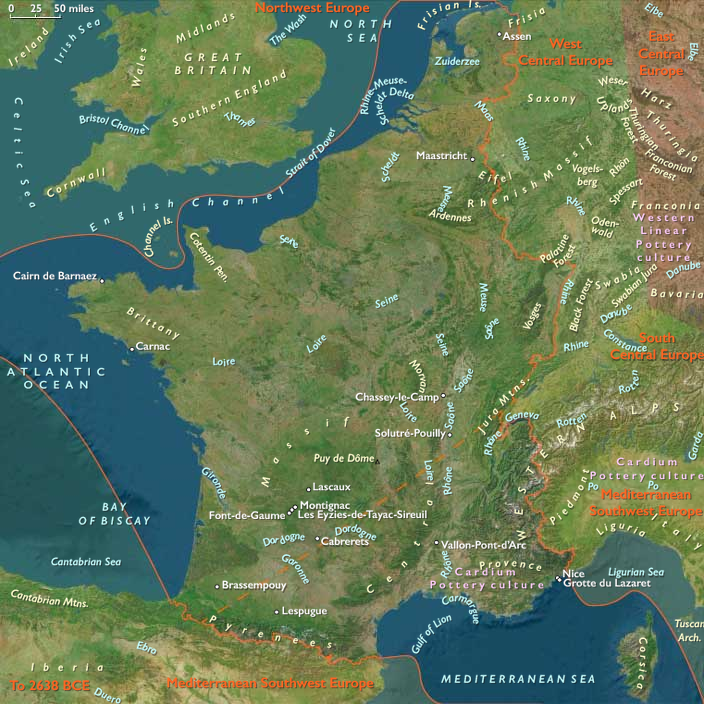
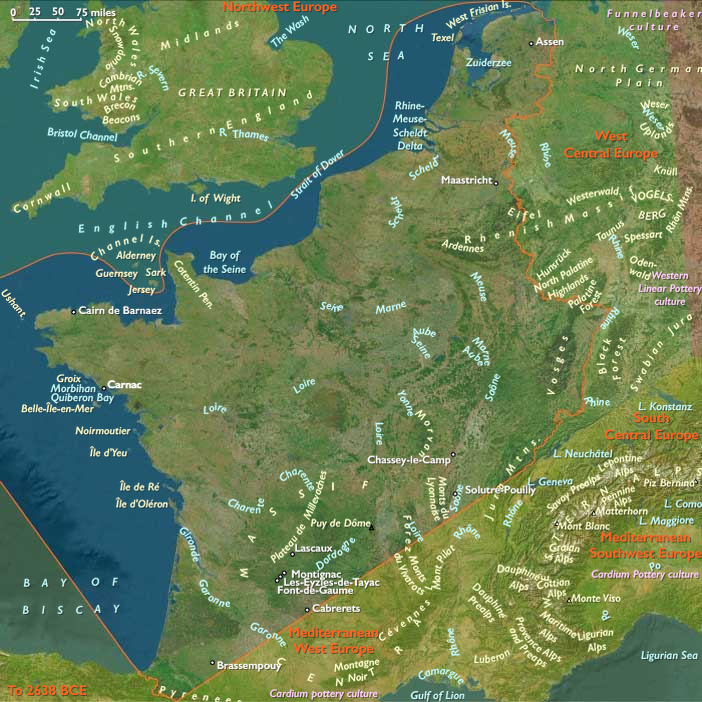
Located in the Lot département of the Midi-Pyrénées region, near Cabrerets, Pech Merle is one of the few prehistoric cave painting sites in France still open to the public. This vast cave system, extending more than a mile from its entrance, preserves some of the most stunning murals of the Upper Paleolithic period.
Prehistoric Art at Pech Merle
-
The cave features dramatic murals dating from the Gravettian culture (c. 25,000 BCE), though some engravings and paintings may be from the Magdalenian era (c. 16,000 BCE).
-
Seven chambers contain lifelike depictions of:
- Woolly mammoths
- Spotted horses and single-color horses
- Bovids and reindeer
- Human figures and handprints
-
One of Pech Merle’s most famous images is the "Spotted Horses" panel, depicting two horses with distinctive black spots, surrounded by hand stencils—a masterpiece of prehistoric symbolic expression.
Cave Use and Preservation
- During the Ice Age, the cave likely served as a refuge for prehistoric peoples, offering shelter from the Arctic climate and extreme conditions.
- A great river once flowed through the region, cutting underground passages that were later used by early humans.
- Children’s footprints, preserved in ancient clay half a mile underground, provide rare evidence of human movement deep within the caves.
A Sealed Time Capsule of Prehistoric Life
- Over time, earth movements and rain sealed the cave entrances, preserving the artwork in near-perfect condition until its discovery in the 20th century.
- Within a six-mile radius of Pech Merle, there are ten other caves with Upper Paleolithic art, though none are open to the public.
Pech Merle stands as a remarkable testament to early human creativity and survival, offering a rare glimpse into the artistic, cultural, and environmental realities of Ice Age Europe.
Locations
Groups
Topics
Commodoties
Subjects
Regions
Subregions
Related Events
Showing 10 events out of 69446 total
Years: 21645BCE - 19918BCE
Locations
Groups
Topics
Commodoties
Subjects
Regions
Subregions