
Part of the Gallic tribe of the …
Years: 331BCE - 331BCE
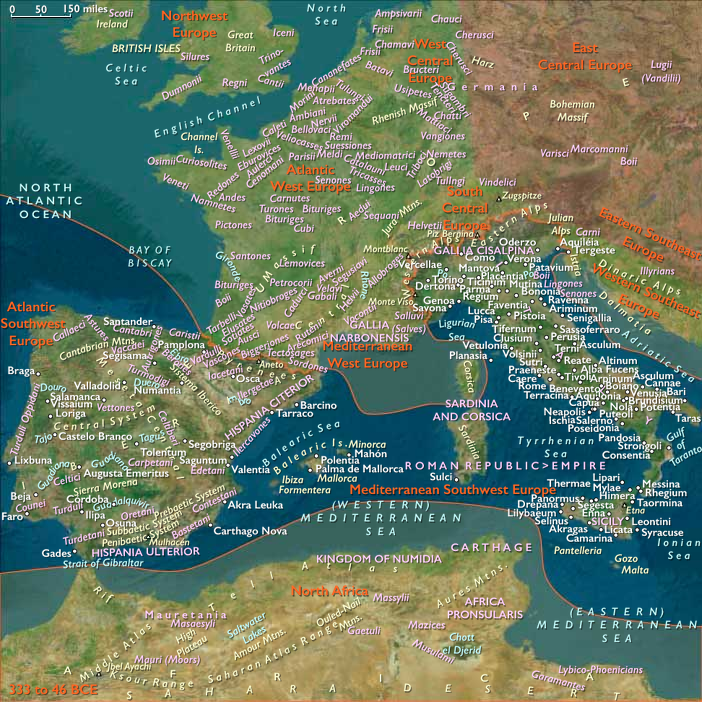
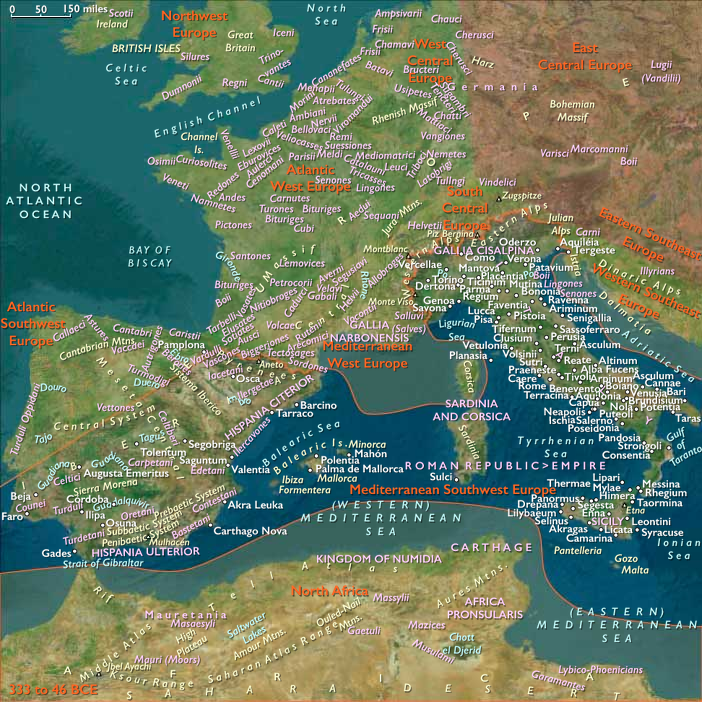
Part of the Gallic tribe of the Senones had in about 400 BCE had made their way over the Alps and settled on the east coast of Italy from Ariminum to Ancona, in the so-called ager Gallicus, and founded the town of Sena Gallica (Sinigaglia), which has become their capital.
They had invaded Etruria and besieged Clusium in 391 BCE.
The Clusines had appealed to Rome, whose intervention, accompanied by a violation of the law of nations, had led to war, the defeat of the Romans at the Allia (July 18, 390 BCE) and the capture of Rome.
The Senones have been engaged in hostilities with the Romans for decades, but in 331 BCE conclude a peace with Rome and enter upon a period of friendly relations which is to last the rest of the century.
Locations
Groups
Topics
Commodoties
Subjects
Regions
Subregions
Related Events
Showing 10 events out of 64377 total
Years: 331BCE - 331BCE
Locations
Groups
Topics
Commodoties
Subjects
Regions
Subregions