
General Mariano Paredes y Arrillaga leads an …
Years: 1846 - 1846
January
General Mariano Paredes y Arrillaga leads an army into Mexico City on January 2, 1846.
President José Joaquín de Herrera flees and Paredes, assuming the presidency on January 4, expels John Slidell from Mexico.
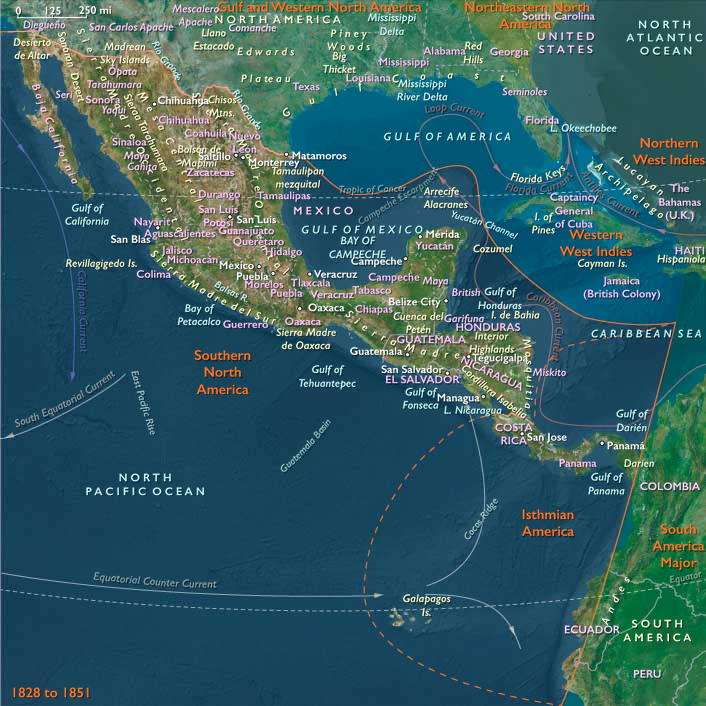
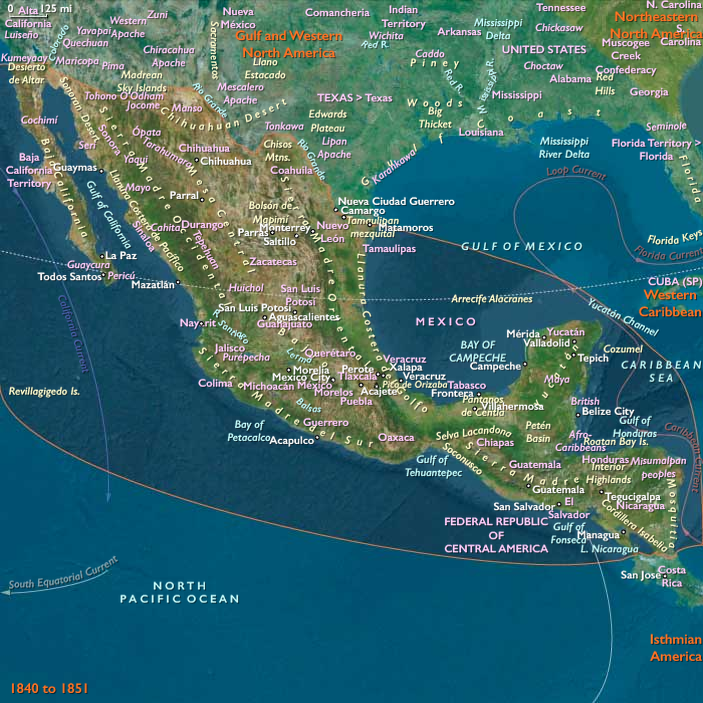
In November 1845, U.S. president James Polk had sent Slidell, a secret representative, to Mexico City with an offer to the Mexican government of twenty-five million dollars million for the Rio Grande border in Texas and Mexico's provinces of Alta California and Santa Fe de Nuevo México.
U.S. expansionists want California to thwart British ambitions in the area and to gain a port on the Pacific Ocean.
Polk had authorized Slidell to forgive the three million dollars owed to U.S. citizens for damages caused by the Mexican War of Independence and pay another twenty-five million to thirty million dollars in exchange for the two territories.
Mexico is not inclined nor able to negotiate.
In 1846 alone, the presidency will change hands four times, the war ministry six times, and the finance ministry sixteen times.
Mexican public opinion and all political factions agree that selling the territories to the United States would tarnish the national honor.
Mexicans who oppose direct conflict with the United States, including President José Joaquín de Herrera, are viewed as traitors.
Military opponents of de Herrera, supported by populist newspapers, considered Slidell's presence in Mexico City an insult.
When de Herrera considered receiving Slidell to settle the problem of Texas annexation peacefully, he was accused of treason and deposed.
After a more nationalistic government under General Paredes comes to power, it publicly reaffirms Mexico's claim to Texas; Slidell, convinced that Mexico should be "chastised", returns to the U.S.
Locations
People
Groups
- United States of America (US, USA) (Washington DC)
- Alta California
- Santa Fe de Nuevo México
- Mexico, Centralist Republic of
- Texas, Republic of
Topics
- Party System, Second (United States)
- Jacksonian Democracy (United States)
- “Manifest Destiny” and American Expansion; 1840-1851
- Mexican-American War
Commodoties
Subjects
Regions
Subregions
Years: 1846 - 1846
January
Locations
People
Groups
- United States of America (US, USA) (Washington DC)
- Alta California
- Santa Fe de Nuevo México
- Mexico, Centralist Republic of
- Texas, Republic of
Topics
- Party System, Second (United States)
- Jacksonian Democracy (United States)
- “Manifest Destiny” and American Expansion; 1840-1851
- Mexican-American War
Commodoties
Subjects
Regions
Subregions