
Palmyra, ('city of palm trees'), a long-prominent …
Years: 260 - 260
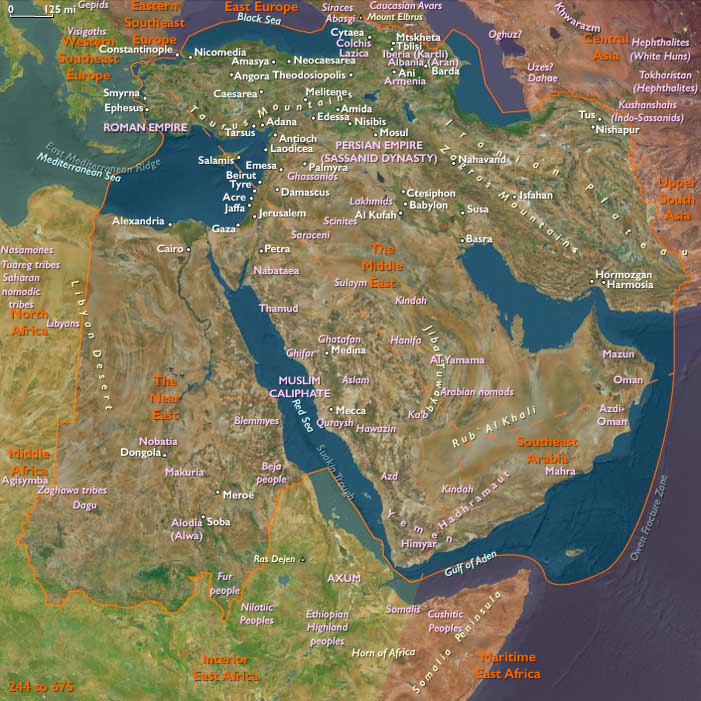
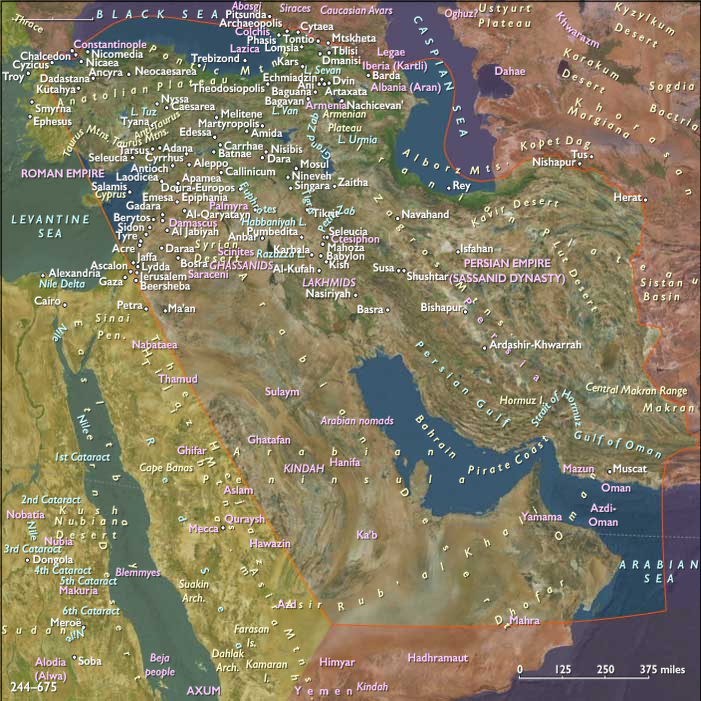
Palmyra, ('city of palm trees'), a long-prominent trading city built on an oasis along one of the main routes of east-west trade one hundred and forty miles (two hundred and thirty kilometers) northeast of Damascus, had come under Roman control by the time of the emperor Tiberius.
However, with the Sassanians having supplanted the Parthians in Persia and southern Mesopotamia in 227, the road to the Persian Gulf had soon been closed to Palmyrene trade.
Still relatively autonomous, Palmyra has grown increasingly wealthy and influential due to its tariff on the caravans passing through the city.
In return, the local rulers have policed caravan routes and the border area.
Instability around the Roman-controlled Mediterranean, coupled with the interruption of caravan trade with the East, had led the Romans to set up the personal rule here of the leading Palmyrene family of Septimius Odainath, or Odaenathus, a Roman citizen appointed governor of Syria Phoenice by Valerian.
The year is not known, but already in an inscription dated 258 he is styled "the illustrious consul our lord".
The defeat and captivity of Valerian in 260 has left the eastern provinces largely at the mercy of the Persians; the prospect of Persian supremacy is one that neither Palmyra nor its ruler have any reason to desire.
At first, it seems, Odaenathus had attempted to propitiate the Persian monarch Shapur.
However, when his gifts had been contemptuously rejected (Petr. Patricius, 10) he had decided to throw in his lot with the cause of Rome to prevent his city from falling under Sassanian control.
He thus abandons the neutrality that has made Palmyra's fortune for an active military policy that, while it will add to Odaenathus's fame, in a short time will bring his native city to its ruin.
Before Shapur’s army, returning home in 260 rich in plunder from its sack of Antioch, can cross the Euphrates, Odaenathus deals it a severe defeat, thereby curtailing further Persian aggression in Syria and Asia Minor.
Locations
People
Groups
- Arab people
- Gauls
- Jews
- Asia (Roman province)
- Cilicia (Roman province)
- Cappadocia (Roman province)
- Syria Palæstina, Roman province of (Judea, Samaria, and Idumea)
- Alamanni (Germanic tribal alliance)
- Persian Empire, Sassanid, or Sasanid
- Roman Empire (Rome): Non-dynastic
- Palmyrene Empire
- Gallic Empire
- Syrian people
Topics
- Classical antiquity
- Crisis of the Third Century (Roman Civil “War” of 235-84)
- Roman Gothic War, Second
- Roman-Persian War of 257-61
Subjects
Regions
Subregions
Years: 260 - 260
Locations
People
Groups
- Arab people
- Gauls
- Jews
- Asia (Roman province)
- Cilicia (Roman province)
- Cappadocia (Roman province)
- Syria Palæstina, Roman province of (Judea, Samaria, and Idumea)
- Alamanni (Germanic tribal alliance)
- Persian Empire, Sassanid, or Sasanid
- Roman Empire (Rome): Non-dynastic
- Palmyrene Empire
- Gallic Empire
- Syrian people
Topics
- Classical antiquity
- Crisis of the Third Century (Roman Civil “War” of 235-84)
- Roman Gothic War, Second
- Roman-Persian War of 257-61
Subjects
Regions
Subregions