
Paleo-Indians expand across the American continent around …
Years: 11277BCE - 9550BCE
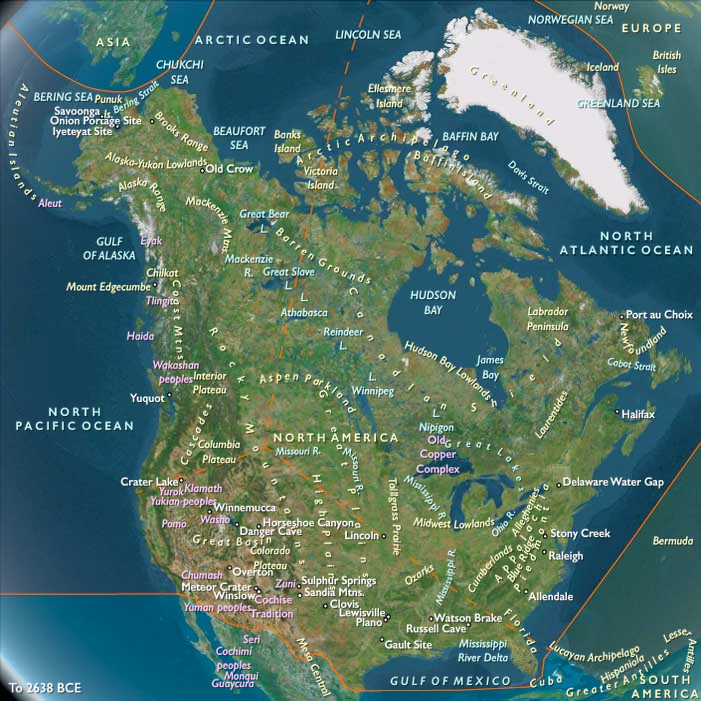
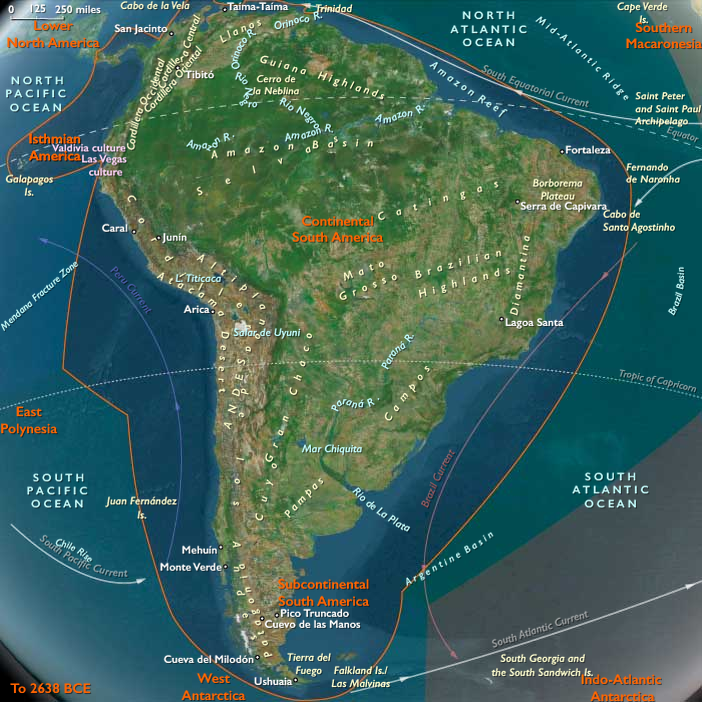
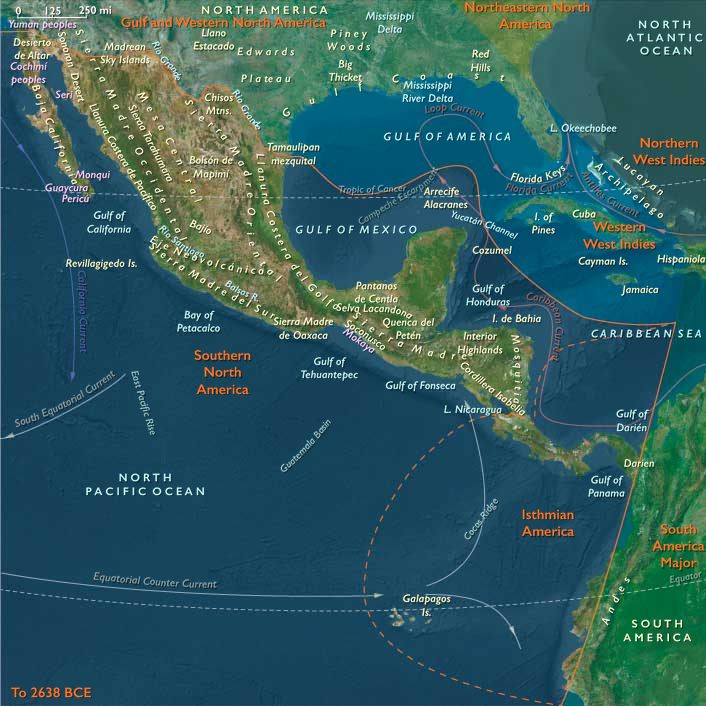
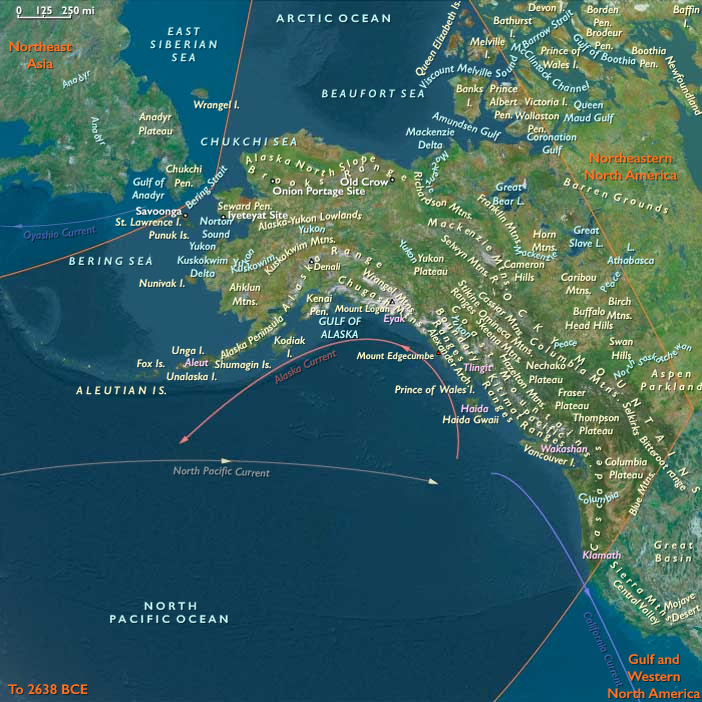
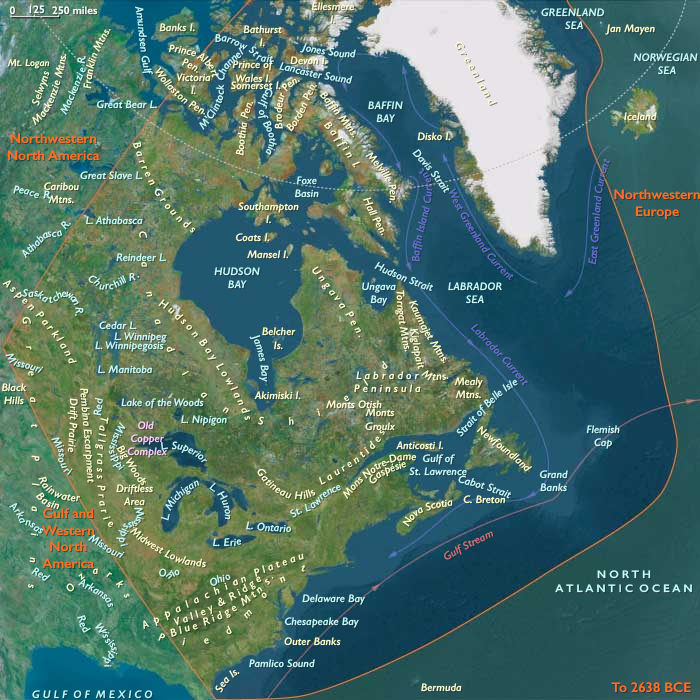
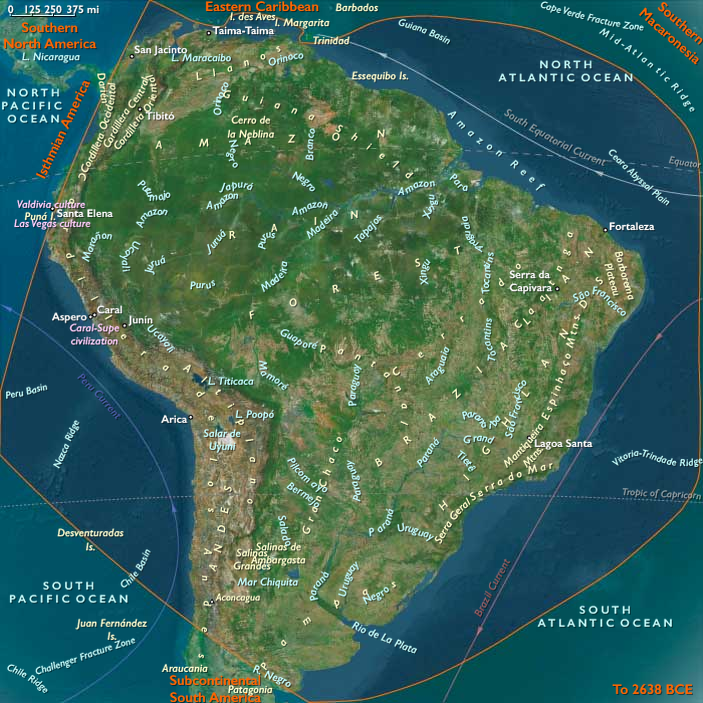
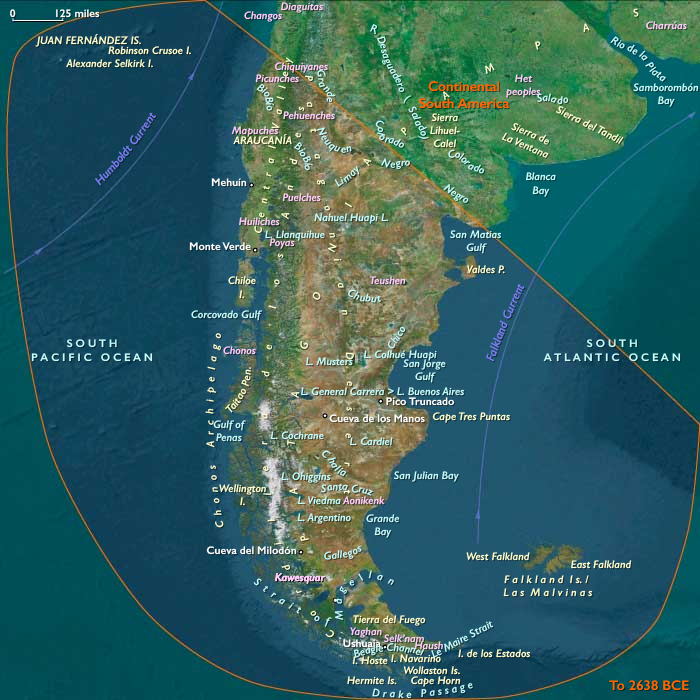
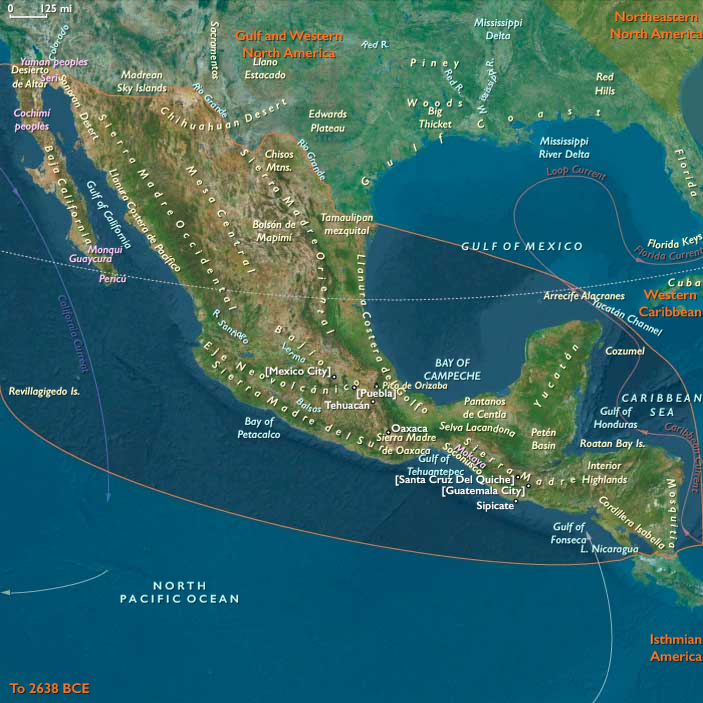
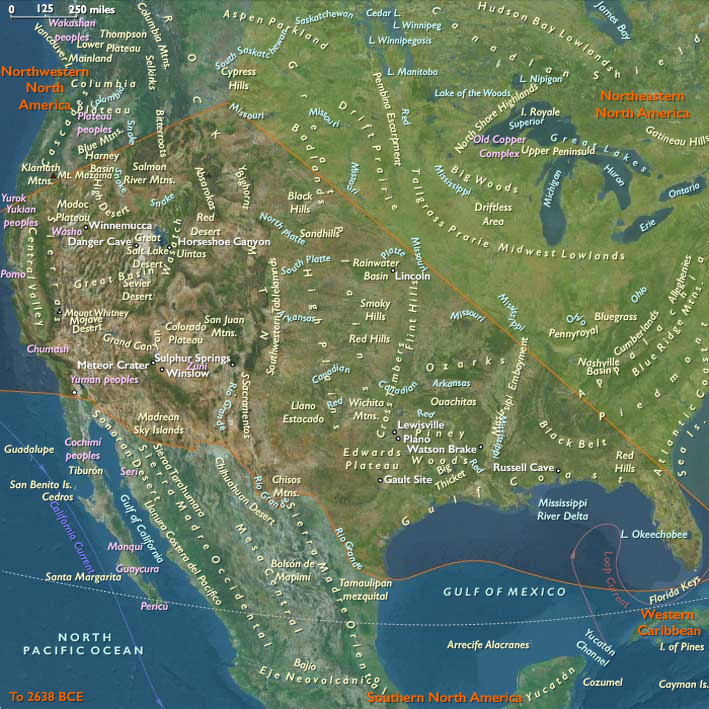
Paleo-Indians expand across the American continent around 13,000 years ago, with their hunting potentially contributing to megafaunal extinctions alongside climate change. The traditional 'Clovis First' theory placed initial human arrival at this time via the Beringia land bridge. However, mounting evidence suggests humans reached North America much earlier, possibly 15,000-23,000 years ago.
Two primary migration routes are proposed: an inland ice-free corridor between the Laurentide and Cordilleran ice sheets, and a Pacific coastal route using watercraft. Coastal archaeological evidence would be submerged under post-glacial sea level rise of up to 100 meters.
The timing remains hotly debated, but scholars agree on Central Asian origins and widespread continental habitation during the late glacial period (16,000-13,000 years ago), when warming climates following the Last Glacial Maximum (26,500-19,000 years ago) enabled accelerated deglaciation and population expansion.
Groups
Topics
- Paleolithic
- Pleistocene Epoch
- Last glacial period
- Lithic Stage (Americas)
- The Upper Paleolithic
- Allerød Oscillation
- Late Glacial Maximum
- Younger Dryas
- Preboreal Period
Commodoties
Subjects
Regions
Subregions
- Northwestern North America
- Northeastern North America
- South America Major
- South America Minor
- Southern North America
- Gulf and Western North America
Related Events
Showing 10 events out of 69399 total
Years: 11277BCE - 9550BCE
Groups
Topics
- Paleolithic
- Pleistocene Epoch
- Last glacial period
- Lithic Stage (Americas)
- The Upper Paleolithic
- Allerød Oscillation
- Late Glacial Maximum
- Younger Dryas
- Preboreal Period
Commodoties
Subjects
Regions
Subregions
- Northwestern North America
- Northeastern North America
- South America Major
- South America Minor
- Southern North America
- Gulf and Western North America