
Filters:
General Amherst, the British commander-in-chief in North …
Years: 1763 - 1763
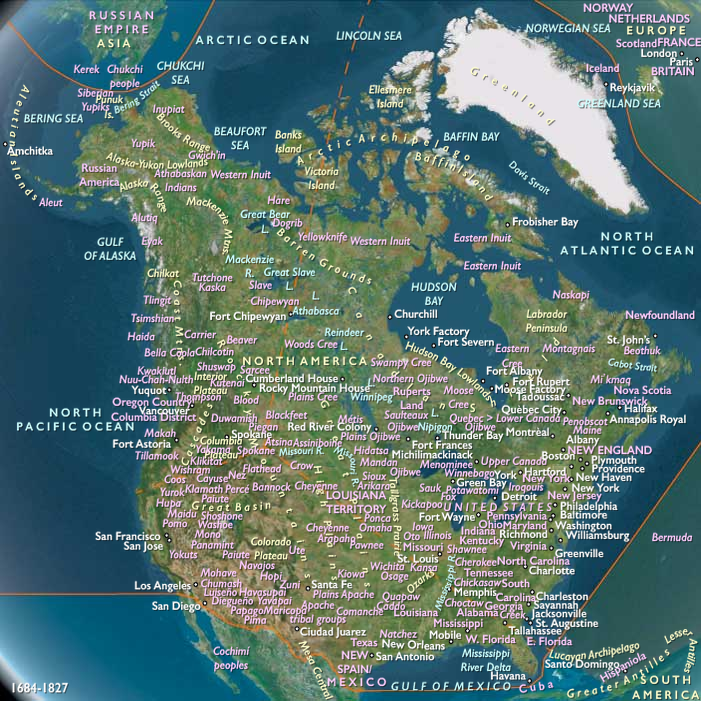
General Amherst, the British commander-in-chief in North America, is in overall charge of administering policy towards natives, which involves both military matters and regulation of the fur trade.
Amherst believes that with France out of the picture, the natives will have no other choice than to accept British rule.
He also believes that they are incapable of offering any serious resistance to the British Army; therefore, of the eight thousand troops under his command in North America, only about five hundred are stationed in the region where the war erupts.
Amherst and officers such as Major Henry Gladwin, commander at Fort Detroit, make little effort to conceal their contempt for the natives.
Natives involved in the uprising frequently complain that the British treat them no better than slaves or dogs.
Additional native resentment results from Amherst's decision in February 1761 to cut back on the gifts given to the natives.
Gift giving had been an integral part of the relationship between the French and the tribes of the pays d'en haut.
Following a native custom that carries important symbolic meaning, the French had given presents (such as guns, knives, tobacco, and clothing) to village chiefs, who in turn redistributed these gifts to their people.
By this process, the village chiefs gained stature among their people, and were thus able to maintain the alliance with the French.
Amherst, however, considers this process to be a form of bribery that is no longer necessary, especially since he is under pressure to cut expenses after the war with France.
Many natives regard this change in policy as an insult and an indication that the British look upon them as conquered people rather than as allies.
Amherst also begins to restrict the amount of ammunition and gunpowder that traders can sell to natives.
While the French had always made these supplies available, Amherst does not trust the natives, particularly after the "Cherokee Rebellion" of 1761, in which Cherokee warriors took up arms against their former British allies.
As the Cherokee war effort had collapsed because of a shortage of gunpowder, so Amherst hopes that future uprisings can be prevented by restricting gunpowder.
This creates resentment and hardship because gunpowder and ammunition are wanted by native men because it helps them to provide game for their families and skins for the fur trade.
Many natives begin to believe that the British are disarming them as a prelude to making war upon them.
Sir William Johnson, the Superintendent of the Indian Department, tries to warn Amherst of the dangers of cutting back on gifts and gunpowder, to no avail.
Amherst believes that with France out of the picture, the natives will have no other choice than to accept British rule.
He also believes that they are incapable of offering any serious resistance to the British Army; therefore, of the eight thousand troops under his command in North America, only about five hundred are stationed in the region where the war erupts.
Amherst and officers such as Major Henry Gladwin, commander at Fort Detroit, make little effort to conceal their contempt for the natives.
Natives involved in the uprising frequently complain that the British treat them no better than slaves or dogs.
Additional native resentment results from Amherst's decision in February 1761 to cut back on the gifts given to the natives.
Gift giving had been an integral part of the relationship between the French and the tribes of the pays d'en haut.
Following a native custom that carries important symbolic meaning, the French had given presents (such as guns, knives, tobacco, and clothing) to village chiefs, who in turn redistributed these gifts to their people.
By this process, the village chiefs gained stature among their people, and were thus able to maintain the alliance with the French.
Amherst, however, considers this process to be a form of bribery that is no longer necessary, especially since he is under pressure to cut expenses after the war with France.
Many natives regard this change in policy as an insult and an indication that the British look upon them as conquered people rather than as allies.
Amherst also begins to restrict the amount of ammunition and gunpowder that traders can sell to natives.
While the French had always made these supplies available, Amherst does not trust the natives, particularly after the "Cherokee Rebellion" of 1761, in which Cherokee warriors took up arms against their former British allies.
As the Cherokee war effort had collapsed because of a shortage of gunpowder, so Amherst hopes that future uprisings can be prevented by restricting gunpowder.
This creates resentment and hardship because gunpowder and ammunition are wanted by native men because it helps them to provide game for their families and skins for the fur trade.
Many natives begin to believe that the British are disarming them as a prelude to making war upon them.
Sir William Johnson, the Superintendent of the Indian Department, tries to warn Amherst of the dangers of cutting back on gifts and gunpowder, to no avail.
Locations
People
- Guyasuta
- Jeffery Amherst, 1st Baron Amherst
- Neolin
- Pontiac (Ottawa leader)
- William Johnson, 1st Baronet
Groups
- Iroquois (Haudenosaunee, also known as the League of Peace and Power, Five Nations, or Six Nations)
- Wyandot, or Wendat, or Huron people (Amerind tribe)
- Miami (Amerind tribe)
- Lenape or Lenni-Lenape (later named Delaware Indians by Europeans)
- Ojibwa, or Ojibwe, aka or Chippewa (Amerind tribe)
- Odawa, or Ottawa, people (Amerind tribe)
- Seneca (Amerind tribe)
- Mascouten (Amerind tribe)
- Kickapoo people (Amerind tribe)
- Potawatomi (Amerind tribe)
- Wea (Amerind tribe)
- Piankeshaw (Amerind tribe)
- Shawnees, or Shawanos (Amerind tribe)
- Ohio Country
- Illinois Country
- Britain, Kingdom of Great
- Mingo (Seneca-Cayuga Tribe of Oklahoma)
Topics
- North American Fur Trade
- Indian Trade
- Colonization of the Americas, British
- Seven Years' War
- Pontiac's War (Pontiac's Rebellion of Conspiracy)
Commodoties
Subjects
Regions
Subregions

Years: 1763 - 1763
Locations
People
- Guyasuta
- Jeffery Amherst, 1st Baron Amherst
- Neolin
- Pontiac (Ottawa leader)
- William Johnson, 1st Baronet
Groups
- Iroquois (Haudenosaunee, also known as the League of Peace and Power, Five Nations, or Six Nations)
- Wyandot, or Wendat, or Huron people (Amerind tribe)
- Miami (Amerind tribe)
- Lenape or Lenni-Lenape (later named Delaware Indians by Europeans)
- Ojibwa, or Ojibwe, aka or Chippewa (Amerind tribe)
- Odawa, or Ottawa, people (Amerind tribe)
- Seneca (Amerind tribe)
- Mascouten (Amerind tribe)
- Kickapoo people (Amerind tribe)
- Potawatomi (Amerind tribe)
- Wea (Amerind tribe)
- Piankeshaw (Amerind tribe)
- Shawnees, or Shawanos (Amerind tribe)
- Ohio Country
- Illinois Country
- Britain, Kingdom of Great
- Mingo (Seneca-Cayuga Tribe of Oklahoma)
Topics
- North American Fur Trade
- Indian Trade
- Colonization of the Americas, British
- Seven Years' War
- Pontiac's War (Pontiac's Rebellion of Conspiracy)
Commodoties
Subjects
Regions
Subregions