
Ottoman conquest has not meant the end …
Years: 1690 - 1690
Ottoman conquest has not meant the end of armed resistance on the part of the Slavic peoples.
Poor harvests and a rapacious nobility have frequently brought on local revolts by the reaya; in addition, individuals accused of crimes or protesting injustice would characteristically head for the hills or forests to live the life of the haiduk, or outlaw.
Both of these forms of resistance had increased from the seventeenth century, when the territorial expansion of the Ottoman Empire is reversed and Ottoman warriors withdrawing toward the core of the empire find themselves in growing competition with one another for inelastic resources.
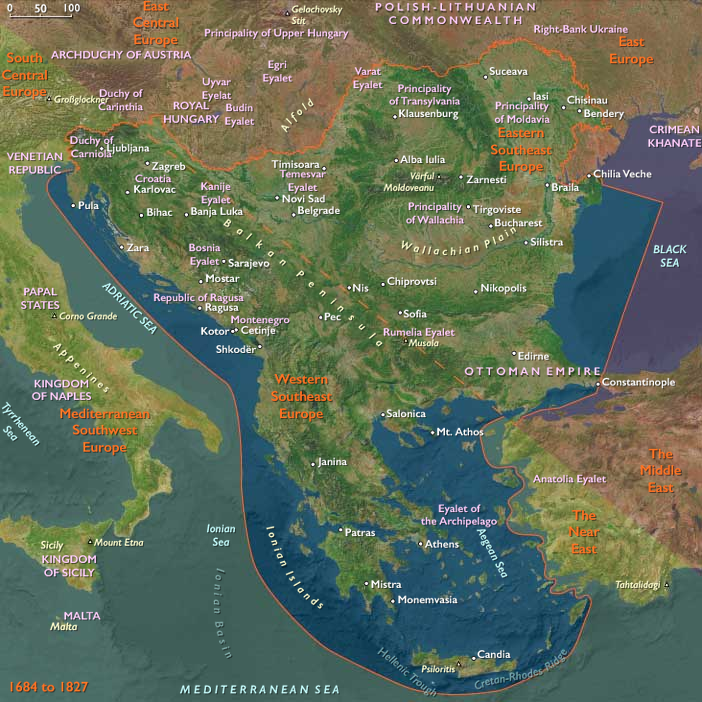
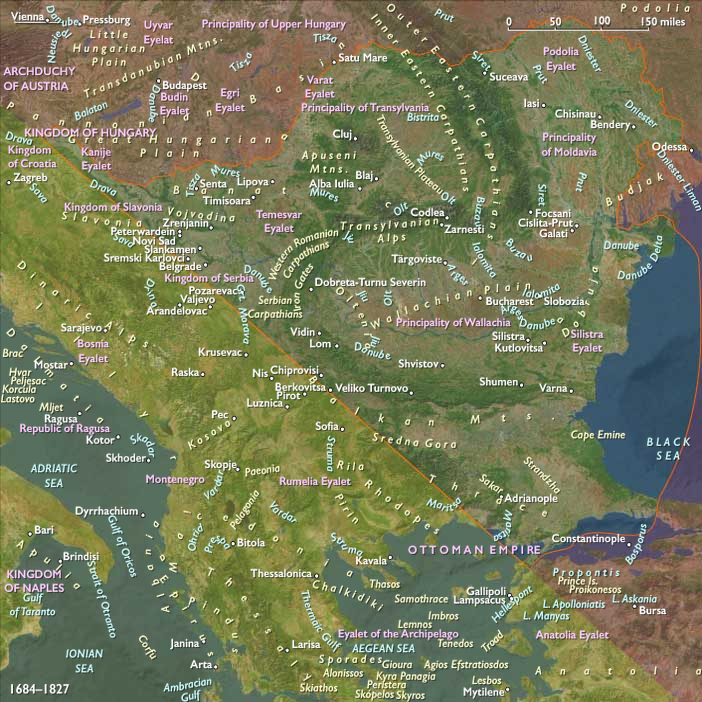
Christian forces have attempted to push the Turks from the Balkans from 1684 to 1689, inciting the Serbs to rebel against their Turkish overlords.
Armed uprisings by the peasantry are particularly common in northern areas such as the Morava River valley, where imperial control is weakest and the Janissaries least disciplined.
The greatest of these revolts takes place in 1690, when Serbs rise in support of the Austrian invasion.
The Habsburg forces, unable to sustain their advance, retreat back across the Sava, leaving the the Serbs south of the Sava River seriously exposed to Turkish reprisals.
Fearing these, the Serbian patriarch Arsenije III Carnojevic of Pec, a town in the south of present-day Serbia, leads a great migration of sixty thousand to seventy thousand families from “Old Serbia” and southern Bosnia across the Danube and Sava to ...
Locations
People
Groups
- Papal States (Republic of St. Peter)
- Venice, (Most Serene) Republic of
- Austria, Archduchy of
- Ottoman Empire
- Hungary, Royal
- Russia, Tsardom of
- Polish-Lithuanian Commonwealth (Commonwealth of the Two Nations)
- Habsburg Monarchy, or Empire
- Holy League (Great Turkish War)
Topics
Commodoties
Subjects
Regions
Subregions
Related Events
Showing 10 events out of 29283 total
Years: 1690 - 1690
Locations
People
Groups
- Papal States (Republic of St. Peter)
- Venice, (Most Serene) Republic of
- Austria, Archduchy of
- Ottoman Empire
- Hungary, Royal
- Russia, Tsardom of
- Polish-Lithuanian Commonwealth (Commonwealth of the Two Nations)
- Habsburg Monarchy, or Empire
- Holy League (Great Turkish War)
Topics
Commodoties
Subjects
Regions
Subregions