
Filters:
The Bloodless Surrender of Troyes and the …
Years: 1429 - 1429
The Bloodless Surrender of Troyes and the March to Reims (July 1429)
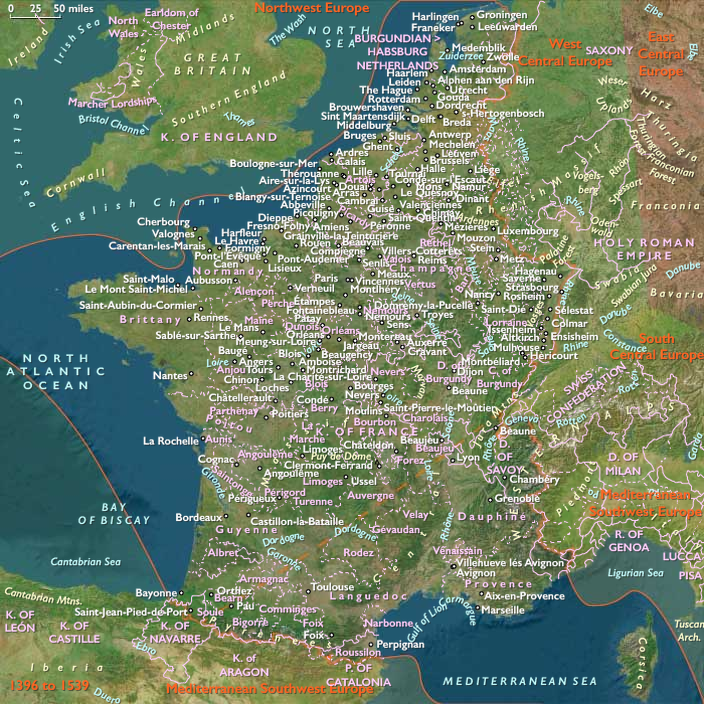
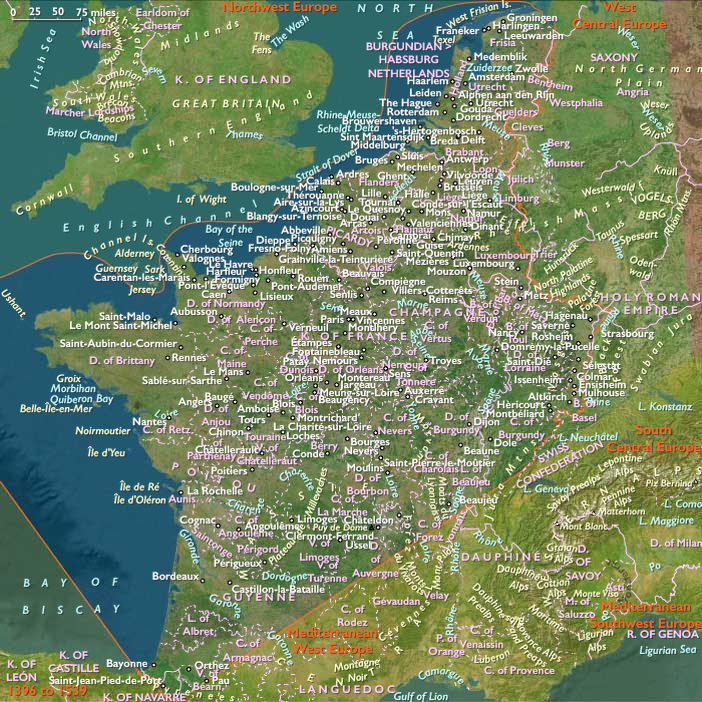
As Joan of Arc and the French army advanced toward Reims in July 1429, most towns along the route surrendered without resistance, recognizing the rising legitimacy of Charles VII. The only exception was Troyes, the city where the infamous 1420 Treaty of Troyes had attempted to disinherit Charles VII in favor of the English.
Initially hesitant to surrender, Troyes was in for a surprise: a local religious movement had inadvertently prepared the city for the arrival of Joan’s army.
I. The French Advance and Minimal Resistance
- Following the surrender of Auxerre on July 3, 1429, Joan and the French army continued northward.
- Most towns along the route returned to French allegiance without a fight, recognizing that English and Burgundian forces were in retreat.
- Troyes, however, initially resisted, likely because of its symbolic connection to the treaty that had sought to make Henry VI the king of France.
II. The French Army’s Food Shortage
- By the time they reached Troyes, Joan’s army was running dangerously low on food.
- However, they were unexpectedly saved by a wandering friar, Brother Richard.
- Brother Richard had been preaching in Troyes about the end of the world, and he had convinced local residents to plant beans, which had an early harvest.
- The French army arrived just as the beans were ripening, solving the food crisis.
III. The Siege and Surrender of Troyes (July 1429)
- Joan’s forces besieged Troyes for four days, but no major battle took place.
- After witnessing Joan’s determination and the strength of the French army, the city capitulated without bloodshed.
- The Treaty of Troyes had sought to strip Charles VII of his birthright, but now the same city accepted his rule, a symbolic reversal of English fortunes.
IV. Consequences: The Path to Reims Opens
- With Troyes secured, Joan and Charles VII’s army were free to march to Reims, where his long-awaited coronation would take place.
- The lack of resistance along the route demonstrated the crumbling authority of the English and their Burgundian allies.
The bloodless surrender of Troyes in July 1429 further validated Joan’s mission and ensured that Charles VII would soon be crowned at Reims, marking a turning point in the Hundred Years’ War.
Locations
People
Groups
- Normandy, Duchy of
- Burgundy, Duchy of
- Christians, Roman Catholic
- Scotland, Kingdom of
- France, (Valois) Kingdom of
- England, (Plantagenet, Lancastrian) Kingdom of
Commodoties
Subjects
Regions
Subregions
Years: 1429 - 1429
Locations
People
Groups
- Normandy, Duchy of
- Burgundy, Duchy of
- Christians, Roman Catholic
- Scotland, Kingdom of
- France, (Valois) Kingdom of
- England, (Plantagenet, Lancastrian) Kingdom of
Commodoties
Subjects
Regions
Subregions