
Orestes, the governor of Alexandria, clashes in …
Years: 415 - 415
Orestes, the governor of Alexandria, clashes in 415 with the young bishop of Alexandria, Cyril, who had been appointed shortly before Orestes.
Orestes steadfastly resists Cyril's agenda of ecclesiastical encroachment into secular prerogatives.
Cyril on one occasion, sends the grammaticus Hierax to secretly discover the content of an edict that Orestes is to promulgate on the mimes shows, which attract great crowds.
When the Jews, with whom Cyril has clashed before, discover the presence of Hierax, they riot, complaining that Hierax's presence is aimed at provoking them.
Orestes then has Hierax seized and publicly tortured in the theater.
The Jews of Alexandria according to Christian sources scheme against the Christians and kill many of them.
Cyril reacts and expels either all of the Jews, or else only the murderers, from Alexandria, actually exerting a power that belongs to the civil officer, Orestes.
Orestes is powerless, but nonetheless rejects Cyril's gesture of offering him a Bible, which would mean that the religious authority of Cyril would require Orestes' acquiescence in the bishop's policy.
Approximately five hundred monks, who reside in the mountains of Nitria, have meanwhile heard of the ongoing feud between the Governor and Bishop, and shortly thereafter descend into Alexandria, armed and prepared to fight alongside Cyril.
These monks' violence had already been used by Theophilus fifteen years earlier against the "Tall Brothers"; furthermore, it is said that Cyril had spent five years among them in ascetic training.
The monks, upon their arrival in Alexandria, quickly intercept Orestes' chariot in town and proceed to bombard and harass him, calling him a pagan idolater.
Orestes responds to such allegations by countering that he is actually a Christian, and had even been baptized by Atticus, the Bishop of Constantinople.
The monks pay little attention to Orestes’ claims of Christianity, and one of the monks, by the name of Ammonius, strikes Orestes in the head with a rock, which causes him to bleed profusely.
Orestes’ guards at this point flee for fear of their lives, but a nearby crowd of Alexandrians come to his aid, and Ammonius is subsequently secured and ordered to be tortured for his actions.
Ammonius dies upon excessive torture; following his death, Cyril orders that he henceforth be remembered as a martyr.
Orestes is known to seek the counsel of Hypatia, and a rumor spreads among the Christian community of Alexandria in which she is blamed for his unwillingness to reconcile with Cyril.
Therefore, a mob of Christians gathers, led by a reader (i.e., a minor cleric) named Peter whom Scholasticus calls a fanatic.
They kidnap Hypatia on her way home and take her to the "Church called Caesareum. They then completely stripped her, and then murdered her with tiles".
Socrates Scholasticus was hence interpreted as saying that, while she was still alive, Hypatia's flesh was torn off using oyster shells (tiles; the Greek word is ostrakois, which literally means "oystershells" but the word was also used for brick tiles on the roofs of houses and for pottery sherds).
Afterward, the men proceed to mutilate her, and finally burn her limbs.
This political assassination eliminates an important and powerful supporter of the Imperial Prefect, and leads Orestes to give up his struggle against Patriarch Cyril and leave Alexandria.
Modern historians think that Orestes had cultivated his relationship with Hypatia to strengthen a bond with the pagan community of Alexandria, as he had done with the Jewish one, to handle better the difficult political life of the Egyptian capital.
When news breaks of Hypatia's murder, it provokes great public denouncement, not only against Cyril, but against the whole Alexandrian Christian community.
Cyril, who, if not directly responsible, at least had done nothing to prevent the riots, is forced to acknowledge the authority of the civil government.
The departure soon afterward of many scholars marks the beginning of the decline of Alexandria as a major center of ancient learning.
Locations
People
Groups
- Jews
- Egypt (Roman province)
- Christianity, Nicene
- East, or Oriens, Praetorian prefecture of
- Roman Empire: Theodosian dynasty (Constantinople)
- Egypt, Diocese of
- Roman Empire, Western (Ravenna)
Topics
Subjects
Regions
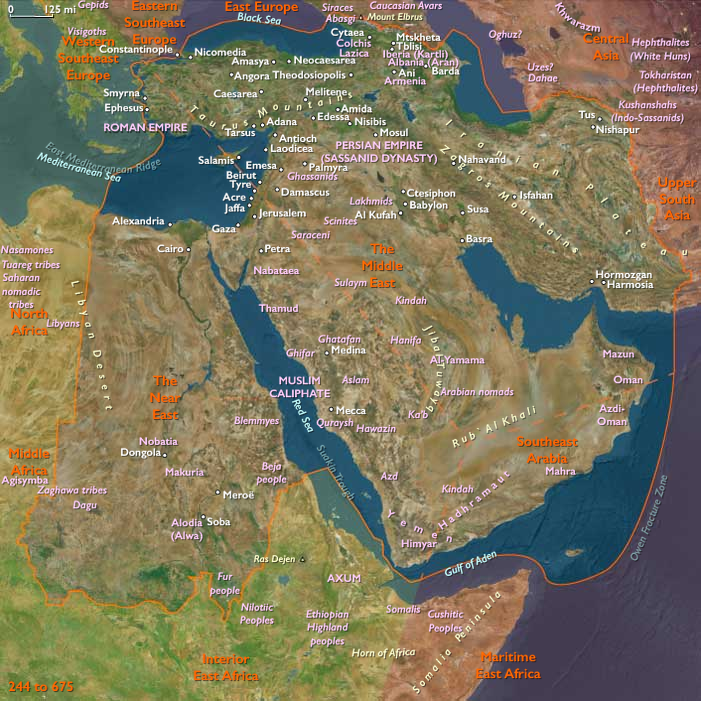
Subregions
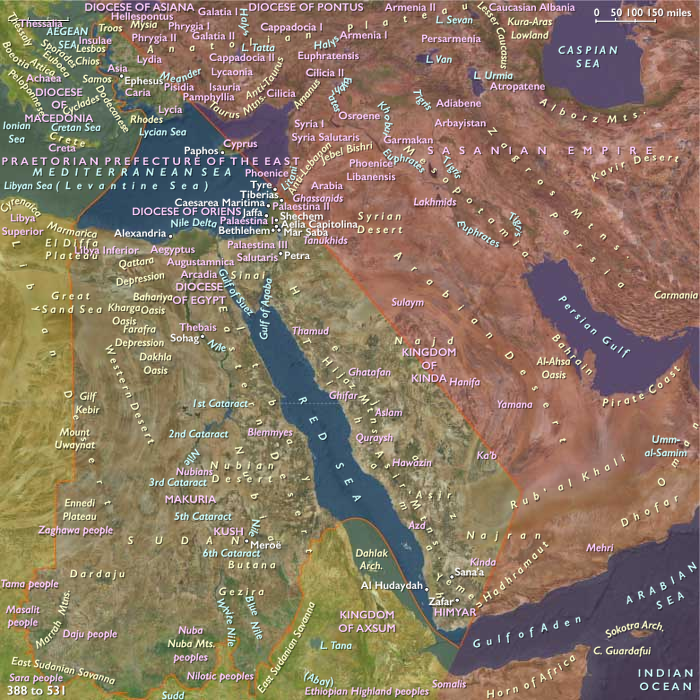
Related Events
Showing 10 events out of 59074 total
Years: 415 - 415
Locations
People
Groups
- Jews
- Egypt (Roman province)
- Christianity, Nicene
- East, or Oriens, Praetorian prefecture of
- Roman Empire: Theodosian dynasty (Constantinople)
- Egypt, Diocese of
- Roman Empire, Western (Ravenna)
Topics
Subjects
Regions
Subregions