
Frederick V, King of Denmark, is obligated …
Years: 1757 - 1757
September
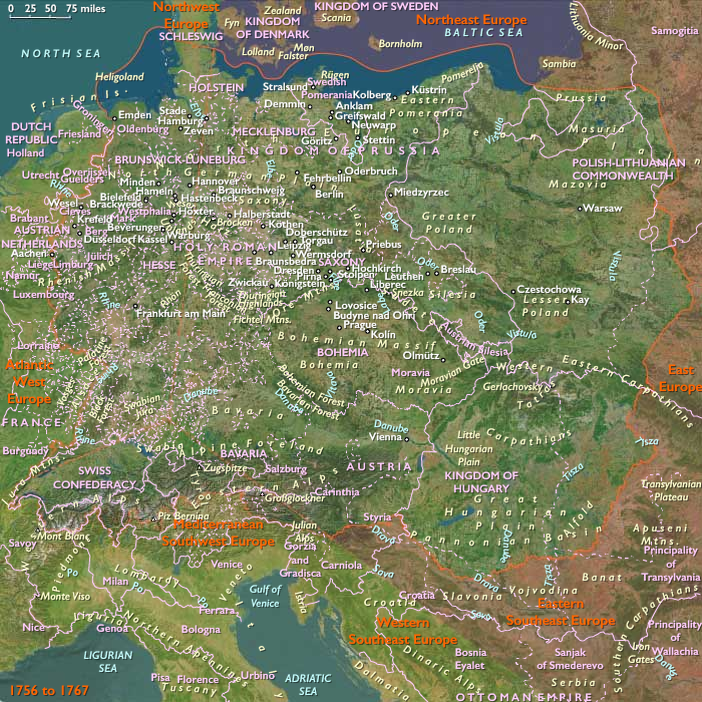
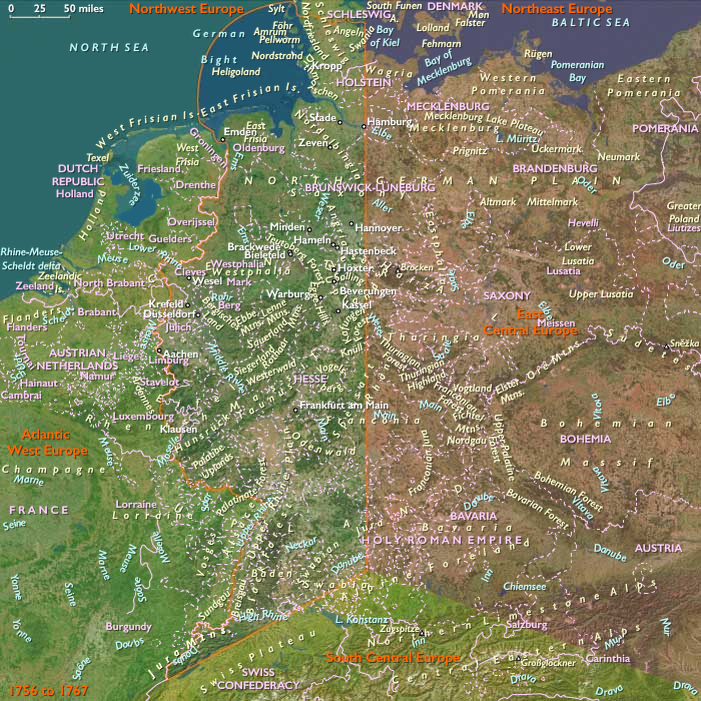
Frederick V, King of Denmark, is obligated by treaty to send troops to defend the remote Duchies of Bremen and Verden, both ruled in personal union with Britain and Hanover, if they are threatened by a foreign power.
As he is eager to preserve his country's neutrality, he attempts to broker an agreement between the two commanders.
Richelieu's army now occupies most of Hanover, having captured the capital in the autumn.
His orders are to smash the Army of Observation and occupy all of Hanover, before turning east and launching an attack on the Prussian fortress of Magdeburg.
Instead, Richelieu, believing his army is in no condition to attack Klosterzeven, is receptive to the proposal, as is Cumberland who is not optimistic about his own prospects.
On September 10 at Klosterzeven, the British and French sign the Convention of Klosterzeven, which secures the immediate end of hostilities.
The terms call for several conditions.
The national contingents from Brunswick and Hesse are to return to their homelands.
Half the Hanoverian force will be interned at Stade, while the remainder are to withdraw across the River Elbe.
Most of Hanover is to be under French occupation, except for a demilitarized zone.
The French will evacuate the Duchy of Bremen, provided the British withdraw their ships from the River Weser.
However, a number of issues are left vague and poorly defined, which will lead to later dispute and controversy.
Following the convention, the Army of Observation begins to disperse, though they are not required to surrender their weapons.
Some of the Hessians are nevertheless forcibly disarmed by French troops, in apparent violation of the terms.
As he is eager to preserve his country's neutrality, he attempts to broker an agreement between the two commanders.
Richelieu's army now occupies most of Hanover, having captured the capital in the autumn.
His orders are to smash the Army of Observation and occupy all of Hanover, before turning east and launching an attack on the Prussian fortress of Magdeburg.
Instead, Richelieu, believing his army is in no condition to attack Klosterzeven, is receptive to the proposal, as is Cumberland who is not optimistic about his own prospects.
On September 10 at Klosterzeven, the British and French sign the Convention of Klosterzeven, which secures the immediate end of hostilities.
The terms call for several conditions.
The national contingents from Brunswick and Hesse are to return to their homelands.
Half the Hanoverian force will be interned at Stade, while the remainder are to withdraw across the River Elbe.
Most of Hanover is to be under French occupation, except for a demilitarized zone.
The French will evacuate the Duchy of Bremen, provided the British withdraw their ships from the River Weser.
However, a number of issues are left vague and poorly defined, which will lead to later dispute and controversy.
Following the convention, the Army of Observation begins to disperse, though they are not required to surrender their weapons.
Some of the Hessians are nevertheless forcibly disarmed by French troops, in apparent violation of the terms.
Locations
People
- Armand de Vignerot du Plessis
- Frederick V of Denmark
- Frederick the Great
- George II of Great Britain
- Prince William, Duke of Cumberland
Groups
- Brunswick-Wolfenbüttel, Duchy of
- Denmark-Norway, Kingdom of
- Hesse-Kassel, Landgraviate of
- France, (Bourbon) Kingdom of
- Bremen-Verden
- Brunswick-Lüneburg, Electorate of (Electorate of Hanover)
- Prussia, Kingdom of
- Britain, Kingdom of Great
Topics
Subjects
Regions
Subregions
Related Events
Showing 10 events out of 26681 total
Years: 1757 - 1757
September
Locations
People
- Armand de Vignerot du Plessis
- Frederick V of Denmark
- Frederick the Great
- George II of Great Britain
- Prince William, Duke of Cumberland
Groups
- Brunswick-Wolfenbüttel, Duchy of
- Denmark-Norway, Kingdom of
- Hesse-Kassel, Landgraviate of
- France, (Bourbon) Kingdom of
- Bremen-Verden
- Brunswick-Lüneburg, Electorate of (Electorate of Hanover)
- Prussia, Kingdom of
- Britain, Kingdom of Great
Topics
Subjects
Regions
Subregions