
Japan after 1640 allows only Chinese and …
Years: 1641 - 1641
Japan after 1640 allows only Chinese and Dutch ships to visit the country.
The economy of Nagasaki suffers heavily without the annual Portuguese ships from Macao.
Government officials, who are looking for means to relocate the Dutch trading post, had forced the Dutch to move from Hirado to Dejima.
The island of Dejima is on the administrative level part of the city of Nagasaki.
The twenty-five local Japanese families that own the real estate receive an annual rent from the Dutch.
Dejima is a small island, one hundred and twenty by seventy-five meters, linked to the mainland by a small bridge, guarded on both sides, and with a gate on the Dutch side.
It contains houses for about twenty Dutchmen, warehouses, and accommodation for Japanese officials.
The Dutch are watched by a number of Japanese officials, gatekeepers, night watchmen, and a supervisor (otona) with about fifty subordinates.
There are a number of merchants for supplies and catering and about one hundred and fifty tsūji ("interpreters").
They all have to be paid by the VOC.
Like the city of Nagasaki, Dejima is under direct supervision of Edo by a governor (Nagasaki bugyō).
Every Dutch ship that arrives in Dejima is inspected, and sails are seized until that ship is set to leave.
Religious books and weapons are sealed and confiscated.
No religious services are allowed on the island.
Despite the financial burden of the isolated outpost on Dejima, the trade with Japan is very profitable for the VOC, initially yielding profits of fifty percent or more.
At this time, the Dutch mainly trade in silk, cotton, and materia medica from China and India.
Locations
Groups
- Chinese Empire, Ming Dynasty
- Netherlands, United Provinces of the (Dutch Republic)
- Japan, Tokugawa, or Edo, Period
- India, Dutch
- Dutch East India Company (Vereenigde Oostindische Compagnie or VOC in Dutch, literally "United East Indies Company")
Commodoties
Subjects
Regions
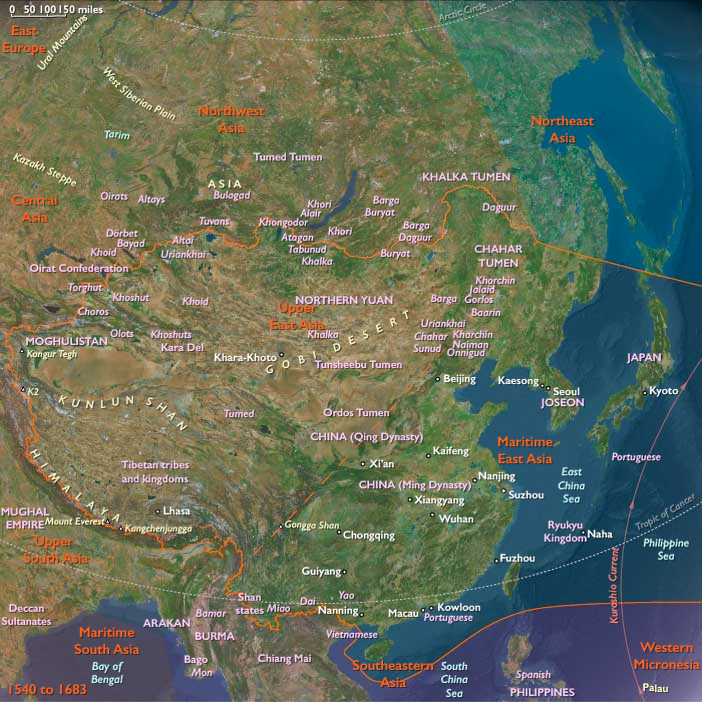
Subregions
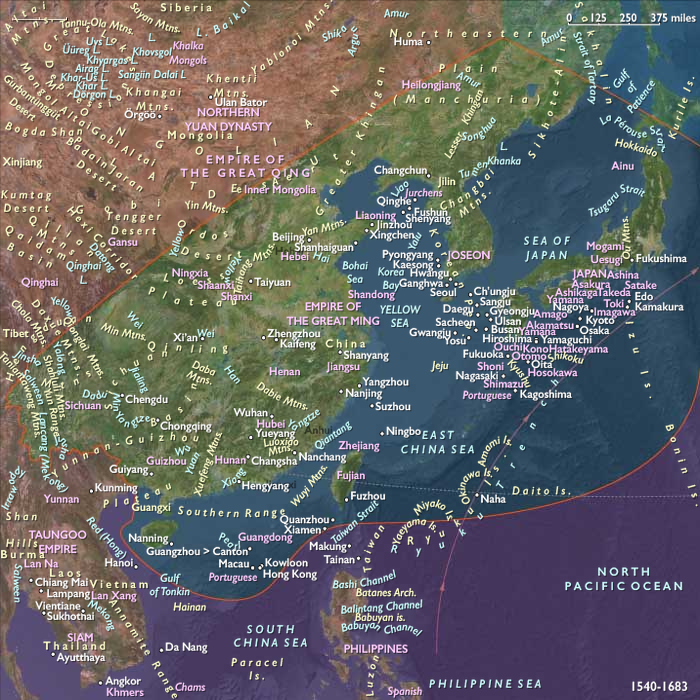
Related Events
Showing 10 events out of 32175 total
Years: 1641 - 1641
Locations
Groups
- Chinese Empire, Ming Dynasty
- Netherlands, United Provinces of the (Dutch Republic)
- Japan, Tokugawa, or Edo, Period
- India, Dutch
- Dutch East India Company (Vereenigde Oostindische Compagnie or VOC in Dutch, literally "United East Indies Company")
Commodoties
Subjects
Regions
Subregions