
East Melanesia (820–1971 CE): Interactions, Colonization, and …
Years: 820 - 1971
East Melanesia (820–1971 CE): Interactions, Colonization, and Independence
Political and Military Developments
Chiefdoms and Inter-Island Alliances
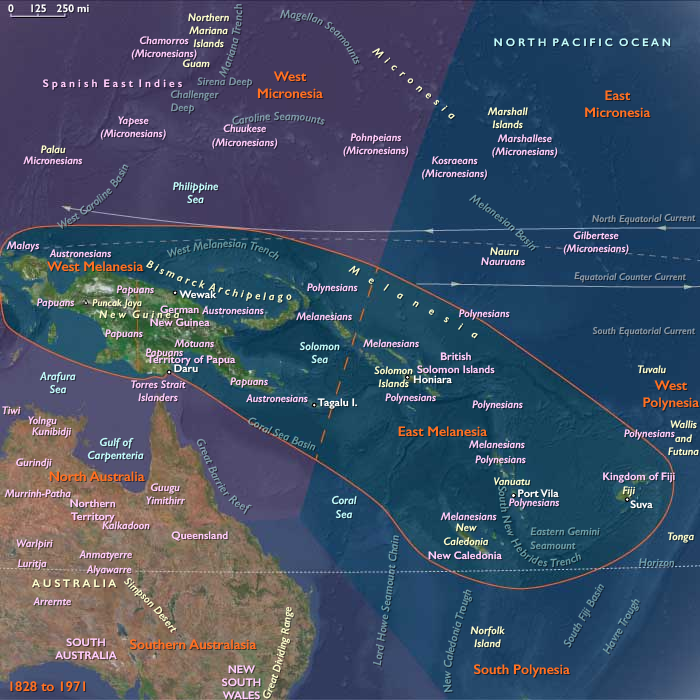
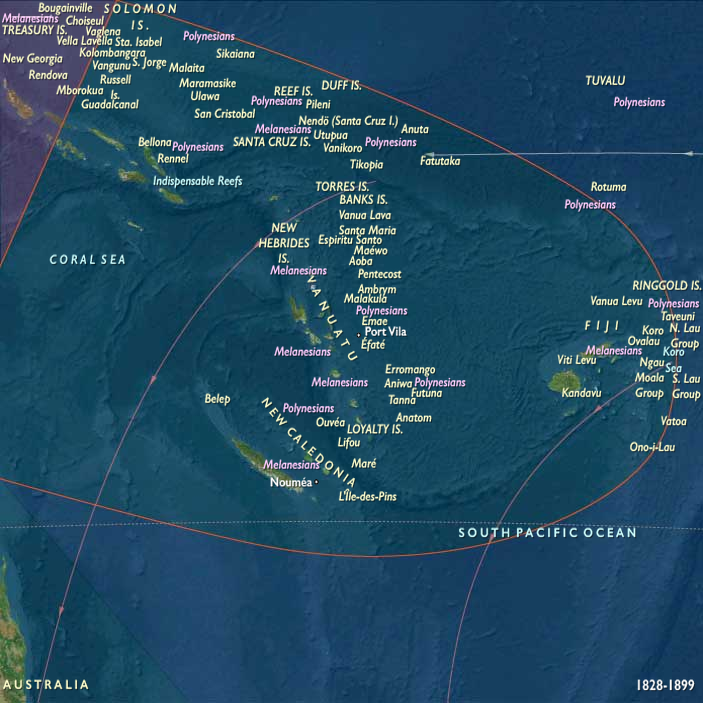
From 820 CE onward, East Melanesia experienced significant growth of complex chiefdoms, notably in Fiji, Vanuatu, and the eastern Solomon Islands. These chiefdoms formed intricate networks of alliances and rivalries, reflecting advanced political organization and military strategies.
European Contact and Colonization
European explorers, beginning in the 17th century, profoundly impacted East Melanesia. Initial exploration was followed by colonization, particularly by British and French powers. New Caledonia became a French colony in 1853, while Fiji was ceded to Britain in 1874, and Vanuatu was jointly administered by Britain and France from 1906 as the New Hebrides Condominium.
Road to Independence
During the 20th century, nationalist movements intensified across East Melanesia. Fiji gained independence in 1970, and later Vanuatu in 1980, highlighting significant shifts towards self-governance and regional sovereignty.
Economic and Technological Developments
Agricultural Innovation and Trade
Agricultural techniques continued evolving, with innovations in crop diversification, cultivation methods, and trade expansion. Copra (dried coconut meat), sandalwood, and sugar became significant economic commodities, fostering regional and global trade.
Technological Integration and Modernization
European colonization introduced new technologies, including metal tools, firearms, and improved shipbuilding techniques. These advancements altered economic practices, transportation, and military dynamics within the region.
Cultural and Artistic Developments
Syncretism and Cultural Adaptation
Cultural traditions adapted and syncretized indigenous Melanesian practices with European influences. Artistic expression, including traditional carvings, dances, and music, incorporated external elements, reflecting evolving cultural identities.
Preservation of Indigenous Traditions
Despite colonial pressures, many indigenous cultural traditions were preserved and revitalized. Ceremonial practices, storytelling, and traditional knowledge systems remained critical components of community cohesion and identity.
Social and Religious Developments
Impact of Christianity
Missionary activities beginning in the 19th century profoundly reshaped religious landscapes, introducing Christianity widely throughout East Melanesia. This led to the blending of indigenous religious practices with Christian doctrines.
Social Changes and Community Structures
Colonialism significantly influenced social structures, introducing Western legal systems, education, and governance models. Nevertheless, traditional community organization, chiefly hierarchies, and kinship networks continued playing vital roles.
Long-Term Consequences and Historical Significance
From 820 to 1971 CE, East Melanesia underwent transformative changes through internal dynamics, external influences, and colonization. The resulting synthesis of traditional and introduced elements profoundly shaped contemporary political structures, economic foundations, cultural identities, and social systems, laying critical groundwork for the post-colonial era.
Groups
- Fiji
- Solomon Islands
- New Hebrides
- Christians, Roman Catholic
- Anglicans (Episcopal Church of England)
- London Missionary Society
- Britain (United Kingdom of Great Britain and Ireland)
- France, Second Empire of
- New Caledonia and Dependencies (French overseas Territory)
- Fiji, Kingdom of
- France (French republic); the Third Republic
- Fiji, Crown Colony of
- New Hebrides
- Solomon Islands (German protectorate)
- Solomon Islands (British protectorate)
- New Hebrides
- Britain (United Kingdom of Great Britain and Northern Ireland)
- France (French republic); the Fourth Republic
- France (French republic); the Fifth Republic
- Fiji, Dominion of
Topics
Commodoties
Subjects
Regions
Subregions
Years: 820 - 1971
Groups
- Fiji
- Solomon Islands
- New Hebrides
- Christians, Roman Catholic
- Anglicans (Episcopal Church of England)
- London Missionary Society
- Britain (United Kingdom of Great Britain and Ireland)
- France, Second Empire of
- New Caledonia and Dependencies (French overseas Territory)
- Fiji, Kingdom of
- France (French republic); the Third Republic
- Fiji, Crown Colony of
- New Hebrides
- Solomon Islands (German protectorate)
- Solomon Islands (British protectorate)
- New Hebrides
- Britain (United Kingdom of Great Britain and Northern Ireland)
- France (French republic); the Fourth Republic
- France (French republic); the Fifth Republic
- Fiji, Dominion of
Topics
Commodoties
Subjects
Regions
Subregions