
Hilary of Poitiers: Defender of Nicene Christianity …
Years: 356 - 356
Hilary of Poitiers: Defender of Nicene Christianity and Opponent of Arianism (c. 300–368 CE)
Hilary of Poitiers, born in Poitiers at the end of the 3rd century CE, was a highly educated pagan aristocrat who, after extensive study of the Old and New Testament, converted to Christianity, along with his wife and daughter (traditionally named Saint Abra). His deep learning, including a rare knowledge of Greek for a Western Christian of the time, would make him one of the most influential theologians of the 4th century CE, particularly in the fight against Arianism.
1. Hilary Becomes Bishop of Poitiers (c. 353 CE)
- Around 353 CE, the citizens of Poitiers, impressed by his wisdom and character, unanimously elected him bishop, despite the fact that he was still married (clerical celibacy was not universally required at this time).
- His tenure came at a critical moment when Arianism was spreading rapidly in the Western Church, largely due to the support of Emperor Constantius II.
- Recognizing the threat to Nicene Christianity, Hilary became one of the leading defenders of the doctrine of the Trinity.
2. Hilary’s Opposition to Arianism and Imperial Persecution
- One of Hilary’s first actions as bishop was to organize the excommunication of key Arian leaders, including:
- Saturninus, the Arian bishop of Arles.
- Ursacius and Valens, two of the most influential Arian theologians and imperial supporters.
- Around 355 CE, he wrote a letter to Emperor Constantius II, known as Ad Constantium Augustum liber primus, denouncing the emperor’s role in persecuting Nicene Christians.
- Instead of achieving reconciliation, his defiance led to his exile.
3. Exile to Phrygia and Writings on the Trinity (356–360 CE)
- At the Synod of Béziers (356 CE), called by Constantius II to settle the Arian controversy, Hilary was condemned and exiled to Phrygia (modern-day Turkey), along with Rhodanus, bishop of Toulouse.
- During his nearly four years in exile, Hilary used the time to write extensively, producing:
- De Trinitate – A detailed theological work defending the doctrine of the Holy Trinity, refuting Arian Christology.
- De Synodis – A historical account of the Arian controversy, attempting to clarify the theological positions of different factions.
- Hymns – He is one of the first Latin hymn writers, using poetry to convey orthodox doctrine.
4. Legacy: Defender of Orthodoxy and Later Recognition as a Church Father
- Eventually, Hilary was recalled from exile and continued his fight against Arianism until his death around 368 CE.
- His writings and theological contributions significantly influenced later Church doctrine, earning him the title “Athanasius of the West” for his staunch defense of Nicene Christianity.
- He was later recognized as a Doctor of the Church, and his legacy as a defender of Trinitarian orthodoxy remains influential in Christian theology.
Hilary’s intellectual depth, theological rigor, and resistance to imperial interference in Church matters made him one of the most important figures in the Arian controversy, securing his place as one of the great Church Fathers of Late Antiquity.
Locations
People
Groups
- Gallia Narbonensis (Roman province)
- Gallia Aquitania (Roman province)
- Christianity, Arian
- Gaul, Diocese of
- Christianity, Nicene
- Roman Empire: Constantinian dynasty (Constantinople)
- Gaul, Praetorian prefecture of
- Christians, Roman Catholic
Topics
Subjects
Regions
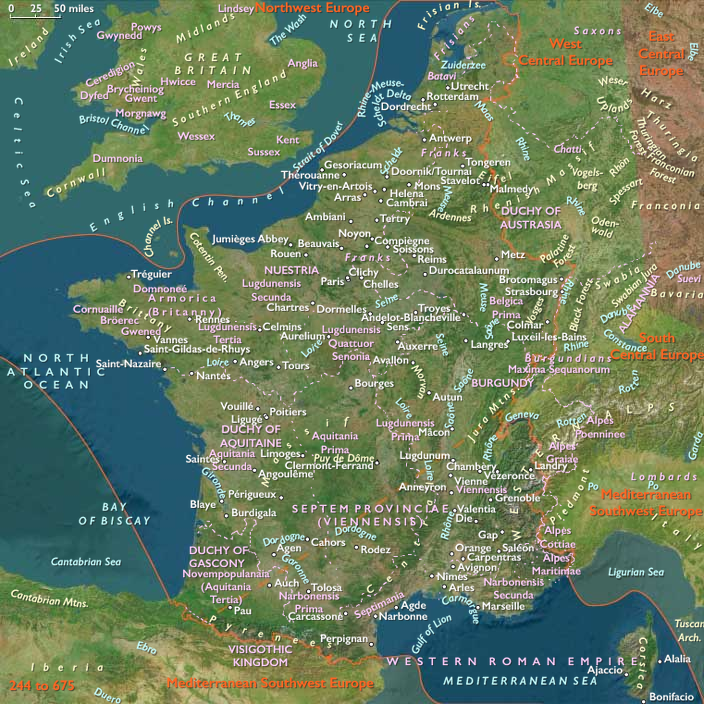
Subregions
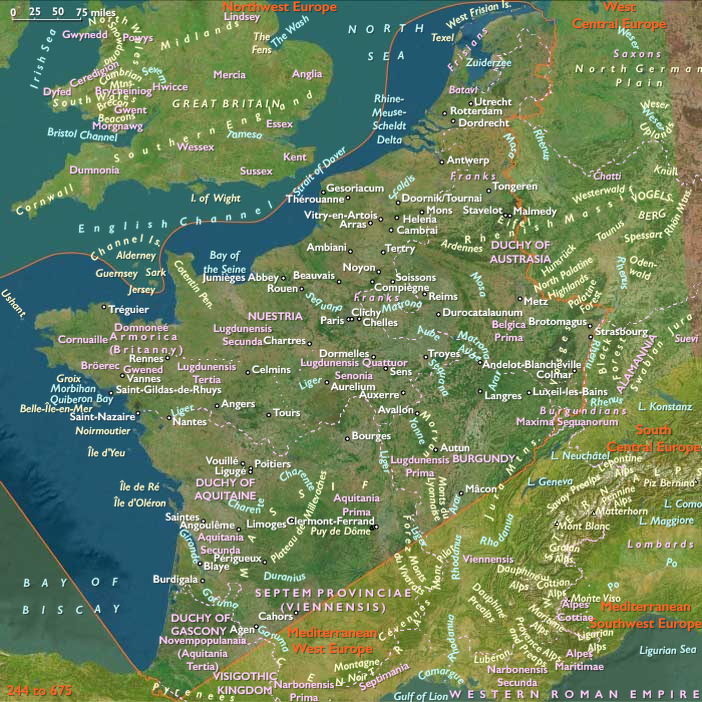
Related Events
Showing 10 events out of 59752 total
Years: 356 - 356
Locations
People
Groups
- Gallia Narbonensis (Roman province)
- Gallia Aquitania (Roman province)
- Christianity, Arian
- Gaul, Diocese of
- Christianity, Nicene
- Roman Empire: Constantinian dynasty (Constantinople)
- Gaul, Praetorian prefecture of
- Christians, Roman Catholic
Topics
Subjects
Regions
Subregions