
One group of nomadic Ghuzz, or Oguz, …
Years: 991 - 991
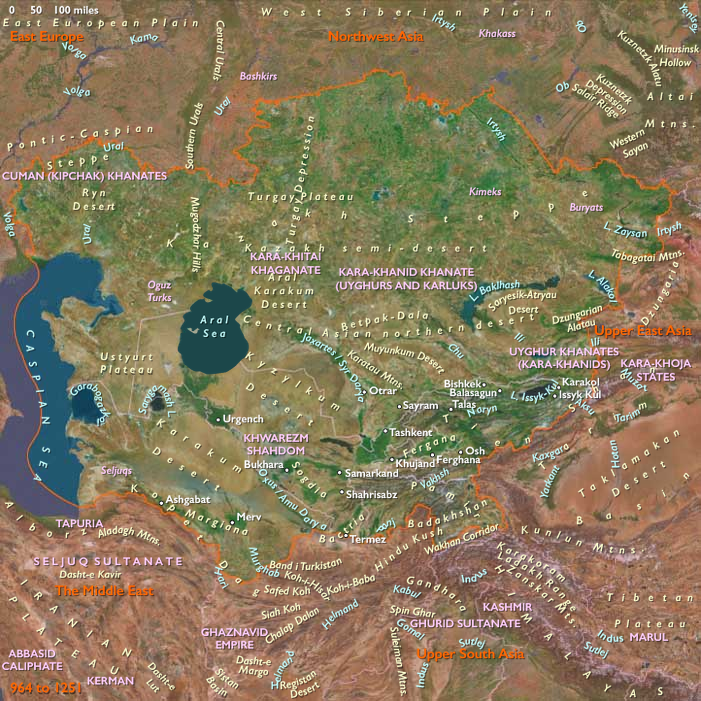
One group of nomadic Ghuzz, or Oguz, Turkmen tribes, led by a chief named Seljuq, had during the tenth-century migrations of the Turkish peoples from Central Asia and southeast Russia split off from the bulk of the Tokuz-Oghuz, a confederacy of nine clans long settled between the Aral and Caspian Sea, and in 985 set up camp on the right bank of the lower Syr Darya (Jaxartes), in the direction of Jend, near Kzyl Orda in present day south-central Kazakhstan.
Here, in 985, Seljuq had converted to Islam.
The biblical names of his four sons—Mikâîl (Michael), Isrâîl (Israel), Mûsâ (Moses), and Yûnus (Jonah)—suggest previous acquaintance with either Khazar Judaism or Nestorian Christianity.
According to some sources, Seljuq had begun his career as an officer in the Khazar army.
The Seljuq clan has played a part in the frontier defense forces of the Iranian Samanid dynasty, which is now on the verge of collapse.
Locations
Groups
- Persian people
- Jews
- Christians, Eastern (Diophysite, or “Nestorian”) (Church of the East)
- Oghuz Turks
- Islam
- Muslims, Sunni
- Muslims, Shi'a
- Oguz Yabgu State
- Samanid dynasty
- Khazar Khaganate
- Kara-Khanid Khanate
- Ghaznavids
- Turkmen people
Commodoties
Subjects
Regions
Subregions
Years: 991 - 991
Locations
Groups
- Persian people
- Jews
- Christians, Eastern (Diophysite, or “Nestorian”) (Church of the East)
- Oghuz Turks
- Islam
- Muslims, Sunni
- Muslims, Shi'a
- Oguz Yabgu State
- Samanid dynasty
- Khazar Khaganate
- Kara-Khanid Khanate
- Ghaznavids
- Turkmen people
Commodoties
Subjects
Regions
Subregions