
One Athanasius, who seems to have been …
Years: 319 - 319
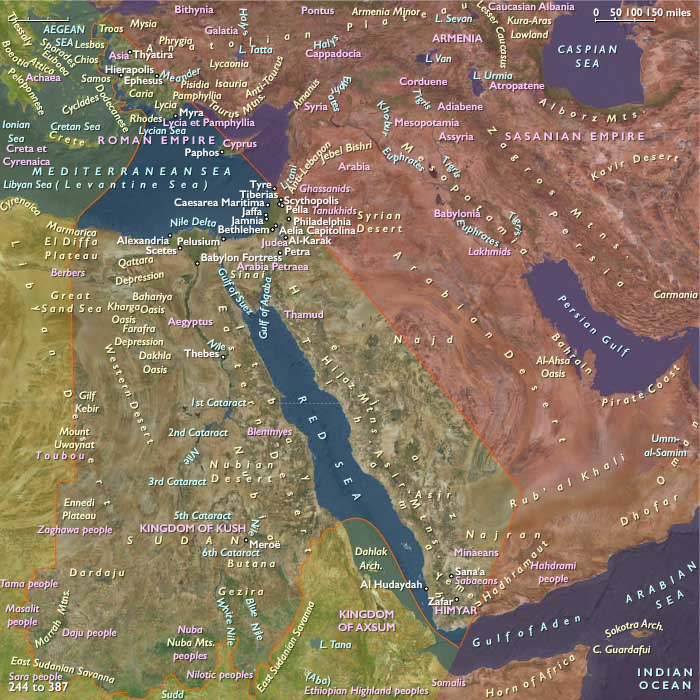
One Athanasius, who seems to have been brought early in life under the immediate supervision of the ecclesiastical authorities of his native Alexandria, is educated classically and theologically here and ordained deacon and appointed secretary to Bishop Alexander.
Here, in the intellectual, moral, and political center of the ethnically diverse Greco-Roman world, he articulates in around 318 the orthodox doctrine of redemption in an early work, On the Incarnation of the Word.
A presbyter named Arius comes into a direct conflict in about 319, with Alexander.
Arius appears to have approached Alexander for what he felt were misguided or heretical teachings being taught by the bishop.
Arius’ theological views appear to have been firmly rooted in Alexandrian Christianity, and his Christological views are certainly not at all radical.
He embraces a subordinationist Christology (that God did not have a beginning, but the Logos did), heavily influenced by Alexandrian thinkers like Origen, which is a common Christological view in Alexandria at this time.
Arius, in essence, denies the full deity of the preexistent Son of God who became incarnate in Jesus Christ.
He argues that God created the Son, while divine and like God ("of like substance"), as the agent through whom he created the universe.
Says Arius of the Son: "there was a time when he was not."
The Arianist creed as propounded by Arius holds that Christ, as the begotten Son of God, was created as other humans and that only the unbegotten God the Father is divine.
Locations
People
Groups
Topics
Subjects
Regions

Subregions
Related Events
Showing 1 events out of 1 total
Years: 319 - 319
Locations
People
Groups
Topics
Subjects
Regions
Subregions