
Dionysius, once his engineers have completed the …
Years: 397BCE - 397BCE
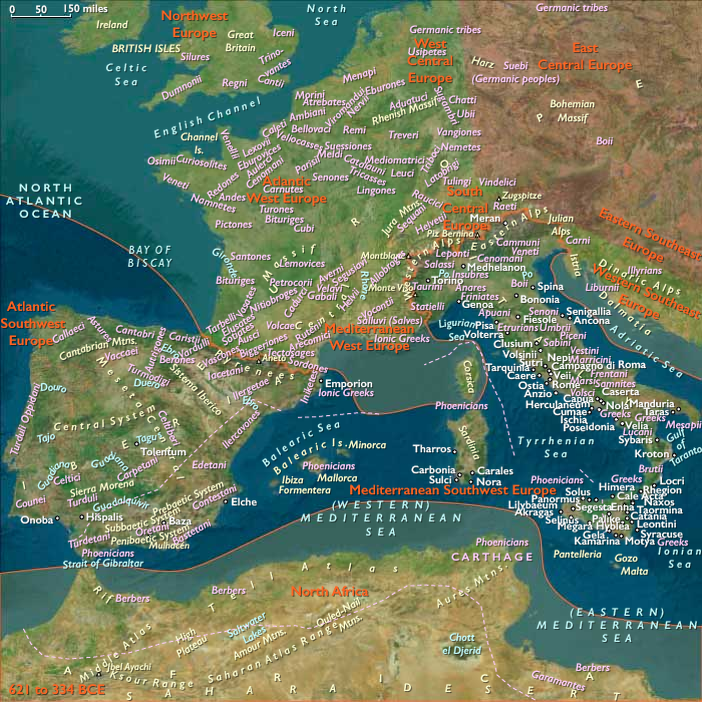
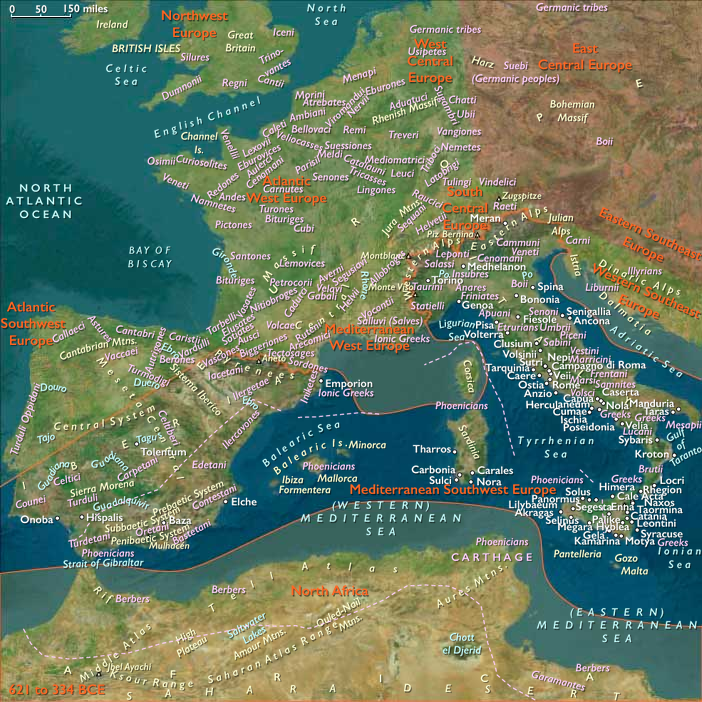
Dionysius, once his engineers have completed the mole, brings forward his siege towers, which are taller than the walls of Motya and equal the height of the tallest buildings in the city.
A storm of arrows and missiles from archers and catapults clears the wall of defenders, then battering rams are employed against the gates.
The Phoenicians counter by putting men on ship masts, and protecting them with breastworks built on the walls.
These "Crows’ nests" are then put beyond the walls, and from these, flax, covered in burning pitch, is dropped on the siege engines, burning them.
However, the Greeks learn to douse the flames with fire fighting teams, and the engines finally reaches the walls despite Carthaginian efforts.
As the Greek troops advance, the Phoenicians launch a storm of arrows and stones from the rooftops and houses, thinning the ranks of on the attackers.
The Greeks push the siege towers next to the houses closest to the walls, and sends troops on the roofs using gangways, who force their way into the houses.
A fierce hand-to-hand struggle ensues, the desperate resistance of the Phoenicians (who expect no mercy from the Greeks) taking a heavy toll on the attackers.
After several days of dawn-to-dusk fighting, Dionysius sends a picked group of mercenaries under a Thruian named Archylus at night with ladders to secure vantage points.
The commandos manage to secure the positions before the Phoenicians discover their tactic, and the Greeks overcome all resistance.
Dionysius had intended to secure as many prisoners as possible for the slave market, but the Greeks vent their frustrations by indiscriminate killing of the population.
Dionysius can only save those who seek refuge in the temples.
In the aftermath of battle, he crucifies all the Greeks who had fought on the side of Carthage; it is not known if these were mercenaries employed by Carthage or citizens of Motya.
He sacks the city, divides the vast spoils among his troops, and garrisons the ruins with an army made mostly of Sicels under an officer named Biton, then marches off to continue the siege of Segesta and Entella.
It is not known what he did there, but the cities continued to resist.
The majority of the fleet sailed back to Syracuse.
Locations
People
Groups
- Sicani
- Sicels
- Ionians
- Dorians
- Elymians
- Greece, classical
- Sicily, classical
- Italy, classical
- Carthage, Kingdom of
- Magna Graecia
- Syracuse, Corinthian city-state of
- Etruria
- Peloponnesian League (Spartan Alliance)
- Athenian Empire (Delian League)
Topics
- Iron Age Europe
- Iron Age Cold Epoch
- Classical antiquity
- Sicilian Wars, or Carthaginian-Syracusan Wars
- Sicilian War, Second, or Second Carthaginian-Syracusan War
- Motya, Siege of
- Dionysius War, First
Commodoties
Subjects
Regions
Subregions
Related Events
Showing 10 events out of 64956 total
Years: 397BCE - 397BCE
Locations
People
Groups
- Sicani
- Sicels
- Ionians
- Dorians
- Elymians
- Greece, classical
- Sicily, classical
- Italy, classical
- Carthage, Kingdom of
- Magna Graecia
- Syracuse, Corinthian city-state of
- Etruria
- Peloponnesian League (Spartan Alliance)
- Athenian Empire (Delian League)
Topics
- Iron Age Europe
- Iron Age Cold Epoch
- Classical antiquity
- Sicilian Wars, or Carthaginian-Syracusan Wars
- Sicilian War, Second, or Second Carthaginian-Syracusan War
- Motya, Siege of
- Dionysius War, First
Commodoties
Subjects
Regions
Subregions