
Olaus Petri, born Olof Persson in Örebro …
Years: 1526 - 1526
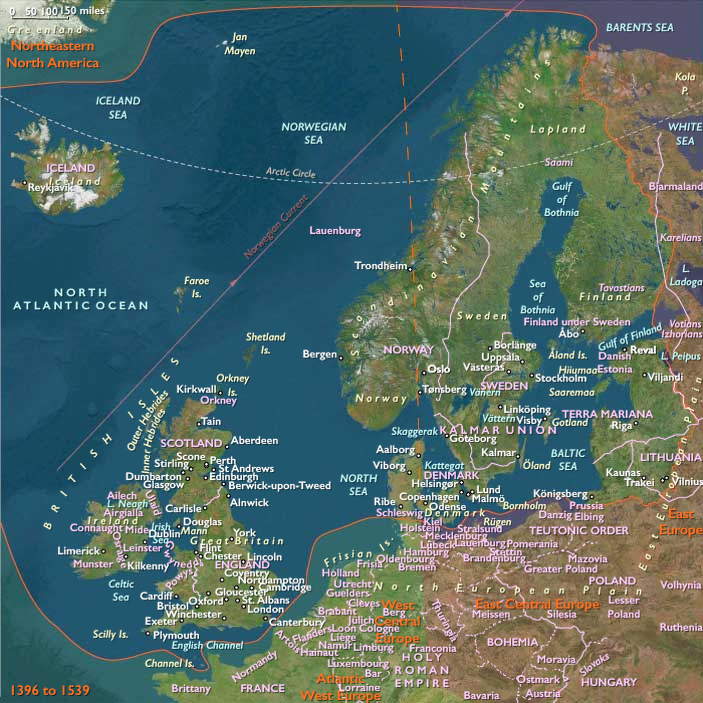
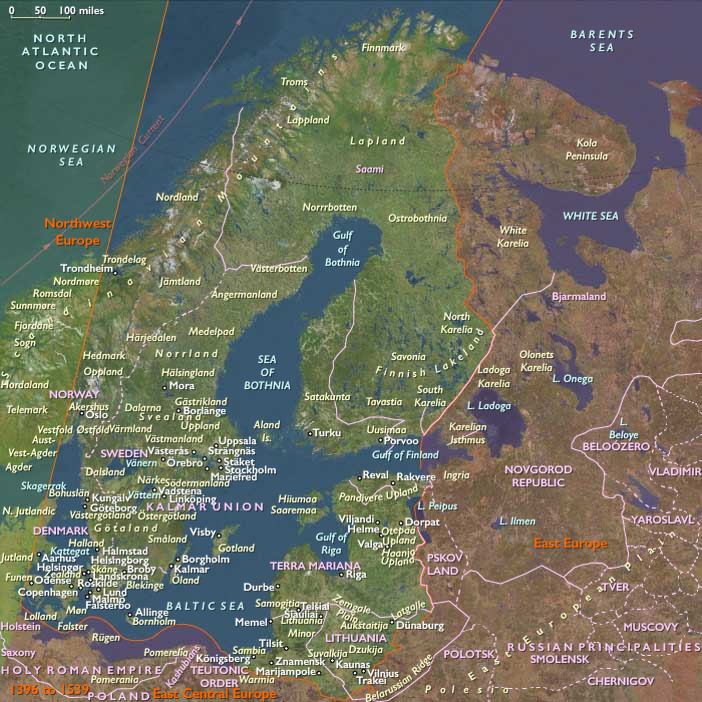
Olaus Petri, born Olof Persson in Örebro in south-central Sweden to a local blacksmith, had learned to read and write at the local Carmelite monastery.
He then went to the capital and studied at the University of Uppsala, where he read theology and German.
Later, he attended the University of Leipzig until 1516, and finally finished his education and received a Master's degree at the University of Wittenberg in February 1518.
While in Wittenberg with his younger brother Lars, Olaus had met with and had been influenced by the main characters of the German reformation, Philipp Melanchthon and Martin Luther.
Both Petri brothers had returned to Sweden in 1519, nearly dying as their ship ran aground on Gotland island during a storm.
They had remained on Gotland for a while, with Olaus preaching and assisting the local priest, Soren Norby, and Lars teaching at the local school.
In 1520, Olaus had returned to Strängnäs on the mainland, accepting ordination as a deacon and serving bishop Mattias Gregersson Lilje as secretary, chancellor of the Diocese of Strängnäs, canon of the Strängnäs Cathedral and dean of the cathedral school.
Olaus had accompanied his mentor, Bishop Gregersson, to Stockholm and attended the tumultuous crowning of Danish King Christian II, who had captured Stockholm and held it for about a year until returning to Denmark, where he was soon deposed and replaced by his uncle, who became King Frederick I of Denmark.
Meanwhile, at the notorious Stockholm Bloodbath in early November, King Christian violated his promises of a general amnesty for the Sture party, and during the post-coronation festivities arrested and executed 80-90 churchmen and secular Swedish nobles, including Bishop Gregersson.
When Olaus expressed his outrage, he was nearly executed as well, but a German who had seen him in Wittenberg identified Olaus as a fellow German and thus saved his life.
King Christian tried to appoint his friend, Odense's bishop Jens Andersen Beldenak, to the now-vacant Strängnäs bishopric, but both Danes soon returned to Denmark, and the scholar-priest Laurentius Andreae, who had been named archdeacon in 1520, ran the diocese.
The massacre had provoked the Swedish War of Liberation, including the election and crowning of Gustav Vasa as King in Strängnäs in 1523.
Olaus (whose father died in 1521, after which he and his brother joined the insurgents under Vasa's leadership) had attended the coronation, sworn fealty to his monarch, and soon became the kingdom's chancellor.
A year later Olaus had been appointed Stockholm's town secretary and moved to the new capital, where he has also served as a judge (despite lack of specific legal training), and town councilor.
Olaus has become known for his advocacy of Lutheranism and criticism of prevailing Roman Catholicism.
In October 1524, the Uppsala Cathedral's chapter had excommunicated both brothers on grounds of heresy.
They remain, however, confident in the new Swedish king's strong support.
In 1525 Olaus had married, as Lutheran practice permitted, and also implemented another of Luther's ideas by having the mass sung in Swedish for the first time.
Throughout this period Olaus has als been involved in scholarly endeavors, including translating Lutheran works into Swedish.
In 1526, Olaus publishes the first Swedish translation of the New Testament, also publishing a catechism in Swedish.
His translation is of vital importance to the development of the Swedish language.
Locations
People
Groups
Topics
Commodoties
Subjects
Regions
Subregions
Related Events
Showing 10 events out of 38363 total
Years: 1526 - 1526
Locations
People
Groups
Topics
Commodoties
Subjects
Regions
Subregions