
Olaf defeats his Norse rivals based at …
Years: 937 - 937
August
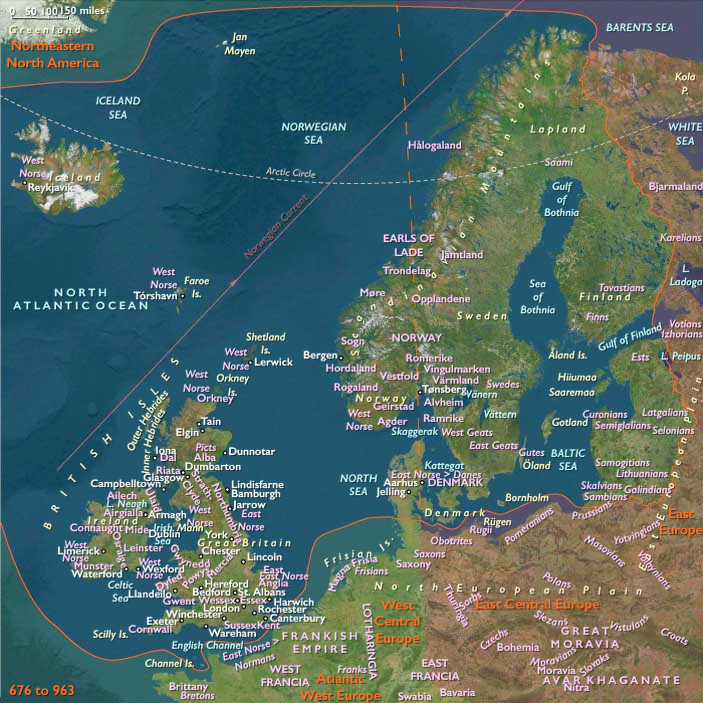
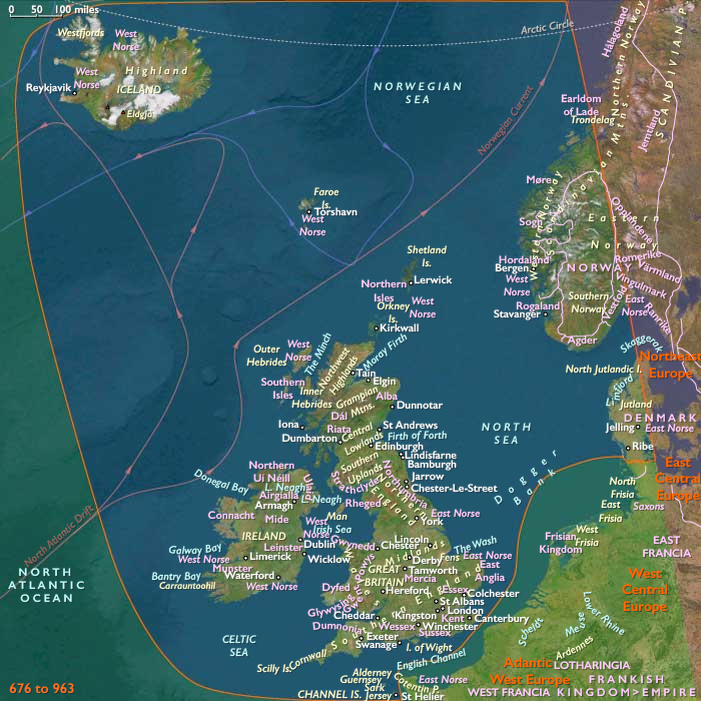
Olaf defeats his Norse rivals based at Limerick in August 937, leaving him free to pursue his family claim to the throne of York.
He marries the daughter of king Constantine II of Scotland, and also allies himself with Owen I of Strathclyde.
Locations
People
Groups
- Brycheiniog, Welsh Kingdom of
- Gwent, Welsh Kingdom of
- Gwynedd, Welsh Kingdom of
- Christianity, Chalcedonian
- Vikings
- Dublin, Kingdom of
- Orkney, Earldom of
- Alba (Scotland), Scots Kingdom of
- Strathclyde, British Kingdom of
- Deheubarth, Welsh Kingdom of
- York, Scandinavian (Norse)
- England, (Anglo-Saxon) Kingdom of
Topics
Commodoties
Subjects
Regions
Subregions
Related Events
Showing 10 events out of 53092 total
Years: 937 - 937
August
Locations
People
Groups
- Brycheiniog, Welsh Kingdom of
- Gwent, Welsh Kingdom of
- Gwynedd, Welsh Kingdom of
- Christianity, Chalcedonian
- Vikings
- Dublin, Kingdom of
- Orkney, Earldom of
- Alba (Scotland), Scots Kingdom of
- Strathclyde, British Kingdom of
- Deheubarth, Welsh Kingdom of
- York, Scandinavian (Norse)
- England, (Anglo-Saxon) Kingdom of
Topics
Commodoties
Subjects
Regions
Subregions