Offa of Mercia conquers Kent, and installs …
Years: 764 - 764
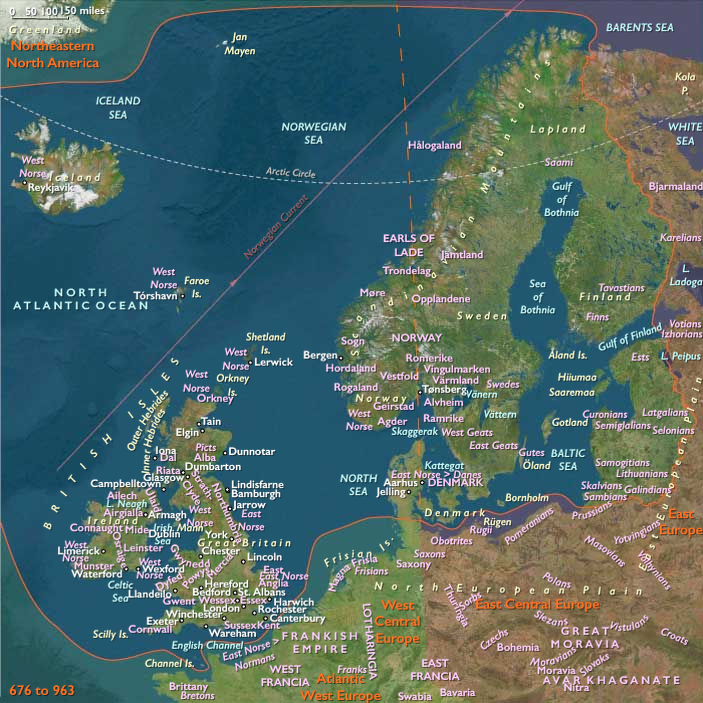
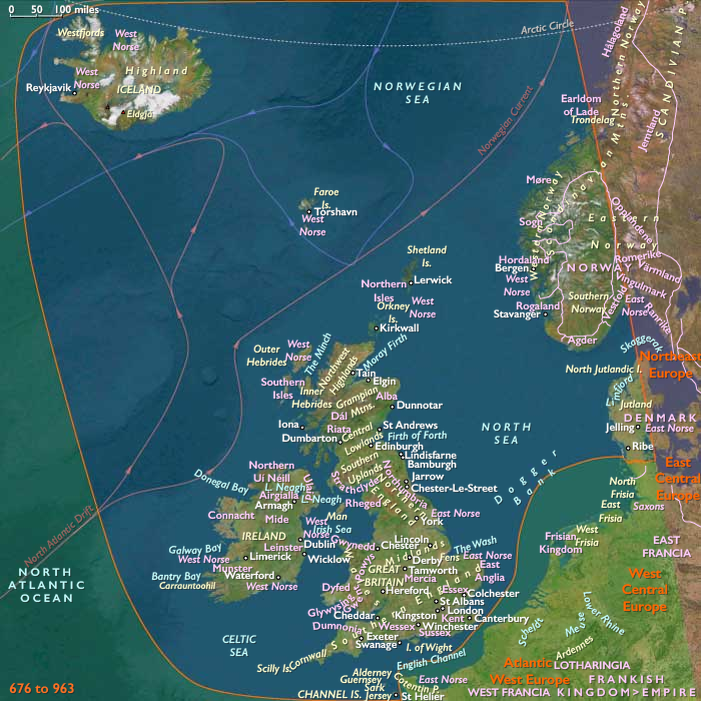
Offa of Mercia conquers Kent, and installs Egbert II on the Kentish throne.
Locations
People
Groups
Topics
Subjects
Regions
Subregions
Related Events
Filter results
Showing 10 events out of 55141 total
The political contest between the imperial minister Oshikatsu and the powerful priest Dokyo erupts in 764 in civil war, in which Oshikatsu and most of his followers are defeated and killed.
A Duchy of Naples had been created after the fall of the Exarchate of Ravenna.
Although Naples' Greco-Roman culture endures, it eventually switches allegiance from Constantinople to Rome under Duke Stephen II, putting it under papal suzerainty by 763.
At the beginning of his reign, Naples was still a loyal dukedom of the Empire, her dukes appointed by the emperor.
In 761, therefore, she had denied entry to the papal envoy, the Bishop Paul, an opponent of the iconoclasm then gripping the Eastern Roman world.
Stephen was no less a supporter of the iconoclasm than the emperor himself.
At that time, Stephen had addressed Antiochos, the patrician of Sicily and his technical overlord, as "our lord" and "most excellent patrikios and protostrategos" (763).
By 764, however, Naples had thrown off iconoclasm and Paul is able to take up his see.
Former Empress Koken reascends the Japanese throne in 765 as Empress Shōtoku, arrests Emperor Junnin, and banishes him to the distant island of Awaji.
Koken makes the priest Dokyo her prime minister, later bestowing on him the title “Ho-o” (roughly, “pope”).
The Yagma people (a branch of the Toquz Oghuz, the later Uyghur) occupy the southern part of Zhetysu; they also hold Kashgar.
The Karluks had remained in the Chinese sphere of influence and an active participant in fighting the Muslim expansion into the area, up until their split from the Tang in 751.
Chinese intervention in the affairs of Western Turkestan had ceased after their defeat at the Battle of Talas in 751 by the Arab general Ziyad ibn Salih.
The Arabs had dislodged the Karluks from Ferghana to …
…the region known historically as Zhetysu (Kazakh: meaning "seven waters"), which corresponds to the southeastern part of modern Kazakhstan, owes its name, to the rivers that flow from the southeast into Lake Balkhash.
The Karluk tribes, after overrunning the Turgesh in Zhetysu, in 766 form a Khanate under the rule of a Yabgu, occupy Suyab, and transfer their capital there.
The bulk of the tribe has left the Altai by this time, and the supremacy in Zhetysu passes to the Karluks.
Most of Turkestan (former Onuq territory) comes under Karluk rule, except in the region west of the Aral Sea, where the Oghuz Turks will soon form a loose confederation.
The Karluks, who are hunters, nomadic herdsmen, and agriculturists, settle in the countryside and in the cities, which are centered around trading posts along the caravan roads.
The Karluks have inherited a vast multiethnic region, whose diverse population is not much different from its rulers.
Zhetysu is populated by the Turgesh, who are divided into two tribes, the Tukhshi and the Azes mentioned in the Orkhon inscriptions, the remnants of the Oghuz Turks whose main body had moved to the west, becoming the Shato Turks (i.e.
"Steppe Turks"), and interspersed with the Sogdian colonies.

In the north and west live the Kankalis.
A separate significant division of the Karluks are the Chigils, a tribe that had detached from the Karluk.
They reside around Issyk Kul.
The diverse population adheres to a spectrum of religious beliefs.
The Karluks and the majority of the Turkic population profess Tengrianism, considered as shamanism and heathen by the Christians and Muslims.
Chigils are Christians of the Nestorian denomination.
The majority of the Toquz Oghuz, with their khan, are Manicheans, but there are also Christians, Buddhists, and Muslims among them.
The peaceful penetration of Muslim culture through commercial relations plays a far more important role in their conversion than Muslim arms.
The merchants are followed by missionaries of various creeds, including Nestorian Christians.
Many Turkestan towns have Christian churches.
The Turks hold sacred the Qastek pass mountains, believing to be an abode of the deity.
Each creed carries its script, including Türkic runiform, Sogdian, Syriac, and later the Uyghur.
The military defeat had sealed the fate of Telets, who is lynched together with his supporters by his rebellious subjects in 765.
Some scholars think that Sabin, his successor, was omitted from the Namelist of Bulgarian Rulers because he was a Slav, but his name could indicate Latin or even Iranian origins.
He was related by marriage to Kormisosh, who was either a father-in-law or a brother-in-law of Sabin.
Since the relation is by marriage, Sabin would not have actually belonged to the Vokil clan.
Sabin rises to the throne after the murder of Telets in 765 and represents that part of the Bulgarian nobility which is seeking a policy of accommodation with the Empire.
Accordingly, he swiftly dispatches secret emissaries to Emperor Constantine V, seeking to reestablish peace.
When the negotiations are discovered, the Bulgarians rebelled and hold an assembly in which they accuse Sabin of causing Bulgaria's enslavement by the Empire.
The Isma'ilite sect comes into being after the death in 765 of Ja'far ibn Muhammad, the sixth imam, or spiritual successor to the Prophet, who is recognized by the Shi'ites.
The term imam imam is used in the Koran to mean leader, guide, model, or sign, and, for Shiites, meaning only a descendant from Ali, the son-in-law of Muhammad.
Most Shiites acknowledge Ja'far's younger son, Musa al-Kazim, as the seventh imam and will acknowledge his successors through the twelfth imam: these will become known as the Ithna 'Ashariyah, or Twelvers, the largest and most conservative of the Shi'ite sects.
Those who support his older, disinherited son, Ismail, become known as Ismailis; also Sabiyah, or Seveners, as they recognize Ismail as the seventh and last imam until the return of his son at the end of time.