
Osei Tutu (d. 1712 or 1717) becomes …
Years: 1684 - 1827
Osei Tutu (d. 1712 or 1717) becomes asantehene (king of Asante) at the end of the seventeenth century.
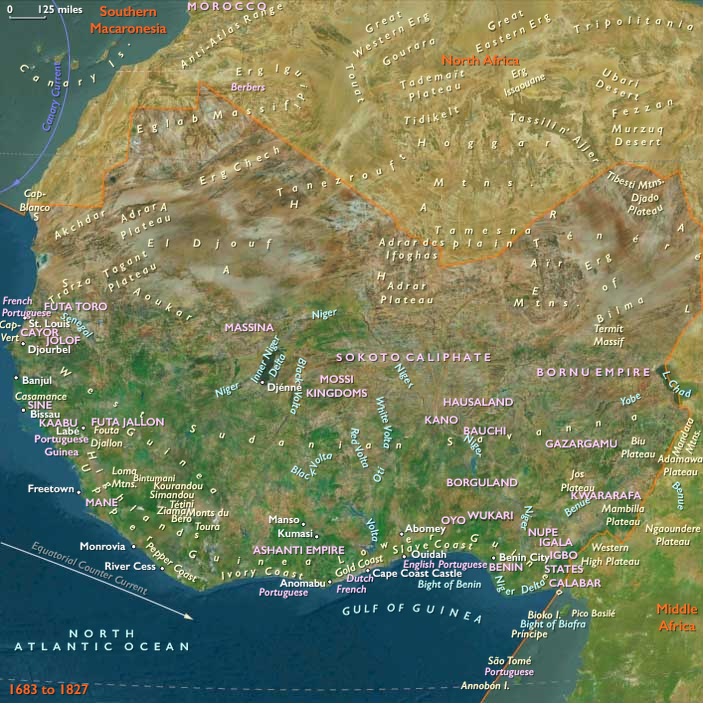
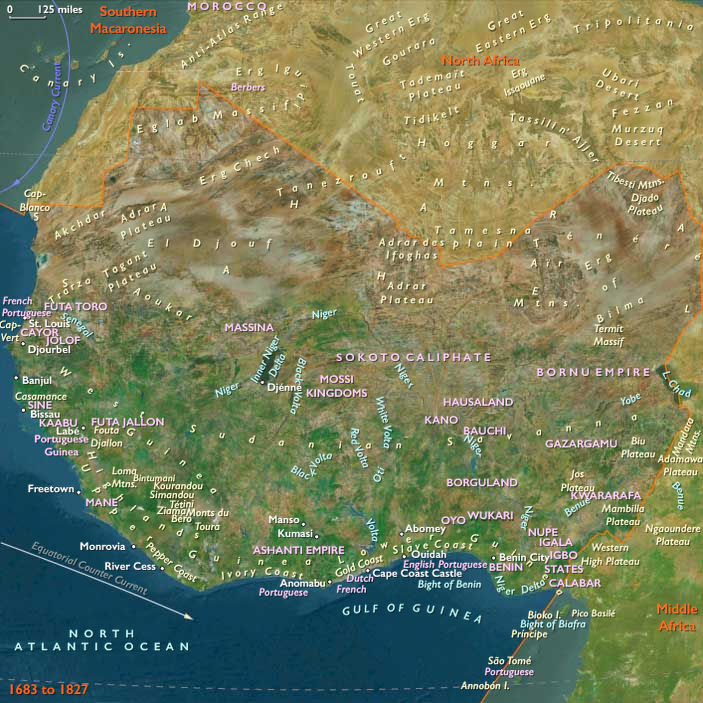
Under Osei Tutu's rule, the confederacy of Asante states is transformed into an empire with its capital at Kumasi.
Political and military consolidation ensue, resulting in firmly established centralized authority.
Osei Tutu is strongly influenced by the high priest, Anokye, who, tradition asserts, caused a stool of gold to descend from the sky to seal the union of Asante states.
Stools already functioned as traditional symbols of chieftainship, but the Golden Stool of Asante represents the united spirit of all the allied states and establishes dual allegiance that superimposes the confederacy over the individual component states.
The Golden Stool remains a respected national symbol of the traditional past and figures extensively in Asante ritual.
Osei Tutu permits newly conquered territories that join the confederation to retain their own customs and chiefs, who are given seats on the Asante state council.
Osei Tutu's gesture makes the process relatively easy and nondisruptive because most of the earlier conquests had subjugated other Akan peoples.
Within the Asante portions of the confederacy, each minor state continues to exercise internal self-rule, and its chief jealously guards the state's prerogatives against encroachment by the central authority.
A strong unity develops, however, as the various communities subordinate their individual interests to central authority in matters of national concern.
By the mid-eighteenth century, Asante is a highly organized state.
The wars of expansion that bring the northern states of Mamprusi, Dagomba, and Gonja under Asante influence are won during the reign of Asantehene Opoku Ware I (d. 1750), successor to Osei Tutu.
By the 1820s, successive rulers have extended Asante boundaries southward.
Although the northern expansions link Asante with trade networks across the desert and in Hausaland to the east, movements into the south bring the Asante into contact, sometimes antagonistic, with the coastal Fante, Ga-Adangbe, and Ewe peoples, as well as with the various European merchants whose fortresses dot the Gold Coast.
Locations
People
Groups
- Mandé peoples
- Hausa people
- Islam
- Ga-Adangme
- Akan people
- Guang people
- Fante people
- Ewe people
- Mossi people
- Mossi Kingdoms
- Dyula people
- Mali Empire
- Dagbon, Kingdom of
- Ashanti of Kumasi, Kingdom of the
- Fante (Fanti), southern Akan state of
Topics
Commodoties
Subjects
Regions
Subregions
Related Events
Showing 10 events out of 30218 total
Years: 1684 - 1827
Locations
People
Groups
- Mandé peoples
- Hausa people
- Islam
- Ga-Adangme
- Akan people
- Guang people
- Fante people
- Ewe people
- Mossi people
- Mossi Kingdoms
- Dyula people
- Mali Empire
- Dagbon, Kingdom of
- Ashanti of Kumasi, Kingdom of the
- Fante (Fanti), southern Akan state of
Topics
Commodoties
Subjects
Regions
Subregions