
Odo II of Blois: The Battle of …
Years: 1016 - 1016
Odo II of Blois: The Battle of Pontlevoy and the Struggle Against Fulk III of Anjou (1016)
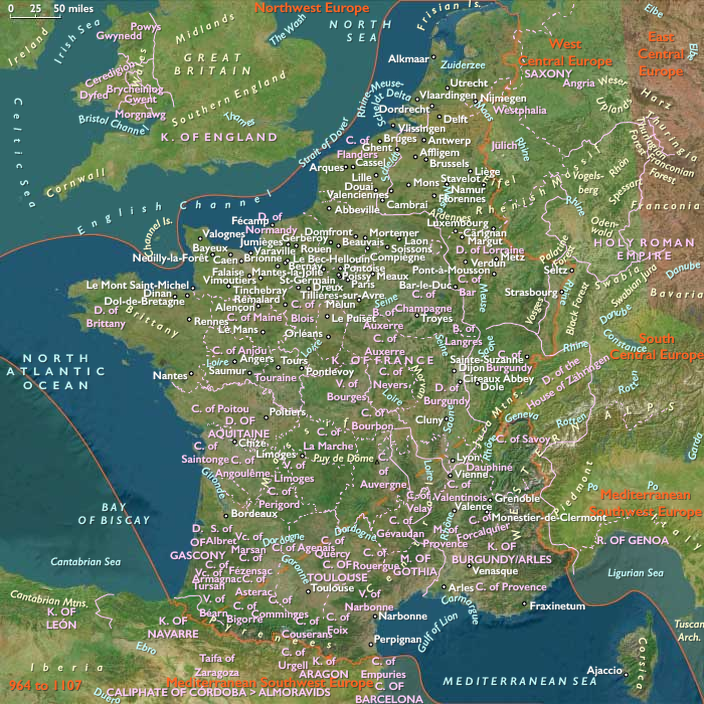
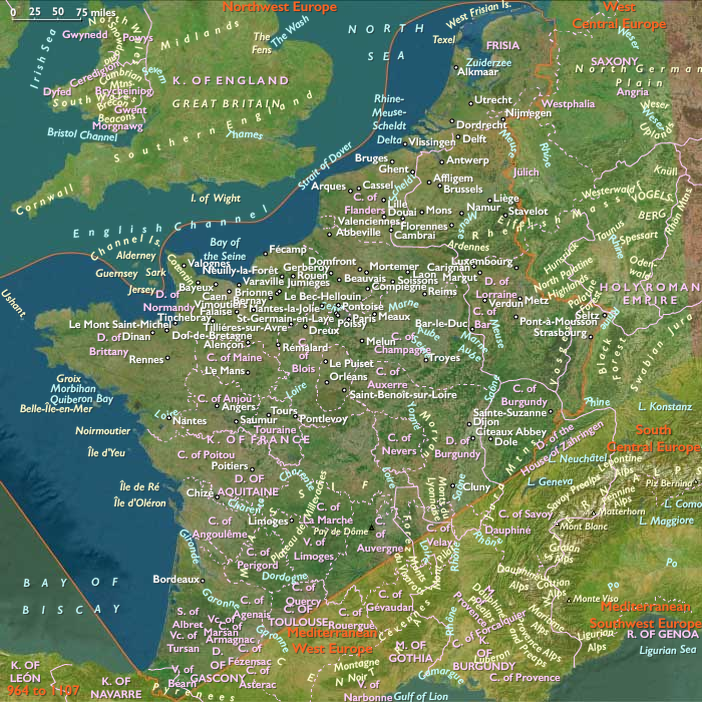
Odo II of Blois, son of Odo I and Bertha of Burgundy, was the first to unite Blois and Champagne, consolidating a powerful feudal domain. However, his ambitions brought him into continuous conflict with neighboring lords and his Capetian overlords, as he sought to expand his influence through war and strategic marriages. One of the most significant setbacks of his career came at the Battle of Pontlevoy (1016), where he suffered a devastating defeat at the hands of Fulk III of Anjou and Herbert I of Maine.
Early Conflicts with Normandy and King Robert II (1005–1007)
- Odo’s first marriage to Matilda of Normandy (daughter of Duke Richard I) ended abruptly in 1005, leaving him without an heir from the union.
- Richard II of Normandy, Matilda’s brother, demanded the return of her dowry, which included half the county of Dreux.
- Odo refused, leading to war with Normandy, which lasted until King Robert II of France intervened in 1007.
- The arbitration awarded Odo the castle of Dreux, while Richard retained the surrounding lands, preventing a full-scale Norman-Blois war.
- Odo remarried quickly, taking Ermengarde of Auvergne, securing an alliance in southern France.
Rivalry with Fulk III of Anjou and the Battle of Pontlevoy (1016)
Odo’s expansionist ambitions clashed directly with those of Fulk III "Nerra" of Anjou, another aggressive feudal lord whose conquests threatened Odo’s territorial claims. Their rivalry culminated in a decisive battle at Pontlevoy on July 6, 1016.
Prelude to the Battle
- Odo, planning to attack the fortress of Montrichard, marched his forces into Angevin territory.
- Fulk III, recognizing the threat, allied with Herbert I of Maine, ensuring that Odo’s advance would be blocked from multiple directions.
- The Angevin-Maine forces split, with Fulk and one part of the army positioned to intercept Odo directly, while Herbert maneuvered separately.
The Battle of Pontlevoy (July 6, 1016)
- Odo’s larger force initially gained the upper hand, overwhelming Fulk’s troops.
- Fulk III was thrown from his horse, nearly captured or killed, as Odo’s cavalry pressed their advantage.
- Seeing the imminent collapse of the Angevin army, a messenger reached Herbert I of Maine, urging him to attack immediately.
- Herbert struck Odo’s left flank, throwing the Blois army into total confusion.
- Odo’s cavalry fled the battlefield, abandoning their infantry, who were slaughtered by Fulk and Herbert’s forces.
- The battle resulted in a crushing defeat for Odo, who would be unable to challenge Fulk for nearly a decade.
Aftermath and Consequences
- Odo’s defeat halted his ambitions against Anjou, forcing him into a period of military inactivity.
- Herbert I of Maine’s reputation soared, marking him as a rising power in western France.
- The battle strained relations between Fulk III and Herbert, as Herbert’s intervention had ultimately saved Fulk, highlighting a power imbalance between the two allies.
Legacy
The Battle of Pontlevoy solidified Fulk III’s dominance in Anjou and Maine, while Odo’s defeat weakened his ability to expand his territories further. However, Odo would later return to challenge his enemies, continuing his lifelong feudal struggles. The Capetian monarchy, meanwhile, benefited from these feudal rivalries, as they prevented any single vassal from becoming too powerful.
Locations
People
Groups
- Christianity, Chalcedonian
- Maine, County of
- Anjou, County of
- Normandy, Duchy of
- Blois, County of
- France, (Capetian) Kingdom of
Topics
Commodoties
Subjects
Regions
Subregions
Years: 1016 - 1016
Locations
People
Groups
- Christianity, Chalcedonian
- Maine, County of
- Anjou, County of
- Normandy, Duchy of
- Blois, County of
- France, (Capetian) Kingdom of
Topics
Commodoties
Subjects
Regions
Subregions