
Nur ad-Din Zengi, the Sultan of Syria, …
Years: 1171 - 1171
Nur ad-Din Zengi, the Sultan of Syria, allows Turan-Shah to travel to Egypt in 1171 to join his younger brother Saladin at a time of rising tensions between Nur ad-Din and Saladin.
Nur al-Din empowers Turan-Shah to supervise Saladin, hoping to provoke dissension between the brothers.
However, this attempt fails as Turanshah is immediately granted an immense amount of lands by Saladin who is in the process of rebuilding the power structure of the Fatimid state around himself and his relatives.
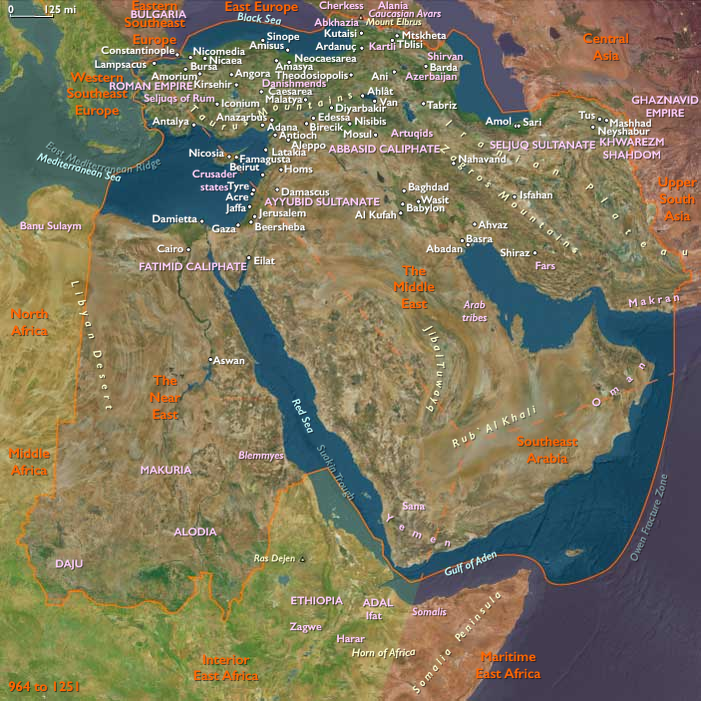
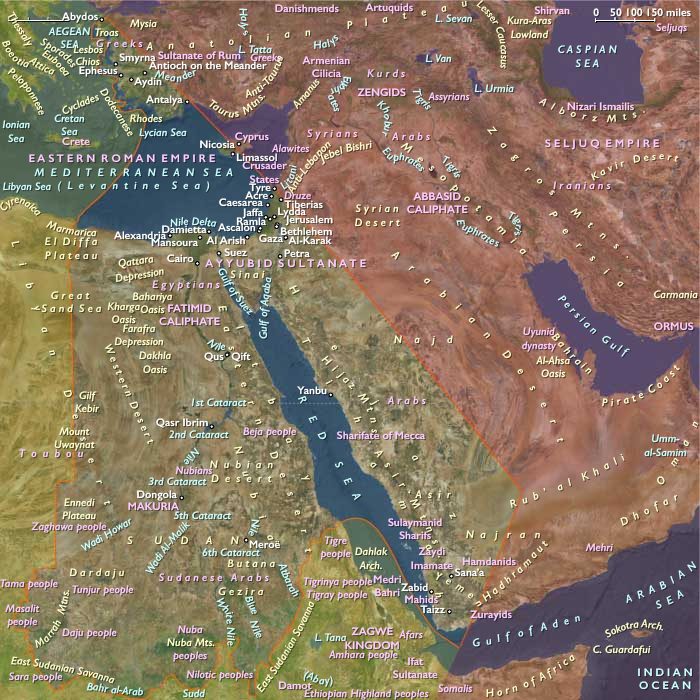
The iqta' or "fief" given to Turan-shah comprises the major cities of Qus and Aswan in Upper Egypt as well as the Red Sea port of Aidab.
Turan-shah is the main force behind the suppression of a revolt staged in 1171 by the Black African garrisons of the Fatimid army in 1171.
Turan-Shah develops a close relationship with the poet courtier 'Umara, who had been a power player in Fatimid politics before Saladin's ascendancy to the vizierate in 1169.
The last Fatimid caliph al-Adid dies on September 11, 1171, and the Ayyubid dynasty gains official control of Egypt.
A number of accusations of murder against Turan-Shah arises following the caliph's death.
According to a eunuch in the service of al-Adid's widow, al-Adid died after hearing that Turan-Shah was in the palace looking for him.
In another version, Turan- Shah is said to have killed al-Adid himself after the latter refused to reveal the location of state treasures that were hidden in the palace.
After the caliph's death, Turan-Shah settles in Cairo in a quarter formerly occupied by Fatimid emirs.
Locations
People
Groups
Topics
Commodoties
Subjects
Regions
Subregions
Related Events
Showing 10 events out of 48365 total
Years: 1171 - 1171
Locations
People
Groups
Topics
Commodoties
Subjects
Regions
Subregions