
Nur ad-Din had sent his lieutenant Shirkuh …
Years: 1164 - 1164
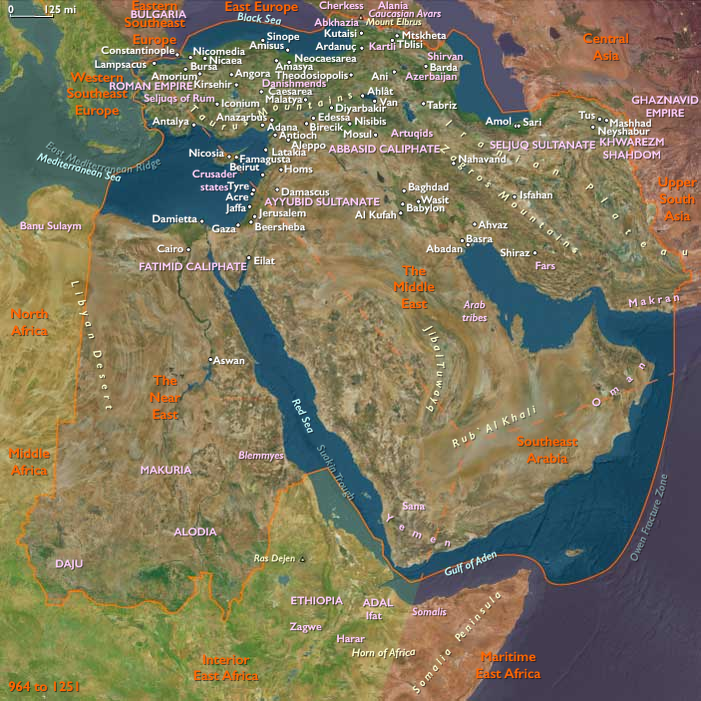
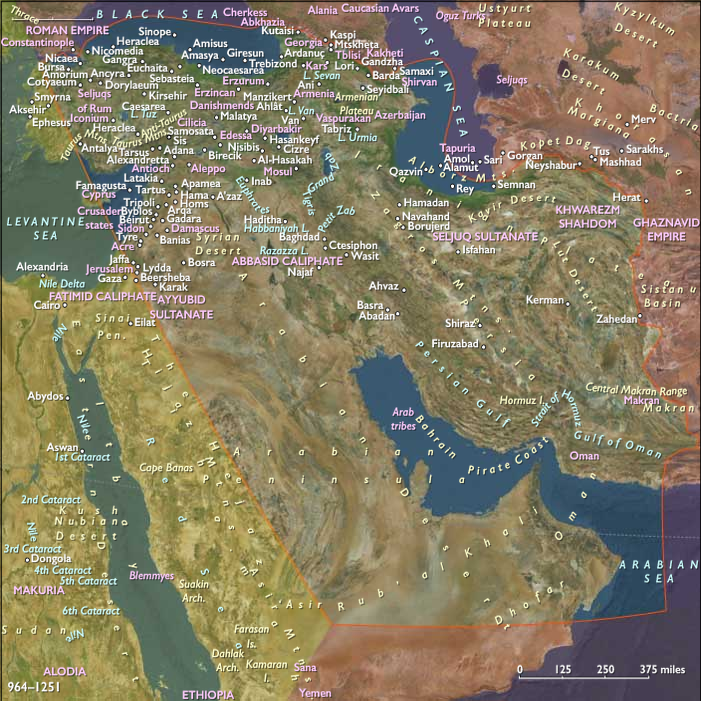
Nur ad-Din had sent his lieutenant Shirkuh to Egypt accompanied by his own nephew, Saladin, to settle a dispute between Shawar and Dirgham over the Fatimid vizierate.
Shawar is restored and Dirgham killed, but after quarreling with Shirkuh, Shawar allies with Almaic of Jerusalem, who, believing his northern front secure, had taken his army to Egypt, where had found himself in a three-way contest between his Franks, Shirkuh, and Shawar, with the latter trying maintain Egyptian independence.
Because Egypt had never paid the yearly tribute that it had promised Baldwin in 1160, Amalric hopes to gain control of Egypt and break Muslim unity.
He ousts Shirkuh from Egypt in 1164, but the king has had to rapidly abandon Egypt upon the news of a great disaster in the north.
Locations
People
Groups
Topics
Commodoties
Subjects
Regions
Subregions
Related Events
Showing 10 events out of 48478 total
Years: 1164 - 1164
Locations
People
Groups
Topics
Commodoties
Subjects
Regions
Subregions