
2. Eligius: Goldsmith, Royal Advisor, and Bishop …
Years: 639 - 639
April
2. Eligius: Goldsmith, Royal Advisor, and Bishop of Noyon-Doornik
Upon Acarius' death, Eligius was unanimously chosen as his successor, further strengthening the Christian presence in pagan territories.
Eligius' Early Life and Rise to Prominence
- Born in Chaptelat, near Limoges, into a wealthy and influential Gallo-Roman family.
- Trained as a goldsmith under Abbo, master of the mint at Limoges.
- His craftsmanship gained royal attention, and he was invited to work under Babo, royal treasurer of Clothar II.
- His work included the golden throne for Clothar II, as well as bas-reliefs for the tomb of Saint Germain of Paris.
Eligius in the Frankish Court
- Following Clothar II’s death in 629 CE, Dagobert I appointed Eligius as his chief councilor.
- His reputation was so great that ambassadors first sought Eligius' counsel before meeting with the king.
- His influence earned him both admiration and enemies at court, particularly among secular noble factions.
Eligius' Role in Diplomacy and Slave Redemption
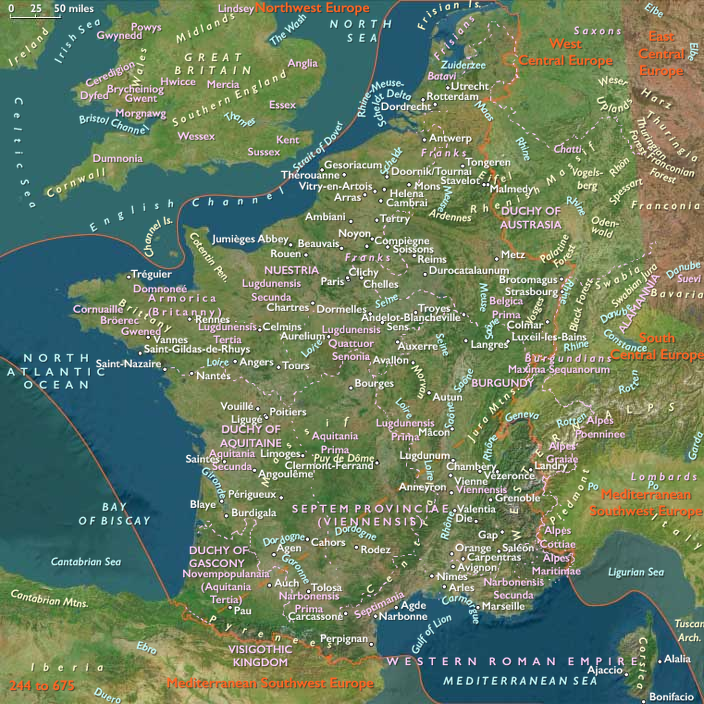
- Helped negotiate a treaty between King Dagobert I and Breton Prince Judicael ap Hoel, bringing Brittany under Frankish suzerainty.
- Used his royal favor to secure alms for the poor and ransom captives, including Romans, Gauls, Bretons, Moors, and Saxons from the Marseilles slave market.
Eligius’ Monastic Foundations and Religious Patronage
- Founded the monastery of Solignac near Limoges (632 CE), introducing Irish monastic rules from Columbanus' tradition.
- Established a convent in Paris that housed 300 nuns, led by Abbess Aurea.
- Restored and built basilicas, including:
- St. Paul’s Basilica.
- The Parisian basilica of Saint Martial, patron of Limoges.
- Tombs and churches dedicated to Saint Martin of Tours and Saint Denis, reinforcing their importance as Frankish patron saints.
3. Legacy of Acarius and Eligius
- Acarius and Eligius played a critical role in Christianizing the pagan regions of northern Gaul, particularly in the Flemish and Frisian lands.
- Their missionary efforts, royal influence, and monastic foundations ensured that Frankish Christianity continued to expand under the Merovingians.
- Eligius’ deep involvement in royal politics foreshadowed the increasing power of bishops in the Frankish court, a trend that would shape medieval European governance.
- Their work laid the foundation for the later Carolingian missionary movements, which would fully integrate pagan Germanic tribes into Christendom.
Conclusion: Pillars of Frankish Christian Expansion
Both Acarius and Eligius were instrumental in consolidating Christianity in Frankish Gaul, bridging the gap between royal power, missionary efforts, and monastic reform. Their influence helped shape Merovingian religious policies, reinforcing the Church’s growing political and social dominance in early medieval Europe.
Locations
People
Groups
- Polytheism (“paganism”)
- Suebi (Germanic tribe)
- Gallo-Roman culture
- Saxons
- Breton people
- Moors
- Christianity, Chalcedonian
- Frisians
- Burgundians
- Austrasia, Frankish Kingdom of
- Neustria and Burgundy, Frankish Kingdom of
- Flemish people
Topics
Commodoties
Subjects
Regions
Subregions
Related Events
Showing 10 events out of 56588 total
Years: 639 - 639
April
Locations
People
Groups
- Polytheism (“paganism”)
- Suebi (Germanic tribe)
- Gallo-Roman culture
- Saxons
- Breton people
- Moors
- Christianity, Chalcedonian
- Frisians
- Burgundians
- Austrasia, Frankish Kingdom of
- Neustria and Burgundy, Frankish Kingdom of
- Flemish people
Topics
Commodoties
Subjects
Regions
Subregions