
The Battle of Brouwershaven (January 13, 1426): …
Years: 1426 - 1426
The Battle of Brouwershaven (January 13, 1426): A Devastating Defeat for Jacqueline of Bavaria
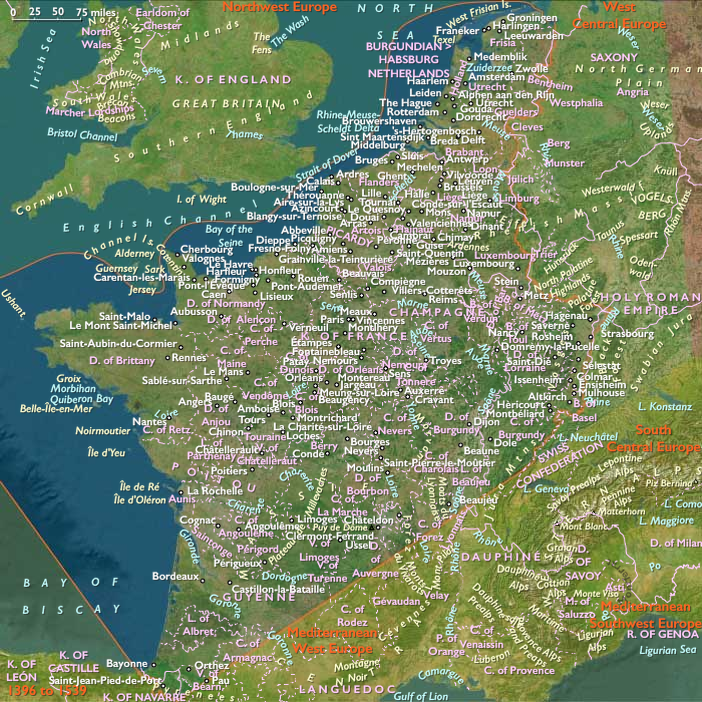
The Battle of Brouwershaven, fought on January 13, 1426, was a decisive Burgundian victory that crippled Jacqueline of Bavaria’s resistance and irreparably damaged the English-Burgundian alliance—a key relationship that had aided the English cause in France during the Hundred Years' War.
The battle unfolded as Jacqueline’s former husband, John IV, Duke of Brabant, sought to dispute her inheritance, prompting her current husband, Humphrey, Duke of Gloucester, to intervene with an English force. However, Philip the Good, Duke of Burgundy, was well-prepared, personally leading his superior Burgundian army against the English and Zeeland forces.
I. The English Expedition and Burgundian Countermeasure
- Humphrey of Gloucester, supporting Jacqueline, sent an English force to Zeeland, but Philip the Good had advanced warning and prepared a fleet to intercept them.
- The Burgundians succeeded in capturing a small detachment of 300 English soldiers, but most of the force landed safely at Brouwershaven, where they joined their Zeeland allies.
II. Forces and Initial Deployment
-
The Burgundian Army (Philip the Good) – 4,000 troops
- Feudal retainers of the Duke of Burgundy.
- Municipal militia from Dordrecht, The Hague, and Delft.
- Over 1,000 militia crossbowmen and gunners from Dordrecht.
-
The Zeeland and English Forces – 4,200 troops
- Zeelanders (3,000 men) led by the Lord of Heemstede.
- English forces (1,200 men) led by Walter FitzWalter, 7th Baron FitzWalter.
-
The Zeelanders allowed the Burgundians to land unopposed, possibly hoping for an Agincourt-style victory with English longbowmen providing support.
III. The Battle: A Crushing Burgundian Victory
- As Burgundian forces were still disembarking, the English launched an attack, advancing in formation with trumpets sounding.
- The Burgundian forces retaliated with cannon fire and volleys of crossbow bolts from their municipal militia, but English longbowmen held firm and fired back, scattering the crossbowmen.
- However, the Burgundian knights, heavily armored and well-disciplined, launched a devastating counterattack, engaging the English men-at-arms in close combat.
- The English and Zeeland forces were driven onto a dike and virtually wiped out.
IV. Casualties and Aftermath
- According to Janus Reygersberg’s Chronyk en Historie van Zeeland:
- 3,000 Zeelanders were killed, and many others captured.
- Duke Philip himself reported capturing 200 English soldiers.
- Local noble losses:
- The Lord of Heemstede was captured.
- Baron FitzWalter managed to escape.
V. Consequences: A Catastrophic Blow to Jacqueline’s Cause
- The defeat at Brouwershaven was devastating for Jacqueline of Bavaria, as her military capabilities were crippled.
- The battle deepened tensions between England and Burgundy, undermining the Anglo-Burgundian alliance, which had been crucial to English ambitions in France.
- Philip the Good consolidated Burgundian control over Holland and Zeeland, ensuring that Jacqueline’s claim would be increasingly difficult to restore.
The Battle of Brouwershaven (1426) was a turning point, effectively ending English intervention in Jacqueline’s favor and securing Philip the Good’s dominance in the Low Countries.
Locations
People
- Humphrey of Lancaster, 1st Duke of Gloucester
- Jacqueline of Hainaut
- John IV, Duke of Brabant
- Philip the Good
Groups
- Burgundy, Duchy of
- Christians, Roman Catholic
- Hainaut, County of
- Holland, County of
- Brabant, Duchy of
- Zeeland, County of
- France, (Valois) Kingdom of
- Netherlands, Burgundian
- England, (Plantagenet, Lancastrian) Kingdom of
Topics
- Hundred Years' War
- Hook and Cod wars
- Armagnac-Burgundian Civil War
- Hundred Years' War: Resumption of the war under Henry V
- Brouwershaven, Battle of
Commodoties
Subjects
Regions

Subregions
Years: 1426 - 1426
Locations
People
- Humphrey of Lancaster, 1st Duke of Gloucester
- Jacqueline of Hainaut
- John IV, Duke of Brabant
- Philip the Good
Groups
- Burgundy, Duchy of
- Christians, Roman Catholic
- Hainaut, County of
- Holland, County of
- Brabant, Duchy of
- Zeeland, County of
- France, (Valois) Kingdom of
- Netherlands, Burgundian
- England, (Plantagenet, Lancastrian) Kingdom of
Topics
- Hundred Years' War
- Hook and Cod wars
- Armagnac-Burgundian Civil War
- Hundred Years' War: Resumption of the war under Henry V
- Brouwershaven, Battle of
Commodoties
Subjects
Regions
Subregions