
Northwestern North America (1108 – 1251 CE): …
Years: 1108 - 1251
Northwestern North America (1108 – 1251 CE): Coastal Chiefdoms, Athabaskan Migrations, and Maritime Worlds
Geographic and Environmental Context
Northwestern North America includes western Canada (from British Columbia to the Yukon), Alaska and Washington in the United States, northern Idaho, and the northwestern portions of Montana, Oregon, and California.
-
The Pacific Northwest coast featured fjords, islands, and temperate rainforests, rich in salmon and cedar.
-
Alaska contained tundra, boreal forest, and marine ecosystems tied to the Bering Sea and Gulf of Alaska.
-
The interior plateaus of British Columbia and the Columbia River basin sustained riverine and upland communities.
-
Ecological diversity fostered complex fishing economies, maritime cultures, and interior foraging-horticultural blends.
Climate and Environmental Shifts
-
The Medieval Warm Period improved productivity in northern latitudes, increasing salmon runs and supporting larger populations along rivers.
-
In the subarctic, milder winters facilitated caribou hunting and extended habitation zones northward.
-
Coastal abundance buffered populations against climatic fluctuation, though occasional shifts in salmon cycles shaped subsistence strategies.
Societies and Political Developments
-
Northwest Coast chiefdoms flourished: the Tlingit, Haida, Tsimshian, Kwakwaka’wakw, and Coast Salish developed ranked societies, with nobles, commoners, and slaves.
-
Wealth and authority centered on control of salmon streams, cedar resources, and trade routes, expressed in potlatch ceremonies.
-
In Alaska, Yup’ik and Inupiat communities combined maritime hunting (seals, whales) with fishing and reindeer herding in tundra zones.
-
Athabaskan (Dene) migrations pushed southward into the interior Northwest, foreshadowing later Navajo and Apache dispersals farther south.
-
Interior groups such as the Nlaka’pamux and Ktunaxa maintained flexible forager-horticultural systems, interacting with both Plains and coastal societies.
Economy and Trade
-
Salmon fishing was the economic foundation of the Pacific Northwest, supported by weirs, traps, and seasonal migrations.
-
Cedar wood provided canoes, plank houses, and monumental carvings.
-
Long-distance trade connected coastal and interior peoples: shells, copper, obsidian, and hides circulated widely.
-
The Kuskokwim and Yukon river systems in Alaska linked subarctic hunters to coastal economies.
-
Slavery was practiced, with captives exchanged through trade and warfare.
Subsistence and Technology
-
Weirs, fish traps, and smokehouses preserved salmon surpluses.
-
Large plank houses sheltered extended families and symbolized lineage prestige.
-
Ocean-going canoes, carved from cedar logs, enabled trade, raiding, and whaling.
-
Alaska’s maritime hunters used kayaks and umiaks, harpoons, and toggling heads for sea mammals.
-
Potlatch feasts redistributed goods, reinforcing social hierarchies and reciprocal obligations.
Movement and Interaction Corridors
-
The Inside Passage along British Columbia and Alaska served as a major corridor for canoe trade.
-
Columbia River networks tied interior Plateau groups into coastal exchanges.
-
Overland routes across mountain passes carried obsidian, copper, and hides into coastal markets.
-
The Bering Strait linked Alaskan Inuit with Chukchi and Siberian communities, maintaining a trans-Arctic cultural sphere.
Belief and Symbolism
-
Northwest Coast spirituality emphasized clan totems, ancestral spirits, and animal transformations, expressed in monumental totem poles and masks.
-
Shamans mediated healing and communication with spirit beings.
-
In Alaska, ritual life honored sea spirits and whale hunters, with ceremonies ensuring balance between humans and animals.
-
Potlatch ceremonies fused political authority with spiritual obligation, legitimizing noble lineages.
Adaptation and Resilience
-
Abundant salmon and cedar resources provided stable surpluses for coastal societies.
-
Flexibility in subsistence—mixing fishing, hunting, and horticulture—ensured resilience in interior groups.
-
Maritime adaptations in Alaska buffered against Arctic harshness.
-
Potlatch redistribution reinforced community stability during times of scarcity.
Long-Term Significance
By 1251 CE, Northwestern North America was a center of complex maritime chiefdoms and transcontinental exchange. Pacific Northwest societies developed some of the most stratified and ceremonial cultures in the Americas, while Athabaskan migrations reshaped the interior. With their salmon-based economies, cedar technologies, and potlatch traditions, these communities forged a durable cultural system that would endure for centuries, even as outside pressures transformed the wider world.
Groups
- Kwakwakaʼwakw
- Coast Salish
- Haida people
- Tlingit people
- Athabaskans, or Dene, peoples
- Nuu-chah-nulth people (Amerind tribe; also formerly referred to as the Nootka, Nutka, Aht, Nuuchahnulth)
- Klamath (Amerind tribe)
- Tsimshian
- Eyak
- Aleutian Tradition
- Thule Tradition, Punuk and Birnirk Stages
- Inupiat
- Inuit
Topics
Commodoties
- Fish and game
- Weapons
- Hides and feathers
- Colorants
- Glass
- Oils, gums, resins, and waxes
- Grains and produce
- Strategic metals
- Slaves
- Lumber
Subjects
- Commerce
- Watercraft
- Sculpture
- Painting and Drawing
- Environment
- Decorative arts
- Faith
- Government
- Custom and Law
- Technology
Regions
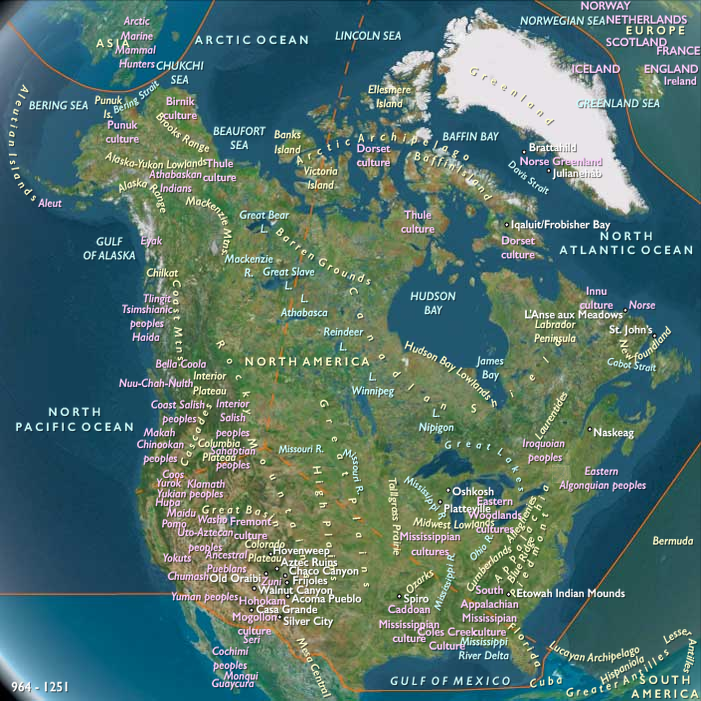
Subregions
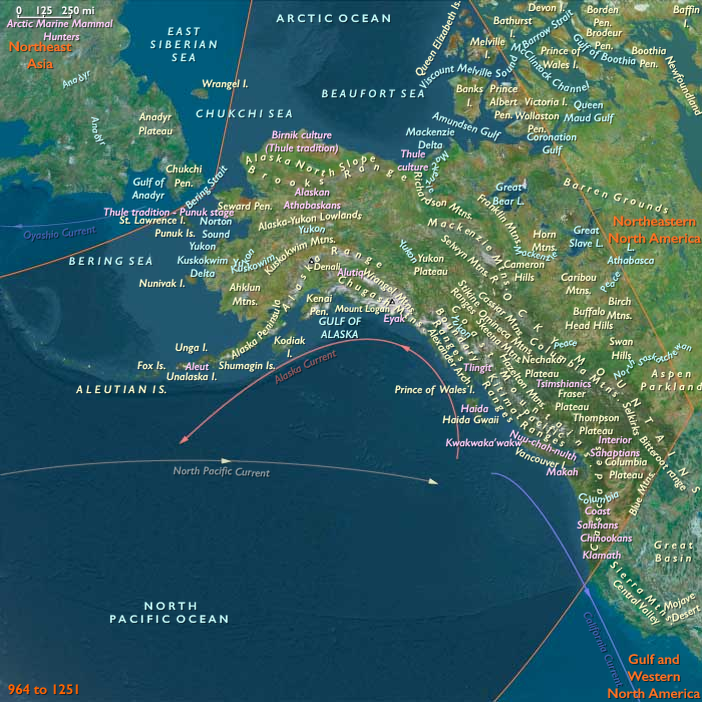
Related Events
Showing 10 events out of 49873 total
Years: 1108 - 1251
Groups
- Kwakwakaʼwakw
- Coast Salish
- Haida people
- Tlingit people
- Athabaskans, or Dene, peoples
- Nuu-chah-nulth people (Amerind tribe; also formerly referred to as the Nootka, Nutka, Aht, Nuuchahnulth)
- Klamath (Amerind tribe)
- Tsimshian
- Eyak
- Aleutian Tradition
- Thule Tradition, Punuk and Birnirk Stages
- Inupiat
- Inuit
Topics
Commodoties
- Fish and game
- Weapons
- Hides and feathers
- Colorants
- Glass
- Oils, gums, resins, and waxes
- Grains and produce
- Strategic metals
- Slaves
- Lumber
Subjects
- Commerce
- Watercraft
- Sculpture
- Painting and Drawing
- Environment
- Decorative arts
- Faith
- Government
- Custom and Law
- Technology
Regions
Subregions