
From ASTt to Old Bering Sea, Okvik, …
Years: 909BCE - 819
From ASTt to Old Bering Sea, Okvik, and Punuk
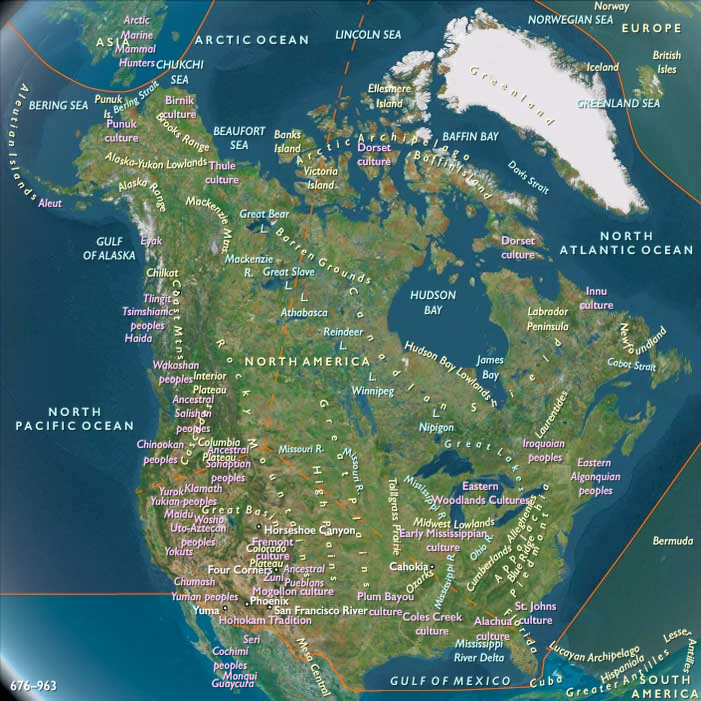
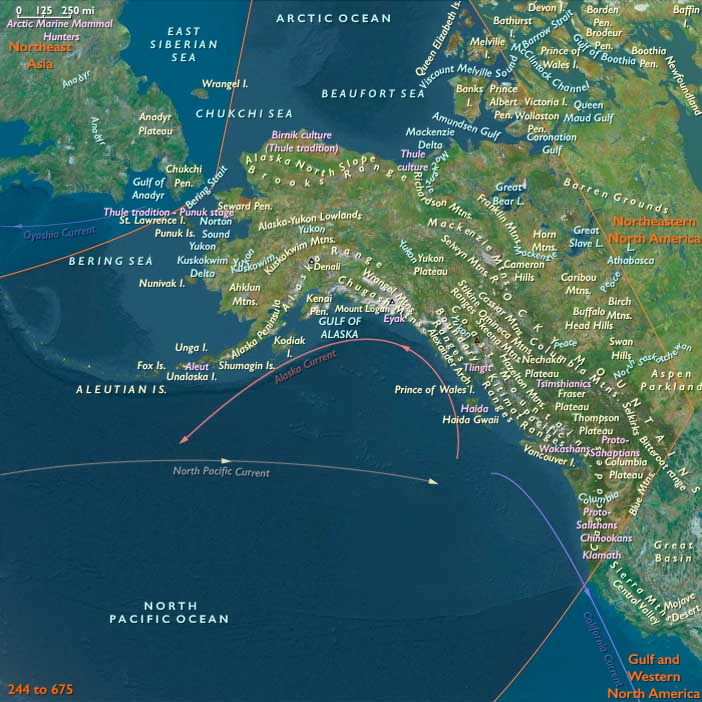
On the western side of the Arctic, innovation accelerated. By the second century CE, the Old Bering Sea culture flourished along the Alaskan and Chukotkan coasts and on the islands between. Its artisans created engraved ivory harpoon heads and tools, marrying artistry with maritime hunting of seals, walrus, and whales.
By the mid-third century, the Okvik culture emerged on the Punuk Islands, carving bold spirals and faces into ivory and developing a distinctive stylistic identity while continuing marine subsistence.
Finally, by the late seventh century, the Punuk culture spread across the Strait. Their subterranean houses framed with whale jawbones, and their focus on cooperative whale hunts, marked a major shift to larger, more permanent settlements and complex social life.
This west Arctic trajectory culminated in the maturation of the Thule tradition, which would soon expand eastward to reshape all of Arctic North America.
Groups
- Kwakwakaʼwakw
- Haida people
- Tlingit people
- Athabaskans, or Dene, peoples
- Klamath (Amerind tribe)
- Tsimshian
- Aleutian Tradition
Commodoties
Subjects
Regions
Subregions
Years: 909BCE - 819
Groups
- Kwakwakaʼwakw
- Haida people
- Tlingit people
- Athabaskans, or Dene, peoples
- Klamath (Amerind tribe)
- Tsimshian
- Aleutian Tradition
Commodoties
Subjects
Regions
Subregions