
Northwestern North America (909 BCE – 819 …
Years: 909BCE - 819
Northwestern North America (909 BCE – 819 CE) Norton and Birnirk North, Ranked Longhouses South — Toward Thule and Classic Northwest Coast
Geographic and Environmental Context
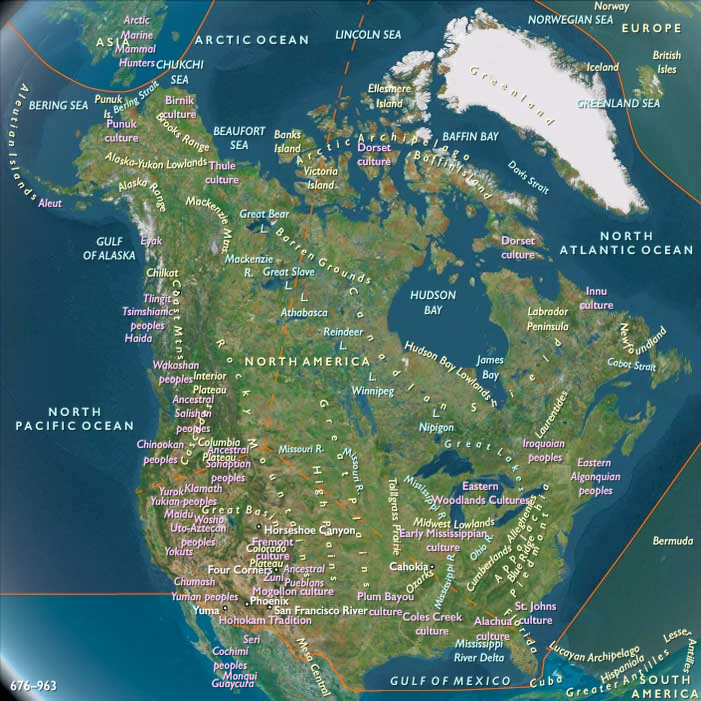
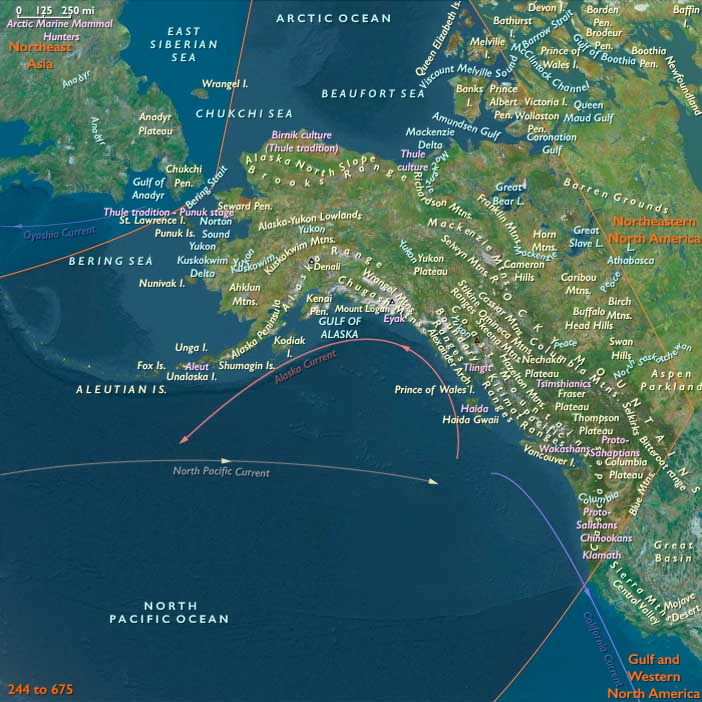
Northwestern North America includes Alaska, western Canada (Alberta, British Columbia, Yukon and Northwest territory and Nunavut west of 110°W) Alaska, Washington State, northern Idaho, and the northwestern portions of Montana, Oregon, and California.
-
Anchors: Norton Sound–Kotzebue Sound (Norton tradition), Brooks Range–North Slope (Birnirk precursors), Cook Inlet–Prince William Sound, Haida Gwaii–Northern/ Central BC coasts, Fraser–Columbia–Plateau town belts, Puget Sound.
Climate & Environmental Shifts
-
First-millennium variability; productive fisheries persisted; sea-ice season structured Arctic hunting.
Subsistence & Settlement
-
Norton tradition (c. 1000 BCE–800 CE) in the western Arctic: large semi-subterranean houses, net fisheries, oil lamps, ceramics; broad marine–riverine economies.
-
Late in the period, Birnirk elements (c. 600–1000 CE) appeared on the North Slope—specialized sea-ice sealing/whaling technologies—foreshadowing Thule.
-
Coastal Northwest: fully developed ranked plank-house villages with hereditary house-lineages controlling fisheries, cedar, and canoe landings; monumental houses rose along Haida Gwaii and the Central Coast.
-
Interior Plateau: dense pit-house towns leveraged salmon canyons (Fraser/Columbia), integrated with coastal exchange.
Technology & Material Culture
-
Arctic: pottery, lamps, toggling harpoons, qayaq/umiak precursors; driftwood sledges; bone/ivory working refined.
-
Coast: heavy adze/chisel carpentry; large sea-going canoes; shell-bead and copper wealth items; standardized net systems.
-
Interior: ground-stone toolkits, fishing gaffs, storage bins.
Movement & Interaction Corridors
-
Arctic: migratory arcs along sea-ice edges; Norton trade into interior for lithics and pyroclastics.
-
Coast–Interior: eulachon “grease” trails ferried oil inland; obsidian and antler–horn moved coastwise.
Cultural & Symbolic Expressions
-
First-salmon rituals, whale/seal ceremonies, and crest/lineage art consolidated social memory.
-
Mortuary diversity: house-area interments, formal cemeteries, and burial cairns.
Environmental Adaptation & Resilience
-
Route redundancy (ice-edge, riverine, and coastal lanes) maintained flows under climatic oscillations; storage economies and social insurance (feasts, alliance marriages) offset shocks.
Transition
By 819 CE, Northwestern North America was a tripartite cultural mosaic: Norton/Birnirk Arctic societies poised for Thule expansion; ranked longhouse polities on the North Pacific Coast approaching their classic florescence; and interior plateau towns tightly integrated into salmon and grease-trail economies — a foundation for the medieval transformations already underway by 820–963 CE.
Groups
- Kwakwakaʼwakw
- Haida people
- Tlingit people
- Athabaskans, or Dene, peoples
- Klamath (Amerind tribe)
- Tsimshian
- Aleutian Tradition
Commodoties
Subjects
Regions
Subregions
Related Events
Showing 10 events out of 519 total
Years: 909BCE - 819
Groups
- Kwakwakaʼwakw
- Haida people
- Tlingit people
- Athabaskans, or Dene, peoples
- Klamath (Amerind tribe)
- Tsimshian
- Aleutian Tradition
Commodoties
Subjects
Regions
Subregions