
Filters:
Western Branches of the Arctic Small-Tool Tradition …
Years: 2637BCE - 910BCE
Western Branches of the Arctic Small-Tool Tradition
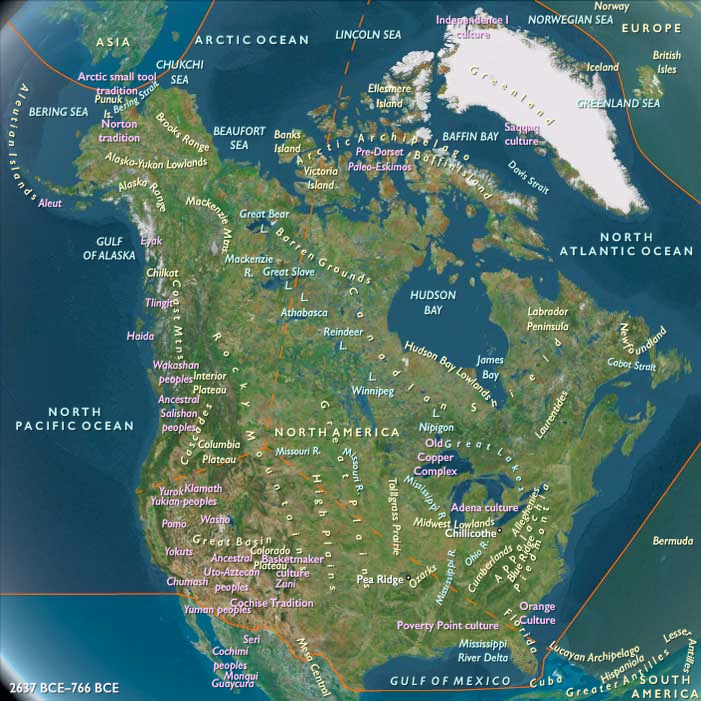
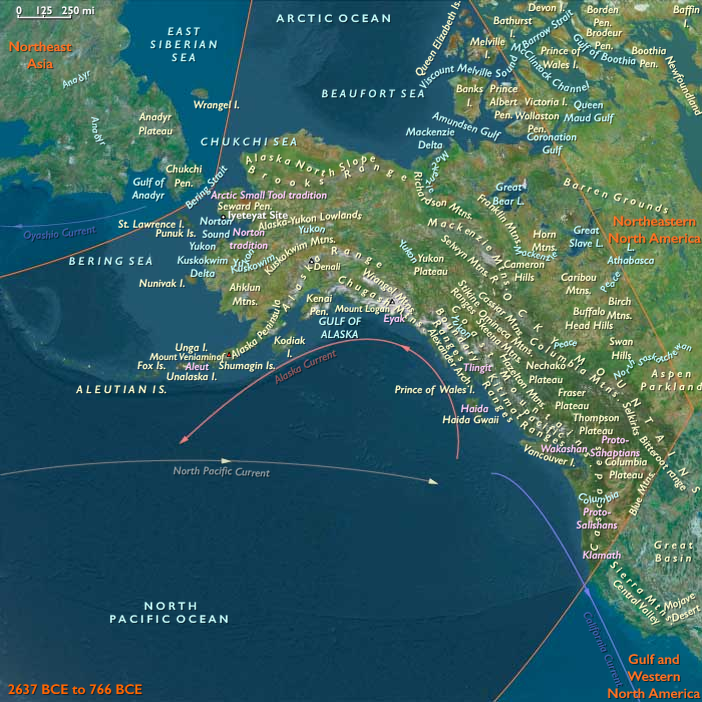
West of 110°W, Arctic Small-Tool groups spread across Alaska, the western Canadian Arctic, and the Bering Strait corridor. Like their eastern counterparts, they mastered microlithic technology and portable shelters, but local adaptations emphasized both inland and coastal hunting.
In Alaska, small-blade toolkits supported mixed economies: caribou, fish, and seals along coastal margins. Seasonal mobility linked river valleys to sea ice. These ASTt communities set the stage for later Choris, Norton, and Ipiutak traditions, and ultimately the florescence of the Old Bering Sea culture.
By 910 BCE, the foundations of western Arctic lifeways—flexibility, mobility, and cross-Strait connections—were firmly in place.
Groups
- Kwakwakaʼwakw
- Haida people
- Tlingit people
- Athabaskans, or Dene, peoples
- Klamath (Amerind tribe)
- Tsimshian
- Aleutian Tradition
Topics
- Archaic Stage (Americas)
- Subboreal Period
- Abrolhos Transgression
- 4.2 kiloyear BP aridification event
- Formative Stage (Americas)
- Rottnest Transgression
- Younger Subboreal Period
Commodoties
Subjects
Regions
Subregions
Years: 2637BCE - 910BCE
Groups
- Kwakwakaʼwakw
- Haida people
- Tlingit people
- Athabaskans, or Dene, peoples
- Klamath (Amerind tribe)
- Tsimshian
- Aleutian Tradition
Topics
- Archaic Stage (Americas)
- Subboreal Period
- Abrolhos Transgression
- 4.2 kiloyear BP aridification event
- Formative Stage (Americas)
- Rottnest Transgression
- Younger Subboreal Period
Commodoties
Subjects
Regions
Subregions