
Northwestern North America (2008–2019 CE) Climate …
Years: 2008 - 2019
Northwestern North America (2008–2019 CE)
Climate Urgency, Indigenous Leadership, and Global Alliances
Environmental context
Between 2008 and 2019, climate change impacts in Northwestern North America became unmistakable and measurable. Arctic sea ice reached record lows, permafrost thaw accelerated, and coastal erosion threatened communities from the Yukon–Kuskokwim Delta to the North Slope. In the Pacific, marine heatwaves—including the “Blob” (2013–2016)—disrupted salmon survival and shifted marine ecosystems. Wildfires in interior Alaska and British Columbia reached unprecedented sizes, transforming boreal forest landscapes. Ocean acidification, driven by rising CO₂, began visibly affecting shellfish hatcheries and coastal food webs.
Political and legal change
This period saw Indigenous-led governance move to the center of environmental and economic decision-making:
-
The Haida Nation, Heiltsuk, and other coastal governments co-led marine spatial planning initiatives.
-
The Tsilhqot’in Nation v. British Columbia (2014) decision marked the first recognition of Aboriginal title to a specific area in Canada.
-
In Alaska, tribal organizations secured expanded authority in environmental review and wildlife co-management through federal–tribal agreements.
-
Internationally, Indigenous leaders from the region became prominent at United Nations climate summits and Arctic Council working groups.
Economy and infrastructure
The period saw both new opportunities and intensified risks:
-
Renewable energy initiatives—solar in Arctic communities, micro-hydro in the interior, and wind in coastal Alaska—began to reduce diesel dependence.
-
LNG (liquefied natural gas) export proposals in British Columbia, along with pipeline expansions, sparked significant legal and grassroots resistance.
-
Ecotourism grew, especially in the Great Bear Rainforest and Haida Gwaii, where cultural tourism integrated economic development with language and art revitalization.
Arctic and Bering Strait dynamics
Rapid environmental change made the Bering Strait an even more important geopolitical and ecological chokepoint:
-
Ship traffic increased as sea ice retreated, prompting calls for stronger vessel monitoring and spill prevention measures.
-
Indigenous communities in Alaska and Chukotka expanded transboundary cooperation on wildlife monitoring, cultural exchange, and search-and-rescue.
-
Arctic Council projects integrated Indigenous knowledge into climate modeling and ecosystem management.
Cultural resurgence and global profile
The decade brought unprecedented international recognition of Northwest Coast and Arctic Indigenous cultures:
-
Master carvers, weavers, and contemporary artists from the region gained major museum commissions and global exhibitions.
-
Large-scale canoe voyages, such as Tribal Journeys, became annual fixtures drawing global Indigenous participation.
-
Language revitalization accelerated through immersion schools, media production, and digital archives.
Environmental and rights campaigns
The era’s defining activism included:
-
Opposition to the Northern Gateway pipeline, culminating in its federal rejection in 2016.
-
Coastal First Nations’ moratorium on oil tanker traffic through British Columbia’s north coast, enshrined in Canada’s Oil Tanker Moratorium Act (2019).
-
Alaska Native coalitions resisting offshore oil leasing in the Chukchi and Beaufort Seas, contributing to federal lease withdrawals.
By 2019 CE
Northwestern North America stood at the front line of global climate politics—a place where environmental urgency, Indigenous rights, and global advocacy converged. The region’s Indigenous nations had become not only defenders of their territories but also key voices in shaping international approaches to conservation, sustainable development, and climate resilience.
People
Groups
- Kwakwakaʼwakw
- Haida people
- Tlingit people
- Athabaskans, or Dene, peoples
- Klamath (Amerind tribe)
- Nuu-chah-nulth people (Amerind tribe; also formerly referred to as the Nootka, Nutka, Aht, Nuuchahnulth)
- Tsimshian
- Eyak
- United States of America (US, USA) (Washington DC)
- Canada, Dominion of
- British Columbia (Canadian province)
- Britain (United Kingdom of Great Britain and Northern Ireland)
- Alaska, State of (U.S.A.)
Topics
Commodoties
Subjects
- Commerce
- Watercraft
- Sculpture
- Painting and Drawing
- Environment
- Decorative arts
- Government
- Custom and Law
Regions
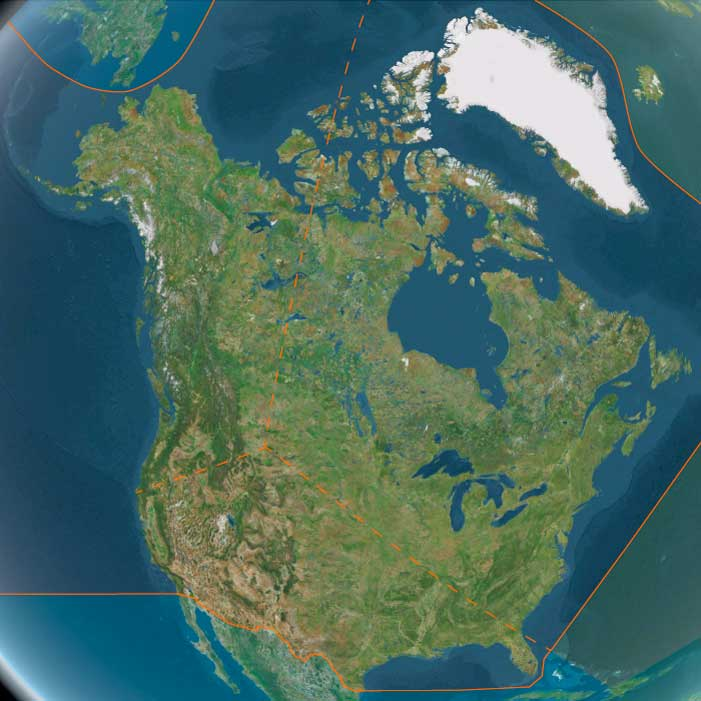
Subregions
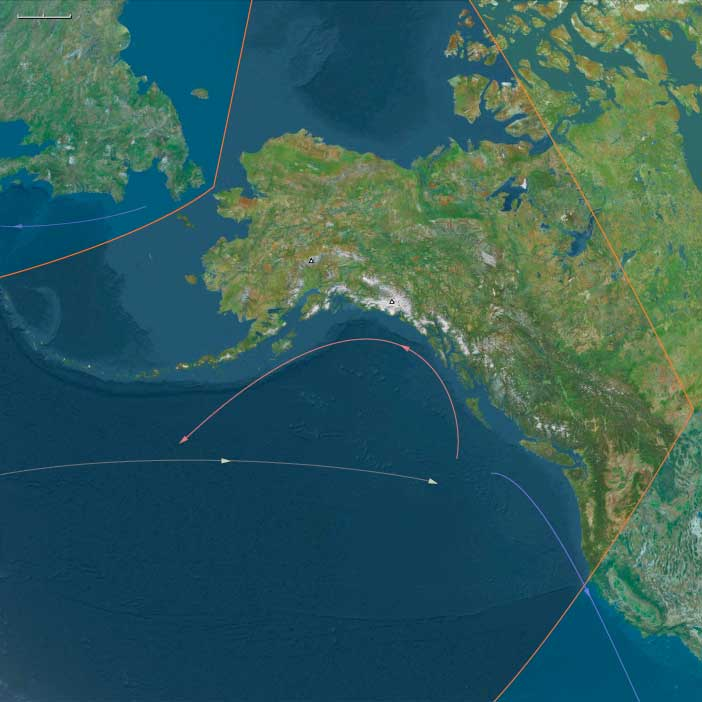
Related Events
Filter results
Showing 10 events out of 101 total
Northeast Asia (2008–2019 CE)
Strategic Development, Cultural Preservation, and New Ethnohistorical Insights
From 2008 to 2019, Northeast Asia—comprising eastern Siberia (east of 130°E), northeastern China's Heilongjiang province, northern Primorsky Krai, and most of Hokkaido, excluding its southwestern portion—continued on a trajectory defined by strategic economic developments, intensified cultural preservation, groundbreaking ethnological research, and mounting environmental concerns.
Economic integration within the region accelerated, driven primarily by China's ambitious Belt and Road Initiative (BRI). The initiative significantly impacted Heilongjiang province and Primorsky Krai, facilitating infrastructure projects, including railways, highways, and logistics hubs. Vladivostok emerged prominently as a focal point for economic cooperation, hosting the Eastern Economic Forum annually from 2015, attracting significant international participation and investment.
Japan persisted in diplomatic dialogues with Russia regarding the contested Kuril Islands. Despite intermittent high-level discussions, including meetings between leaders Shinzo Abe and Vladimir Putin, a resolution remained unattained. Nonetheless, the dialogues spurred increased cultural exchanges and economic partnerships between Hokkaido and adjacent Russian regions, particularly in tourism, fisheries, and energy development.
Indigenous peoples, notably the Evenki, Chukchi, Koryaks, Itelmen, Oroks, Nivkhs, and other groups, further advanced their advocacy for recognition and rights. The creation of Kamchatka Krai in 2007—consolidating Kamchatka Oblast and the Koryak Autonomous Okrug—began yielding improved administrative oversight, though challenges in governance and socioeconomic disparities persisted. Efforts to preserve indigenous cultural practices and languages increased, supported by regional and international initiatives aimed at protecting cultural heritage and promoting sustainable development.
New ethnological and linguistic research provided significant insights into the historical migrations and relationships among indigenous populations. Studies showed that the Chukchi are a relatively recent people who separated from the Koryaks between 800 and 1,000 years ago. The Koryaks themselves emerged from the Tokarev archaeological culture, which inhabited southern Kamchatka between 2,800 and 1,500 years ago. DNA research revealed that Proto-Koryaks migrated from the Lower Amur Valley, historically connected to the Baikal region via river systems. Furthermore, linguistic analysis highlighted the Nivkh as the sole surviving speakers of the Amuric language group, linking them to the ancient Amurian Civilization, instrumental in populating Northeast Asia's coastal territories.
Environmental challenges became increasingly pronounced during this era, highlighting vulnerabilities posed by climate change, biodiversity loss, and pollution. Severe wildfires in Siberia, declining fish stocks, and threats to critical habitats underscored the urgency for comprehensive environmental policies. Conservation groups intensified their efforts, collaborating with governments and local communities to establish protected areas and implement sustainable resource management practices.
The region's economic progress frequently clashed with environmental sustainability, as rapid industrial expansion continued to exert significant ecological pressures. Indigenous communities advocated for balanced development approaches, emphasizing the interconnectedness of environmental health, cultural preservation, and economic sustainability.
By 2019, Northeast Asia remained a dynamic region defined by strategic economic initiatives, rich ethnohistorical discoveries, cultural resilience, and environmental challenges. These interconnected factors underscored the need for cooperative governance, sustainable practices, and ongoing dialogue among regional stakeholders, setting the foundation for future stability and integrated growth.
North Polynesia (2008–2019 CE)
Economic Recovery and Tourism Growth
From 2008 to 2019, North Polynesia experienced a gradual economic recovery following the global financial crisis of 2008. Tourism, central to the region’s economy, rebounded strongly by the early 2010s, buoyed by increasing numbers of visitors from East Asia, Australia, and the continental United States. The recovery spurred extensive developments in hospitality, infrastructure, and local businesses.
Renewable Energy and Sustainability Initiatives
North Polynesia intensified its commitment to sustainability during this era. Hawaii set ambitious renewable energy goals, including a target to achieve 100% renewable electricity by 2045. Solar, wind, and geothermal energy projects proliferated, reflecting a growing commitment to environmental stewardship and reducing dependence on imported fossil fuels.
Native Hawaiian Activism and Cultural Revitalization
This period marked heightened political activism and cultural renewal among Native Hawaiians. Movements advocating for land rights, protection of sacred sites, and political autonomy gained momentum. Notably, widespread protests arose in response to the proposed construction of the Thirty Meter Telescope (TMT) on Mauna Kea, underscoring deeper tensions over land use, indigenous rights, and cultural heritage preservation.
Climate Change and Environmental Challenges
Climate change impacts became increasingly evident in North Polynesia, with rising sea levels, intensified coastal erosion, and more frequent extreme weather events posing significant risks. Communities and policymakers implemented mitigation measures, infrastructure upgrades, and adaptive strategies to combat climate-related threats to the islands’ ecosystems and urban areas.
Economic Disparities and Housing Crisis
Economic growth was accompanied by significant challenges, particularly growing income disparity and housing affordability crises. Rapidly rising property values and the influx of non-resident investors exacerbated homelessness and housing insecurity, prompting local governments to increase funding for affordable housing and social programs.
Technological Innovation and Astronomical Research
North Polynesia maintained its position as a key global hub for astronomical research. Institutions on Maui and Oʻahu expanded high-tech and innovation sectors, while debates surrounding development atop Mauna Kea drew international attention. The controversy highlighted the complex balance between scientific advancement, environmental stewardship, and cultural preservation.
Strategic Military Significance
The strategic military role of North Polynesia, particularly Hawaii, remained pivotal. U.S. military installations continued to expand infrastructure investments and personnel deployments in response to growing geopolitical tensions in the Asia-Pacific region. The military presence remained an economic anchor, even as it continued to provoke local debates over land use and sovereignty issues.
Educational Advancements and Cultural Integration
Educational systems increasingly integrated Hawaiian culture, language, and history into curricula, promoting deeper understanding and respect for indigenous traditions. The University of Hawaii System expanded research programs, particularly in environmental sciences, renewable energy, marine biology, and indigenous studies, further enhancing the islands’ global academic reputation.
Natural Disasters and Community Resilience
Notably, North Polynesia faced severe natural disasters during this period, including the eruption of Kīlauea volcano on the Big Island (2018), whose ashfall significantly affected air quality and travel across the islands. Although occurring outside the North Polynesia region specifically delineated here (Maui to Kure Atoll), the event underscored the interconnectedness and vulnerability of the entire archipelago. Community resilience, disaster preparedness, and responsive infrastructure measures received renewed emphasis.
Cultural Representation and Global Influence
North Polynesian culture increasingly resonated on global stages through media, arts, film, music, and sports. Films and television shows prominently featuring the islands raised their international profile, driving increased tourism and fostering global cultural appreciation. Events such as the annual Merrie Monarch Festival continued to flourish, preserving and celebrating traditional Hawaiian hula and cultural heritage.
Conclusion of the Era
Between 2008 and 2019, North Polynesia navigated economic recovery, cultural renaissance, and environmental challenges. The region balanced rapid modernization and global integration with strengthened advocacy for indigenous rights, cultural identity, sustainability, and community resilience. These years laid important groundwork for future efforts in achieving economic, environmental, and cultural sustainability, affirming North Polynesia’s unique and enduring legacy.
South Polynesia (2008 – 2019 CE)
Geographic scope: This subregion includes Norfolk Island, the Kermadec Islands, the Chatham Islands, and all of New Zealand’s North Island except for the extreme southwest.
Climate and Environmental Conditions
Climate variability was increasingly viewed through the lens of global climate change, with scientific monitoring highlighting rising sea levels, warmer sea-surface temperatures, and shifting rainfall patterns. El Niño and La Niña cycles influenced drought frequency in eastern North Island districts and brought flooding to some northern and western regions. The Chatham Islands remained cool, windy, and prone to rapid weather changes; the Kermadec Islands retained their subtropical climate but experienced stronger tropical storm events; and Norfolk Island saw gradual temperature increases alongside changing seasonal rainfall patterns.
Vegetation and Landscape
North Island (excluding extreme southwest): Native forest remnants persisted in reserves, national parks, and difficult-to-reach valleys, with expanding restoration programs and predator control projects. Alpine vegetation remained limited to the highest volcanic peaks—Ruapehu, Ngauruhoe, Tongariro, Mt Taranaki—while large-scale pine forestry and agriculture still dominated much of the lowlands. Wetland and coastal dune restoration increased under conservation initiatives.
Chatham Islands: Significant habitat restoration continued, with predator eradication projects and replanting of native species.
Kermadec Islands: The Kermadec Marine Reserve was globally recognized as a biodiversity hotspot, and pest-free status was maintained on some islands.
Norfolk Island: Restoration programs targeted invasive species removal and the expansion of protected forest areas.
Political and Social Context
In the North Island, Treaty of Waitangi settlement processes continued, with major settlements finalizing land, resource, and financial redress to Māori iwi. Co-management of conservation lands became more common, symbolizing a stronger partnership between iwi and the Crown.
In the Chatham Islands, Moriori cultural resurgence intensified, supported by formal recognition and funding for heritage projects.
Norfolk Island underwent a major governance change in 2015, when the Australian Government replaced self-governing structures with a local council model, sparking significant debate and protest among island residents. The Kermadec Islands became a focal point in 2016 over proposals to expand the marine sanctuary, generating discussion about Māori fishing rights and conservation priorities.
Economic Activity
The North Island economy remained diverse—agriculture, forestry, horticulture, tourism, and technology all played major roles. Māori economic development expanded, with iwi investing in fisheries, tourism, property, and agribusiness as part of post-settlement growth strategies. Tourism continued to grow, with cultural tourism centered on Māori heritage sites and natural attractions.
The Chatham Islands economy relied heavily on fishing, especially for crayfish and blue cod, while Norfolk Island’s economy was tourism-driven. The Kermadec Islands remained uninhabited and economically inactive except for scientific research.
Cultural Developments
The Māori Renaissance deepened, with te reo Māori gaining higher visibility in public life, media, and education. National kapa haka competitions, waka voyaging, and tribal arts festivals reinforced cultural identity. Moriori in the Chathams expanded cultural education programs and commemorations, while Norfolk Island sought to preserve its Pitcairn language and traditions under new governance conditions. Conservation efforts in the Kermadec Islands brought increased global attention to the subregion’s ecological value.
Maritime East Asia (2008–2019 CE): Shifting Power Dynamics, Economic Realignments, and Diplomatic Strains
Between 2008 and 2019 CE, Maritime East Asia—including lower Primorsky Krai, the Korean Peninsula, the Japanese Archipelago south of northern Hokkaido, Taiwan, and southern, central, and northeastern China—enters an era defined by shifting geopolitical landscapes, evolving economic models, deepening integration, and intensifying regional security challenges. This period highlights China's accelerated rise, Japan’s cautious resurgence, Korea’s complex political transitions, Taiwan’s democratic vibrancy, and regional geopolitical tensions involving major global actors.
China: Ascending Global Influence and Domestic Realignments
Under the leadership of Hu Jintao (until 2013) and subsequently Xi Jinping (2013–present), China continues its impressive economic growth trajectory, though at a moderated pace compared to previous decades. Xi Jinping consolidates political authority, launching ambitious initiatives like the Belt and Road Initiative (BRI, 2013), aimed at extending China’s economic and strategic reach globally.
Domestically, Xi emphasizes party discipline, anti-corruption campaigns, and a more assertive foreign policy posture. Internally, social surveillance technologies expand significantly, notably in regions like Xinjiang. Economic reforms move toward high-tech and innovation-driven sectors, as exemplified by strategies like “Made in China 2025.” Nevertheless, China faces growing international scrutiny due to human rights issues, environmental degradation, trade disputes, and territorial tensions, particularly in the South China Sea and over Taiwan.
Japan: Economic Resilience and Strategic Reorientation
After decades of stagnation, Japan under Prime Minister Shinzo Abe (2012–2020) initiates aggressive economic reforms known as “Abenomics,” incorporating monetary easing, fiscal stimulus, and structural reform to rejuvenate growth. Although achieving mixed results economically, Japan demonstrates resilience, with moderate recovery, improved employment rates, and sustained global competitiveness in technology, manufacturing, and innovation sectors.
Politically, Abe pursues a more assertive defense and foreign policy, revising the nation’s pacifist constitution interpretation (2015) to allow collective self-defense, strengthening alliances, notably with the United States, Australia, and India. Japan faces significant demographic challenges, with declining birthrates, population aging, and workforce shortages, prompting cautious consideration of immigration reforms.
Korean Peninsula: Divergent Trajectories and Historic Diplomatic Moves
South Korea: Democratic Stability and Diplomatic Activism
South Korea, under conservative presidents Lee Myung-bak (2008–2013) and Park Geun-hye (2013–2017), emphasizes economic growth, U.S.-South Korea alliance strengthening, and firm North Korea policies. Yet, Park's impeachment in 2017 due to corruption scandals marks a political turning point, ushering in progressive President Moon Jae-in (2017–2022), who emphasizes engagement with North Korea and domestic socioeconomic reforms.
Moon pursues the revitalization of inter-Korean dialogue, leading to historic summits with North Korean leader Kim Jong-un in 2018. Despite warming relations, nuclear diplomacy stalls amid complicated U.S.-North Korean negotiations. South Korea also faces internal debates on social justice, inequality, gender rights, and democratic transparency, reflecting robust civic engagement.
North Korea: Nuclear Ambitions and International Diplomacy
Under Kim Jong-il until his death in 2011 and succeeded by Kim Jong-un, North Korea sharply accelerates its nuclear weapons and ballistic missile programs. Between 2013 and 2017, Pyongyang conducts multiple nuclear tests and missile launches, prompting stringent international sanctions and escalating tensions.
In 2018, Kim Jong-un shifts course, engaging in unprecedented diplomacy: multiple summits with Moon Jae-in, and historic encounters with U.S. President Donald Trump (Singapore Summit, 2018, and Hanoi Summit, 2019). Despite initial optimism, these engagements yield limited results, as fundamental disagreements persist over denuclearization, sanctions relief, and verification mechanisms.
Taiwan: Democratic Consolidation and Cross-Strait Tensions
Taiwan continues strengthening its vibrant democracy. The Kuomintang (KMT) briefly regains power under Ma Ying-jeou (2008–2016), who pursues cross-strait economic rapprochement, notably through the Economic Cooperation Framework Agreement (ECFA, 2010). However, growing skepticism of economic integration fuels backlash, leading to the election of the pro-independence Democratic Progressive Party (DPP) candidate Tsai Ing-wen in 2016.
Tsai advocates a cautious stance on China, promoting Taiwanese identity and democratic resilience, resulting in heightened cross-strait tensions. Under her administration, Taiwan's international profile rises through initiatives such as the New Southbound Policy, strengthening relations with Southeast Asia, India, and Australia amid increased diplomatic pressures from Beijing, which further isolates Taiwan diplomatically.
Primorsky Krai: Economic Revival and Regional Ambitions
Primorsky Krai experiences moderate economic revitalization through increased trade, investment, and regional integration, notably hosting the 2012 Asia-Pacific Economic Cooperation (APEC) summit in Vladivostok. Russia invests substantially in infrastructure upgrades, hoping to transform Vladivostok into a Pacific commercial hub. However, structural issues remain, including population decline, underdeveloped industries, bureaucratic inefficiencies, and challenges balancing regional development with geopolitical considerations in the Pacific region.
Regional and Global Geopolitical Shifts
East Asia's geopolitics increasingly reflect strategic competition, primarily between China and the United States, influencing the regional security landscape significantly. China’s expanding military presence in the South China Sea, tensions over Taiwan, and North Korea’s nuclear provocations drive intense security dynamics. The United States bolsters alliances and regional presence through strategies such as the Pivot to Asia (under President Barack Obama), aimed at counterbalancing China's rising influence.
Simultaneously, economic integration deepens, evidenced by multilateral trade agreements like the Comprehensive and Progressive Agreement for Trans-Pacific Partnership (CPTPP), initiated after the U.S. withdrawal from the TPP in 2017, and the Regional Comprehensive Economic Partnership (RCEP) negotiations. Despite geopolitical friction, economic interdependence remains a crucial stabilizing factor.
Cultural and Technological Innovation
The region emerges as a global leader in technology and innovation. China becomes central in global technology infrastructure, 5G telecommunications, artificial intelligence, and e-commerce platforms like Alibaba and Tencent. South Korea’s entertainment industry, particularly K-pop and Korean dramas, achieves global popularity, significantly influencing popular culture worldwide. Japan maintains its position as a global innovation powerhouse in robotics, automation, and gaming industries, despite demographic pressures.
Legacy of the Era: Geopolitical Realignment and Economic Interdependence
The period 2008 to 2019 CE profoundly reshapes Maritime East Asia's strategic, economic, and political landscapes. China’s assertive rise redefines global geopolitics, challenging traditional alliances and prompting regional strategic recalibrations. Japan cautiously renews its global economic and diplomatic roles despite domestic challenges. South Korea continues democratic maturity amid complicated diplomacy with the North, which itself navigates precarious paths of nuclear brinksmanship and diplomacy. Taiwan asserts democratic strength amid mounting pressures from China, and Primorsky Krai seeks greater regional integration, confronting persistent structural difficulties.
Overall, this transformative era underscores the interplay between intensified geopolitical rivalry and unprecedented economic interdependence, establishing enduring patterns that shape Lower East Asia's trajectory well into the twenty-first century
Central Asia (2008–2019 CE): Leadership Transitions, Economic Resilience, and Evolving Geopolitical Ties
From 2008 to 2019 CE, Central Asia—encompassing modern-day Kazakhstan, Kyrgyzstan, Uzbekistan, Tajikistan, and Turkmenistan—entered a significant transitional phase marked by pivotal leadership changes, economic adaptation to global volatility, intensified geopolitical engagement, and evolving societal dynamics. This era shaped contemporary regional identities, governance structures, and global alignments.
Political Developments
Leadership Changes and Political Transition
Significant leadership transitions defined the era. In Turkmenistan, Gurbanguly Berdymukhamedov succeeded Saparmurat Niyazov (in power since 2007), gradually altering Turkmen politics. In Uzbekistan, Islam Karimov’s death (2016) led to a notable shift under new president Shavkat Mirziyoyev, who pursued cautious liberalization and regional cooperation.
Political Turbulence in Kyrgyzstan
Kyrgyzstan witnessed continued volatility. Following the overthrow of President Kurmanbek Bakiyev in 2010, the country briefly moved toward parliamentary democracy, but political tensions and instability persisted, highlighted by ethnic clashes, notably in Osh (2010).
Kazakhstan’s Managed Transition
In Kazakhstan, President Nursultan Nazarbayev, after nearly three decades in power, stepped down in 2019, handing authority to Kassym-Jomart Tokayev in a carefully managed transition that ensured political continuity.
Economic Developments
Global Financial Crisis and Recovery
Central Asian economies navigated substantial challenges stemming from the 2008 global financial crisis, which impacted commodity-dependent countries such as Kazakhstan and Turkmenistan. Despite setbacks, sustained high oil prices, foreign investment, and diversification efforts enabled gradual recovery and growth.
Infrastructure Expansion and Connectivity
Massive infrastructure projects, including transportation corridors (Belt and Road Initiative, BRI) led by China, dramatically enhanced regional connectivity, integrating Central Asia deeper into Eurasian markets. These initiatives modernized railroads, highways, and logistics, reshaping economic geography.
Labor Migration and Remittance Dependency
Economic pressures intensified reliance on remittances from labor migrants, especially from Kyrgyzstan, Tajikistan, and Uzbekistan, who primarily worked in Russia. Remittances became vital to these nations' economic stability, underscoring vulnerabilities to external economic fluctuations.
Cultural and Religious Developments
Renewed Cultural Identity and Nationalism
Governments continued promoting national identities, history, and language. Cultural heritage initiatives flourished, including restoration projects, historical commemorations, and support for traditional arts, aiming to strengthen domestic legitimacy and national cohesion.
Managed Religious Revival
Islam remained central to cultural and social life, with governments maintaining tight oversight to prevent radicalization. States supported "official Islam," tightly regulating religious institutions while suppressing alternative or extremist interpretations, particularly amid concerns related to global terrorism.
Social Developments and Urbanization
Rapid Urbanization and Infrastructure Development
Major urban centers—such as Astana (renamed Nur-Sultan in 2019), Tashkent, Bishkek, Almaty, Ashgabat, and Dushanbe—underwent dramatic expansion, marked by extensive infrastructure investments, urban renewal projects, and growing middle-class populations, significantly transforming urban landscapes.
Demographic Shifts and Societal Pressures
Continued labor migration profoundly affected social structures, particularly in rural areas. While remittances provided economic lifelines, migration also caused family separations, demographic shifts, and socio-economic disparities between urban and rural populations.
Geopolitical Developments
Deepening Integration with China
China significantly increased its economic and diplomatic presence, primarily through the Belt and Road Initiative, offering substantial investments in infrastructure, trade, and energy projects, reshaping Central Asia’s geopolitical alignment.
Renewed Russian Influence
Russia maintained significant influence, reinforcing security cooperation through the Collective Security Treaty Organization (CSTO) and regional economic integration via the Eurasian Economic Union (EAEU), counterbalancing China’s economic dominance and the West’s political influence.
Western Engagement and Security Concerns
Western interests, notably those of the United States and European Union, persisted in regional stability, security cooperation related to Afghanistan, and democratic governance initiatives, albeit at reduced levels compared to earlier periods.
Long-Term Consequences and Historical Significance
The era from 2008 to 2019 CE decisively shaped contemporary Central Asia. Politically, leadership transitions began transforming governance, creating opportunities for cautious reform. Economically, infrastructure-driven growth deepened global integration yet exposed vulnerabilities to external shocks. Culturally and socially, Central Asia saw strengthened national identities and complex demographic shifts. Geopolitically, increased Chinese engagement, sustained Russian influence, and evolving Western interests positioned Central Asia at the crossroads of major global dynamics, profoundly influencing the region’s ongoing historical trajectory.
East Europe (2008–2019 CE): Geopolitical Tensions, Economic Fluctuations, and Societal Transformations
Political and Military Developments
Russo-Georgian War (2008)
In 2008, the Russo-Georgian War significantly heightened regional tensions. The conflict demonstrated Russia's readiness to assert military influence over neighboring post-Soviet states, altering security perceptions across Eastern Europe.
Annexation of Crimea and Conflict in Eastern Ukraine (2014)
The annexation of Crimea by Russia in 2014 profoundly reshaped regional geopolitics, triggering severe international tensions and sanctions. Simultaneously, armed conflict erupted in Eastern Ukraine’s Donbas region, involving pro-Russian separatist forces, fundamentally affecting Ukraine's political landscape and territorial integrity.
Political Shifts and Domestic Governance
During this period, Russia under President Vladimir Putin strengthened centralized governance, extending political control through legislative and constitutional reforms. Ukraine experienced significant political realignments, notably the Euromaidan Revolution (2014), resulting in enhanced democratic aspirations and closer ties with Western institutions.
Continued Impact of the Chechen Conflicts
Though the major military campaigns of the Chechen Wars (1994–1996, 1999–2009) concluded by 2009, their aftermath significantly influenced regional stability and Russian domestic policy. The period witnessed ongoing counter-insurgency operations, strengthened central control from Moscow, and substantial human rights concerns, continuing to affect governance and security in the North Caucasus.
Economic and Technological Developments
Economic Challenges and Sanctions
Eastern Europe faced economic volatility, exacerbated by global financial crises, fluctuating commodity prices, and international sanctions against Russia following the Crimea annexation. Economic conditions varied, with Ukraine experiencing severe disruptions while Belarus maintained relative stability amid close economic ties with Russia.
Digital Expansion and Cybersecurity Concerns
Technological advancements accelerated, particularly in digital infrastructure and cybersecurity capabilities. However, increased cyber threats and digital propaganda became significant concerns, notably affecting electoral processes and information security across the region.
Cultural and Artistic Developments
Cultural Identity and Nationalism
Artistic and cultural expressions increasingly explored themes of national identity, historical narratives, and political critique. Ukraine witnessed a significant cultural renaissance, emphasizing its distinct cultural heritage in response to external pressures and internal transformations.
Media Control and Independent Journalism
Media environments in Russia and Belarus remained tightly controlled, with limited space for independent journalism. Conversely, Ukraine experienced significant media diversification and increased support for independent journalism, albeit within a highly polarized environment.
Settlement Patterns and Urban Development
Urban Renewal and Infrastructure Projects
Major urban centers such as Kyiv, Minsk, Moscow, and Saint Petersburg experienced continued urban renewal and infrastructural enhancements. Projects focused on transportation networks, public services, housing, and environmental sustainability, reflecting modernization efforts and improved living standards.
Strategic Military Infrastructure Expansion
Russia expanded strategic military infrastructure significantly, particularly in Crimea and along western borders, reflecting increased security concerns and military readiness. Ukraine also sought strategic enhancements, improving military infrastructure and capabilities amid ongoing conflicts.
Social and Religious Developments
Societal Polarization and Activism
Societies in Eastern Europe experienced increased polarization, driven by political dynamics, nationalist sentiments, and socio-economic disparities. Civic activism notably expanded in Ukraine, reflecting societal resilience and engagement in democratic processes.
Religious Autonomy and Influence
Religious institutions maintained significant societal influence, notably exemplified by the establishment of the Orthodox Church of Ukraine (2018), marking a historic religious autonomy from Moscow and reflecting broader socio-political dynamics within Ukraine.
Long-Term Consequences and Historical Significance
The period from 2008 to 2019 CE profoundly impacted Eastern Europe's geopolitical landscape, characterized by military conflicts, political realignments, economic disruptions, and robust societal transformations. These developments significantly influenced regional stability, identity, and international relations, laying critical foundations for Eastern Europe's contemporary challenges and future pathways.
Dmitry Medvedev is elected Russian president on March 2, 2008, while Vladimir Putin becomes prime minister, as the constitution bars Putin from serving a third consecutive presidential term.
Putin returns to the presidency following the 2012 presidential elections, and Medvedev is appointed prime minister.
This four-year joint leadership by the two is coined "tandemocracy" by foreign media.
In 2014, following the Revolution of Dignity in Ukraine, Putin deploys Russian troops to its neighbor to seize the Crimean parliament, leading to the takeover of Crimea.
Russia's subsequent annexation of Crimea and the referendum that preceded it remain globally unrecognized, and lead to sanctions by Western countries, following which the Russian government responded with counter-sanctions against the latter.
In eastern Ukraine, conflict between Russian citizens and Ukrainians contributes to the breakout of war, which the Russian state supports covertly at first, later sending arms and recruiting "volunteer" Russian soldiers to fight.
In March 2018, Putin is elected for a fourth presidential term overall.
Northeast Europe (2008–2019 CE): Resilience Amid Economic Challenges, Geopolitical Tensions, and Social Progress
Between 2008 and 2019 CE, Northeast Europe navigated significant global economic crises, intensified geopolitical tensions stemming from Russia’s assertiveness, profound societal transformations, and sustained regional cooperation. The period saw the Baltic republics (Estonia, Latvia, and Lithuania) firmly embed themselves within the European Union and NATO, while the Nordic states (Denmark, Finland, Norway, and Sweden) continued their traditions of social progress, environmental leadership, and technological innovation.
Global Financial Crisis and Economic Recovery
The global financial crisis beginning in 2008 deeply impacted Northeast Europe, particularly the Baltic republics. Estonia, Latvia, and Lithuania endured severe recessions due to vulnerabilities in real estate, banking sectors, and excessive reliance on external capital. Latvia, hit especially hard, required an emergency financial package from the International Monetary Fund (IMF) and European partners in 2008–2009.
However, these nations showed extraordinary resilience. Estonia rapidly stabilized, joining the Eurozone in 2011, followed by Latvia in 2014 and Lithuania in 2015. Rigorous austerity measures, structural reforms, and prudent fiscal policies facilitated rapid recovery, with all three countries ultimately achieving robust growth, reduced unemployment, and improved competitiveness by 2019.
Geopolitical Tensions: Russia’s Renewed Assertiveness
Northeast Europe’s geopolitical landscape was reshaped dramatically following Russia’s annexation of Crimea in 2014 and military intervention in Ukraine. Baltic states, sharing borders and historical experiences of Soviet rule, faced heightened security concerns. These developments led to significant NATO reinforcement in the region:
-
The Enhanced Forward Presence (EFP) was established in 2017, deploying multinational battlegroups to Estonia (led by the UK), Latvia (Canada-led), and Lithuania (Germany-led), signaling NATO’s firm commitment to collective defense.
-
Increased military spending in Baltic countries further enhanced their defense capabilities and preparedness.
Simultaneously, Sweden and Finland—traditionally non-aligned—strengthened defense cooperation with NATO, deepened bilateral defense ties, and increased defense spending in response to perceived Russian threats, while still maintaining formal military non-alignment.
Finland: Stability, Innovation, and International Influence
Under Presidents Tarja Halonen (until 2012) and Sauli Niinistö (from 2012), Finland remained politically stable, economically competitive, and internationally respected. Though hit by the economic crisis, Finland leveraged technological innovation and educational excellence to recover. The Finnish model of comprehensive welfare, strong governance, high educational standards, and sustainability remained internationally admired.
Sweden: Social Progress and Economic Resilience Amid Challenges
Sweden, led by Prime Ministers Fredrik Reinfeldt (until 2014) and Stefan Löfven (from 2014), balanced economic liberalization and social welfare expansion amid immigration debates and security concerns. Sweden experienced sustained economic growth, robust employment, and technological innovation, maintaining global leadership in digital technology, automotive industry, green energy, and progressive social policies. However, immigration-related tensions, notably following the 2015 European refugee crisis, prompted domestic political shifts and intensified debates on integration policies and social cohesion.
Denmark: Economic Stability, Social Policy, and Immigration Debates
Under Prime Ministers Anders Fogh Rasmussen (until 2009), Lars Løkke Rasmussen (2009–2011, 2015–2019), and Helle Thorning-Schmidt (2011–2015), Denmark navigated economic recovery effectively, balancing strong social welfare policies with fiscal responsibility. Denmark emerged as a global leader in renewable energy, environmental sustainability, and innovative urban development. However, increasing immigration debates significantly shaped Danish domestic politics, leading to stricter immigration policies, vigorous public discourse, and intensified political polarization.
Norway: Continued Prosperity and Global Leadership
Norway, under Prime Ministers Jens Stoltenberg (until 2013) and Erna Solberg (from 2013), maintained exceptional economic prosperity from prudent management of its vast petroleum resources. Norway’s sovereign wealth fund became the largest globally, securing long-term financial stability and extensive social welfare benefits, including high-quality healthcare, education, pensions, and environmental initiatives. Despite security concerns and heightened geopolitical tensions, Norway’s economic strength, diplomatic influence, and humanitarian leadership continued to expand.
Baltic States: Societal Progress, Digital Innovation, and European Integration
Estonia, Latvia, and Lithuania flourished economically and politically within the EU framework despite economic challenges and security concerns. Estonia reinforced its digital leadership, exemplified by pioneering e-governance, cybersecurity innovation, digital citizenship programs (e-Residency), and startup-friendly economic policies.
Latvia and Lithuania similarly embraced digital transformations, economic liberalization, and substantial societal reforms, modernizing infrastructure and improving standards of living. Lithuania increasingly positioned itself as a regional innovation hub, especially in fintech, science, technology, and logistics.
Environmental Leadership and Sustainability
Northeast Europe maintained its global environmental leadership throughout this period:
-
Denmark became a world leader in wind energy, committing to substantial carbon-neutral targets.
-
Sweden and Finland continued aggressive climate action policies, investments in renewable energy, sustainable forestry, and cutting-edge environmental technologies.
-
Norway championed sustainable resource management, maritime conservation, and ecological stewardship.
-
Baltic countries significantly improved environmental governance and sustainability initiatives, aligning with stringent EU environmental standards.
Education, Technology, and Innovation
The region reaffirmed global reputations for educational excellence, technological innovation, and research investment:
-
Finland maintained global leadership in education rankings (PISA tests), emphasizing teacher quality, equity, innovation, and lifelong learning.
-
Sweden and Denmark excelled in innovation, digital entrepreneurship, biotechnology, pharmaceuticals, and automotive industries.
-
The Baltic states enhanced technological infrastructures, educational reforms, and innovative ecosystems, attracting significant startup investment and international recognition.
Societal Transformations and Cultural Flourishing
Throughout the period, Northeast Europe experienced profound societal transformations:
-
Increasing advocacy for gender equality, LGBTQ+ rights, indigenous Sámi rights, and immigrant integration shaped political discourse and social policies in Nordic states.
-
Baltic nations embraced cultural renaissance, significantly investing in cultural heritage, arts, media diversity, and creative industries.
Regional Cooperation: Baltic–Nordic Unity
Cooperation between Baltic and Nordic countries intensified through formal regional mechanisms, notably the Nordic–Baltic Eight (NB8). Regular diplomatic coordination, joint infrastructure projects, cultural exchanges, environmental collaboration, and shared security frameworks reinforced regional cohesion, mutual understanding, and collective resilience in response to geopolitical tensions.
Legacy of the Era
The era 2008–2019 CE profoundly defined Northeast Europe’s contemporary identity, resilience, geopolitical orientation, and socioeconomic dynamism. Through crisis recovery, strategic responses to geopolitical tensions, technological innovation, environmental leadership, and enhanced regional cooperation, Northeast Europe reaffirmed its global standing as an exemplar of democratic governance, social equity, economic sustainability, and regional integration. The societal achievements and transformative developments during these pivotal years established strong foundations for continued regional prosperity, democratic stability, and enduring global influence into the twenty-first century.
East Central Europe (2008–2019 CE): Economic Challenges, Populism, and Regional Realignment
Between 2008 and 2019, East Central Europe experienced significant economic challenges, political shifts, and new geopolitical considerations. The era began with the global financial crisis, resulting in profound economic impacts, and concluded with growing political polarization and the emergence of nationalist and populist governments, reshaping regional dynamics and complicating relationships with the EU.
Political and Military Developments
-
Rise of Populism and Nationalism: Populist parties gained influence, notably in Hungary under Viktor Orbán (Prime Minister since 2010) and in Poland with the rise of the Law and Justice Party (PiS) in 2015, resulting in increased tensions with EU institutions over rule of law and democratic standards.
-
Geopolitical Realignments: Growing concerns about Russian influence, particularly after the 2014 annexation of Crimea and the Ukrainian crisis, led to increased NATO presence and enhanced regional military cooperation, especially in Poland and the Baltic Sea region.
Economic and Technological Developments
-
Economic Recovery and Divergence: After initially facing severe economic downturns during the 2008 global financial crisis, countries like Poland demonstrated remarkable resilience, sustaining growth without recession. However, economic disparities persisted, leading to internal regional divergences and renewed migration patterns toward Western Europe.
-
Digital Transformation and Innovation: Significant investments in technology sectors spurred digital innovation hubs, notably in cities like Kraków, Brno, and Budapest, fostering dynamic IT and startup ecosystems.
Cultural and Social Developments
-
Migration and Demographic Challenges: Increased emigration of skilled young workers to Western Europe intensified demographic pressures, including aging populations and labor shortages.
-
Social and Cultural Polarization: Societies became increasingly polarized, reflecting tensions between liberal, pro-European urban centers and more conservative, nationally oriented rural areas, shaping cultural and political discourse.
Long-term Consequences
The era from 2008 to 2019 reinforced East Central Europe's complex position between European integration and domestic political forces emphasizing national sovereignty and identity. Economic resilience contrasted with growing political polarization, setting the stage for continued regional dynamics shaped by tensions between EU integration, democratic norms, and populist nationalism.
Eastern Southeast Europe (2008–2019 CE): European Integration, Challenges of Democracy, and Regional Realignments
Political and Geopolitical Developments
The period 2008–2019 marked profound changes in Eastern Southeast Europe, characterized by deepening European integration, democratic transitions, and persistent geopolitical challenges.
In 2008, the unilateral declaration of independence by Kosovo triggered significant geopolitical ramifications. The Republic of Kosovo's emergence was recognized by major Western powers, though vehemently opposed by Serbia, Russia, and some EU member states. Serbia responded by intensifying diplomatic efforts to block international recognition, prolonging regional tension and complicating Serbia’s path toward EU integration.
Bulgaria and Romania, having joined the EU in 2007, faced challenges consolidating democratic institutions, battling endemic corruption, and strengthening judicial independence. Their EU membership brought enhanced economic aid and structural investments but also increased scrutiny through the EU's Cooperation and Verification Mechanism (CVM), aimed at judicial reform and anti-corruption measures.
The financial crisis of 2008–2009 significantly impacted the region, straining budgets and economies, prompting austerity measures, and fueling social discontent. Romania experienced particularly sharp austerity policies and protests, notably in 2012 and again in 2017–2019, as citizens increasingly opposed governmental corruption and democratic backsliding.
In Serbia, democratization progressed under complex conditions. The election of President Aleksandar Vučić in 2017 consolidated power in a single party, prompting concerns over democratic erosion, media freedoms, and rule-of-law issues. Nevertheless, Serbia advanced in EU accession negotiations, albeit with slow progress largely due to unresolved Kosovo issues.
In North Macedonia (formerly the Republic of Macedonia), political crises and corruption scandals led to significant civil unrest. A landmark development was the Prespa Agreement (2018) with Greece, resolving a protracted naming dispute, thus opening North Macedonia’s path toward NATO and EU accession.
Bosnia-Herzegovina remained internally fragmented, politically paralyzed by ethnic-based institutions, and reliant on international mediation and EU supervision. Persistent internal divisions obstructed significant political reform and economic development, maintaining Bosnia-Herzegovina in a perpetual political stalemate.
Economic and Social Developments
The global financial crisis and the subsequent European debt crisis deeply affected the economies of Eastern Southeast Europe. Romania and Bulgaria faced severe economic contractions between 2009 and 2012. Recovery followed, aided by substantial EU structural funds and foreign direct investments, but regional and socioeconomic disparities persisted.
Throughout the region, emigration to wealthier EU nations accelerated dramatically, driven by unemployment, low wages, and limited opportunities at home. Romania, Bulgaria, and Serbia saw significant population declines, notably among younger, skilled professionals, leading to demographic imbalances and labor shortages, especially in healthcare and education.
The influx of EU funds and integration into European markets gradually improved infrastructure, agriculture, and technology sectors in Bulgaria and Romania, although pervasive corruption continued to undermine efficiency. Serbia's economy recovered modestly post-2014, benefitting from increased foreign investments and strengthened ties with the EU, Russia, and China.
Cultural and National Identities
Culturally, EU membership and integration processes significantly impacted national identity discourses, particularly in Romania and Bulgaria, where European identity increasingly coexisted alongside national traditions. Persistent emigration, however, created concerns over the loss of cultural continuity and community cohesion.
Serbia's national identity remained influenced by unresolved historical grievances and the Kosovo issue. Public discourse frequently centered on balancing European integration ambitions with preserving traditional alliances, notably with Russia. Rising nationalism, often politically manipulated, complicated reconciliation efforts within the region.
In North Macedonia, the Prespa Agreement triggered intense domestic debate about identity, heritage, and national pride. The nation’s name change was viewed as both a compromise necessary for international integration and a controversial concession to foreign pressure, reflecting the complexity of identity politics in the region.
International Involvement and Influence
The period saw intensified international involvement in Eastern Southeast Europe. EU influence was paramount, setting conditions and oversight for Romania’s and Bulgaria’s continued integration, democratic governance, and economic reforms.
The United States maintained significant geopolitical interest, primarily through NATO and support for Kosovo’s independence. Conversely, Russia sought to maintain regional influence, strongly supporting Serbia’s opposition to Kosovo's recognition and promoting alternative political and economic alliances, notably through energy investments.
China increased its regional footprint substantially through the Belt and Road Initiative (BRI), investing in infrastructure projects, particularly in Serbia, Montenegro, and Bosnia-Herzegovina, thereby creating alternative economic linkages and occasionally complicating Western integration strategies.
Key Developments (2008–2019)
-
2008: Kosovo declares independence; regional diplomatic crises ensue.
-
2008–2009: Global financial crisis severely impacts regional economies, leading to austerity and prolonged economic hardship.
-
2012: Large-scale anti-austerity protests erupt in Romania.
-
2014: Major floods affect Serbia and Bosnia-Herzegovina, highlighting infrastructure weaknesses.
-
2017–2019: Romanian anti-corruption protests become significant public movements.
-
2018: North Macedonia and Greece sign the Prespa Agreement, resolving the naming dispute.
-
2019: Romania holds EU Council Presidency, marking its deeper integration within European structures.
Long-Term Consequences and Historical Significance
The period from 2008 to 2019 consolidated Eastern Southeast Europe's trajectory toward European integration, though deep-rooted challenges persisted. Membership in European institutions brought economic development, infrastructure modernization, and institutional reforms, yet highlighted vulnerabilities, including emigration-driven demographic decline, persistent corruption, and democratic backsliding. The region's geopolitical orientation remained contested between Western alignment, Russian influence, and increasing Chinese investment. Thus, this era established critical foundations and revealed inherent tensions shaping the region's twenty-first-century evolution.
Years: 2008 - 2019
People
Groups
- Kwakwakaʼwakw
- Haida people
- Tlingit people
- Athabaskans, or Dene, peoples
- Klamath (Amerind tribe)
- Nuu-chah-nulth people (Amerind tribe; also formerly referred to as the Nootka, Nutka, Aht, Nuuchahnulth)
- Tsimshian
- Eyak
- United States of America (US, USA) (Washington DC)
- Canada, Dominion of
- British Columbia (Canadian province)
- Britain (United Kingdom of Great Britain and Northern Ireland)
- Alaska, State of (U.S.A.)
Topics
Commodoties
Subjects
- Commerce
- Watercraft
- Sculpture
- Painting and Drawing
- Environment
- Decorative arts
- Government
- Custom and Law
Regions
Subregions