
Gulf and Western North America (1828–1971 CE): …
Years: 1828 - 1971
Gulf and Western North America (1828–1971 CE): Frontiers, States, and Modern Transformations
Geography & Environmental Context
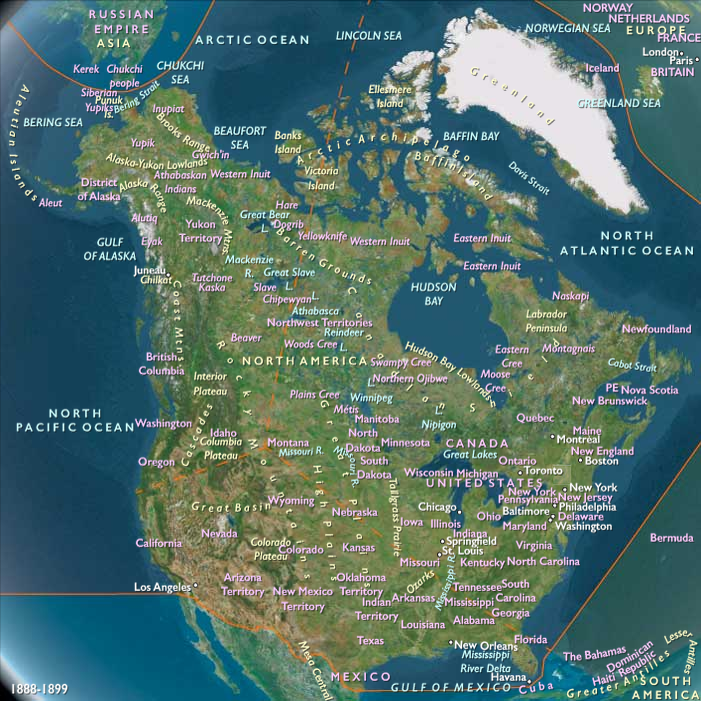
Gulf and Western North America includes Mississippi, Louisiana, Arkansas, Texas, Oklahoma, Kansas, New Mexico, Colorado, Wyoming, Arizona, Utah, Nevada, nearly all of California (except the far northwest), nearly all of Florida (except the extreme northeast), southwestern Georgia, most of Alabama, southwestern Tennessee, southern Illinois, southwestern Missouri, most of Nebraska, southeastern South Dakota, southern Montana, southern Idaho, and southeastern Oregon.
Anchors include the Mississippi delta, the Rio Grande valley, the Great Plains, the California goldfields, and the Gulf of Mexico coast. This was a subregion of fertile river valleys, hurricane-prone coasts, semi-arid plains, deserts, and Mediterranean California — each shaping distinctive economies and settlement patterns.
Climate & Environmental Shifts
The 19th century brought drought cycles to the Great Plains and Southwest, while hurricanes devastated the Gulf Coast. The Dust Bowl of the 1930s compounded ecological crisis, as soil exhaustion and drought displaced thousands. California’s Mediterranean climate supported orchards, vineyards, and irrigated agriculture. The Colorado, Rio Grande, and other rivers were dammed for hydroelectricity and irrigation, transforming deserts into farmland.
Subsistence & Settlement
-
Indigenous nations: Dispossession accelerated through wars, forced removals, and reservations. Yet ceremonial life, farming, and pastoral practices persisted, especially among Pueblo, Navajo, Apache, and Plains peoples.
-
Expansion & statehood:
-
Texas Revolution (1836) and the U.S.–Mexican War (1846–48) brought vast new lands under U.S. control.
-
California Gold Rush (1849) spurred mass migration, diversifying populations.
-
New states formed from frontier territories, incorporating the Plains and Southwest into the U.S. federation.
-
-
Agriculture & economy:
-
Cotton, sugar, and rice thrived in the Gulf South under slavery until the Civil War (1861–65); after emancipation, sharecropping dominated.
-
Plains ranching expanded, even as bison herds were decimated.
-
California shifted to orchards, citrus, and irrigated farming, while railroads knit coast to interior.
-
-
Urbanization: Gulf ports like New Orleans, Houston, and Galveston grew as trade hubs. In the 20th century, cities such as Los Angeles, Dallas, and San Francisco surged with oil, film, aerospace, and high-tech industries.
Technology & Material Culture
-
Transport revolutions: Steamboats dominated the Mississippi in the early 19th century; railroads crossed the Plains by mid-century; automobiles, highways, and aviation reshaped the 20th century.
-
Resource frontiers: Oil fields in Texas, Oklahoma, and California transformed the subregion into an energy powerhouse.
-
Architecture: Spanish missions, plantation houses, adobe pueblos, and frontier cabins persisted alongside skyscrapers, freeways, and Hollywood studios.
-
Cultural production: From blues and jazz in the Gulf South to Hollywood cinema in California, the subregion’s material culture became globally influential.
Movement & Interaction Corridors
-
Rivers: The Mississippi remained the backbone of transport until railways superseded it.
-
Overland trails: The Santa Fe and Oregon Trails carried settlers westward.
-
Maritime & global routes: The Gulf tied Louisiana and Texas to Caribbean and Atlantic trade; California ports connected to Asia. The Panama Canal (1914) enhanced Gulf–Pacific linkages.
-
Migration: Dust Bowl migrants moved west in the 1930s; Mexican laborers sustained agriculture through the Bracero Program (1942–64).
Cultural & Symbolic Expressions
-
Indigenous traditions: Pueblo dances, Navajo weaving, and Plains ceremonies persisted, often underground, before revival in the 20th century.
-
African American culture: The Gulf South nurtured blues, jazz, and gospel, globalizing regional experience.
-
Mexican American communities: Preserved fiestas, Catholic devotions, and bilingual traditions across Texas, New Mexico, Arizona, and California.
-
National mythologies: Frontier individualism, cowboy culture, and the “Wild West” became enduring symbols. Hollywood amplified these themes worldwide.
Environmental Adaptation & Resilience
-
Agriculture: Irrigation, aqueducts, and dams (Hoover Dam, Central Valley Project) transformed deserts into productive farmland.
-
Disaster response: Coastal levees and relief programs confronted hurricanes; soil conservation and New Deal programs addressed Dust Bowl conditions.
-
Communities: Adapted to industrial booms and busts, civil rights struggles, and rapid urbanization while retaining distinct Indigenous, African American, and Mexican American cultural resilience.
Political & Military Shocks
-
U.S. expansion: Texas annexation, Mexican-American War, and the California Gold Rush anchored continental growth.
-
Civil War: The Gulf South was a Confederate heartland; defeat ended slavery but entrenched racial inequality.
-
Native American conflicts: Plains wars, Navajo Long Walk (1864), and Apache resistance marked dispossession.
-
20th-century transformations: Oil wealth, aerospace, and military installations (from San Antonio to Los Angeles) tied the subregion to U.S. global power. Civil rights and labor movements reshaped social landscapes.
Transition
By 1971, Gulf and Western North America had been fully absorbed into the United States, yet it retained deep cultural pluralism. Indigenous nations, African Americans, and Mexican Americans endured marginalization but defined much of the region’s cultural life. Oil derricks, rail hubs, Hollywood studios, and aerospace centers symbolized modern transformation. From the Gulf Coast to California, the subregion was both an industrial powerhouse and cultural crucible, shaping the modern identity of the United States.
People
Groups
- Kwakwakaʼwakw
- Haida people
- Tlingit people
- Athabaskans, or Dene, peoples
- Klamath (Amerind tribe)
- Nuu-chah-nulth people (Amerind tribe; also formerly referred to as the Nootka, Nutka, Aht, Nuuchahnulth)
- Tsimshian
- Eyak
- Aleutian Tradition
- Thule Tradition, Punuk and Birnirk Stages
- Spanish Empire
- Russia, Tsardom of
- Chinese Empire, Qing (Manchu) Dynasty
- Hudson's Bay Company (HBC)
- India, British
- British Empire
- Russian Empire
- Canada, Lower, (British province)
- Canada, Upper, (British province)
- Canada, Upper, (British province)
- Russian-American Company
- Russian America
- United States of America (US, USA) (Washington DC)
- Britain (United Kingdom of Great Britain and Ireland)
- Canada, Province of
- Canada, Province of
- Canada, Province of
- Vancouver Island, Crown Colony of
- Canada, Province of
- Canada, Province of
- British Columbia, Colony of
- Canada, Province of
- Vancouver Island and British Columbia, United Colonies of
- Canada, Province of
- Canada, Dominion of
- Alaska, Department of (U.S.A.)
- British Columbia (Canadian province)
- Alaska, District of (U.S.A.)
- Alaska, Territory of (U.S.A.)
- Japan, Showa Period
- Britain (United Kingdom of Great Britain and Northern Ireland)
- Alaska, State of (U.S.A.)
Topics
- North American Fur Trade
- Maritime Fur Trade
- Fraser Canyon Gold Rush
- Klondike Gold Rush
- World War, Second (World War II)
- Aleutian Islands campaign
- Cold War
Commodoties
- Fish and game
- Hides and feathers
- Colorants
- Glass
- Oils, gums, resins, and waxes
- Textiles
- Strategic metals
- Lumber
Subjects
- Commerce
- Watercraft
- Sculpture
- Painting and Drawing
- Environment
- Decorative arts
- Mayhem
- Government
- Scholarship
- Custom and Law
- Technology
Regions
Subregions
Years: 1828 - 1971
People
Groups
- Kwakwakaʼwakw
- Haida people
- Tlingit people
- Athabaskans, or Dene, peoples
- Klamath (Amerind tribe)
- Nuu-chah-nulth people (Amerind tribe; also formerly referred to as the Nootka, Nutka, Aht, Nuuchahnulth)
- Tsimshian
- Eyak
- Aleutian Tradition
- Thule Tradition, Punuk and Birnirk Stages
- Spanish Empire
- Russia, Tsardom of
- Chinese Empire, Qing (Manchu) Dynasty
- Hudson's Bay Company (HBC)
- India, British
- British Empire
- Russian Empire
- Canada, Lower, (British province)
- Canada, Upper, (British province)
- Canada, Upper, (British province)
- Russian-American Company
- Russian America
- United States of America (US, USA) (Washington DC)
- Britain (United Kingdom of Great Britain and Ireland)
- Canada, Province of
- Canada, Province of
- Canada, Province of
- Vancouver Island, Crown Colony of
- Canada, Province of
- Canada, Province of
- British Columbia, Colony of
- Canada, Province of
- Vancouver Island and British Columbia, United Colonies of
- Canada, Province of
- Canada, Dominion of
- Alaska, Department of (U.S.A.)
- British Columbia (Canadian province)
- Alaska, District of (U.S.A.)
- Alaska, Territory of (U.S.A.)
- Japan, Showa Period
- Britain (United Kingdom of Great Britain and Northern Ireland)
- Alaska, State of (U.S.A.)
Topics
- North American Fur Trade
- Maritime Fur Trade
- Fraser Canyon Gold Rush
- Klondike Gold Rush
- World War, Second (World War II)
- Aleutian Islands campaign
- Cold War
Commodoties
- Fish and game
- Hides and feathers
- Colorants
- Glass
- Oils, gums, resins, and waxes
- Textiles
- Strategic metals
- Lumber
Subjects
- Commerce
- Watercraft
- Sculpture
- Painting and Drawing
- Environment
- Decorative arts
- Mayhem
- Government
- Scholarship
- Custom and Law
- Technology
Regions
Subregions