
Northwestern North America (1252 – 1395 CE): …
Years: 1252 - 1395
Northwestern North America (1252 – 1395 CE): Salmon Chiefdoms, Thule Whalers, and the Grease Trails
Geographic and Environmental Context
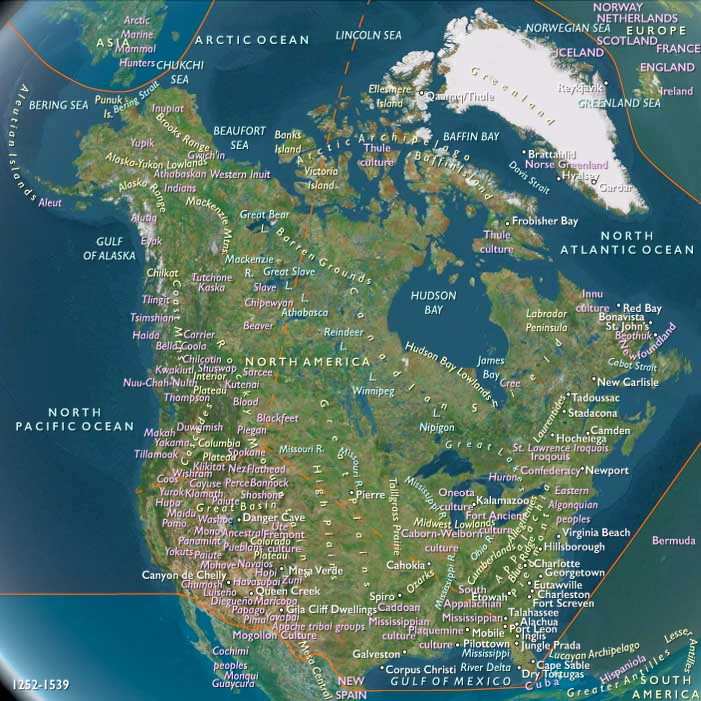
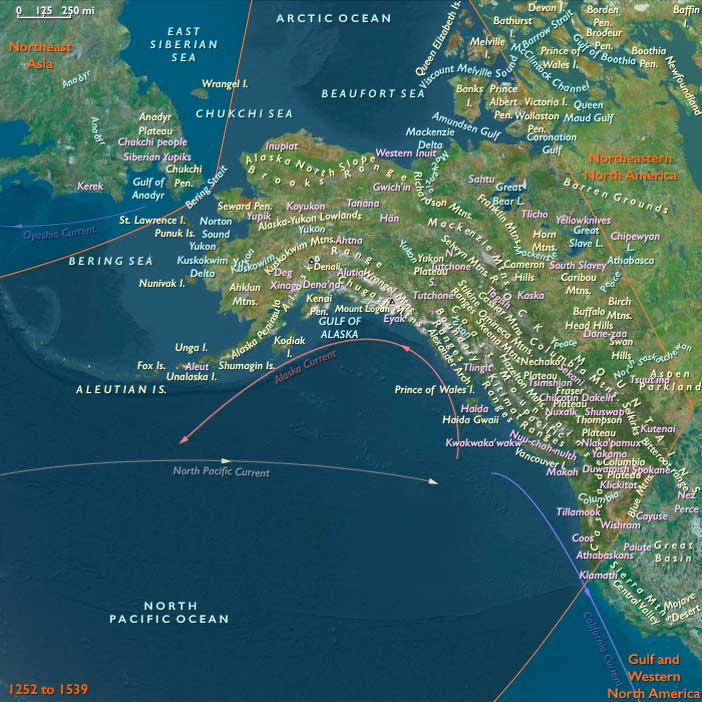
Northwestern North America includes Alaska, western Canada (Yukon and British Columbia), Washington, northern Idaho, northwestern Montana, Oregon, and the northwestern portions of California.
-
Coastal fjords and archipelagos (Southeast Alaska, Haida Gwaii, Vancouver Island, the Salish Sea) supported dense plank-house towns.
-
Gulf of Alaska and Aleutian coasts sustained sea-mammal hunters and offshore fishers.
-
Interior plateaus and river valleys (Stikine, Skeena, Fraser, Columbia, Yukon) tied foragers and farmers into salmon and trade networks.
Climate and Environmental Shifts
-
The late Medieval Warm Period gave way to the early Little Ice Age after c. 1300: slightly cooler, stormier coasts and more variable snowpacks inland.
-
Salmon runs remained robust but fluctuated by river; cooler seas favored some stocks while harsher winters increased risk for interior travel.
-
Along the Arctic rim, sea-ice season lengthened modestly late in the period, without halting whale migrations.
Societies and Political Developments
-
North Pacific Coast chiefdoms (Tlingit, Haida, Tsimshian, Kwakwakaʼwakw, Coast Salish):
-
Ranked house-lineages controlled salmon weirs, tidal flats, cedar groves, and canoe landings.
-
Competitive feasting and alliance-building (potlatch-like institutions) intensified; warfare over fisheries and trade routes is attested in oral histories.
-
-
Gulf of Alaska & Aleutians (Unangan/ Aleut, Sugpiaq/Alutiiq):
-
Maritime villages specialized in sea-lion, seal, and offshore fish, with flexible alliances between winter villages and summer camps.
-
-
Arctic Alaska (Iñupiat/Thule):
-
Thule-derived whaling societies flourished on bowhead migrations; large multi-house communities and cooperative whale hunts peaked before later 15th-century cooling.
-
-
Interior Dene (Athabaskan) (Gwich’in, Kaska, Carrier, Tahltan, among others):
-
Highly mobile river-and-taiga bands coordinated seasonal caribou hunts and salmon fishing; trade partnerships linked interior copper and obsidian to coastal towns.
-
Economy and Trade
-
Salmon surplus economies supported smoking houses, oil rendering, and long-term storage; eulachon grease from the Skeena–Nass became a premier trade good moved on grease trails to interior partners.
-
Prestige metals and shells: native copper (Upper Yukon/Alaska, northwestern BC), dentalium shells, and carved antler circulated as wealth.
-
Maritime staples: sea-mammal oil, hides, baleen (Arctic and Gulf coasts); dried halibut and cod (outer coasts).
-
Interior staples: caribou, moose, berries, and roots complemented river fish; canoe-borne exchange reached well into the Columbia and Fraser networks.
Subsistence and Technology
-
Cedar technologies (coast): monumental plank houses; box-and-steam cooking; bentwood chests; dugout canoes for freight and war.
-
Fishing systems: tidal weirs, stake traps, reef-nets (Salish Sea), river weirs and dip-nets on interior rapids.
-
Arctic/Gulf craft: skin boats and kayaks (qayaq), open whale-boats (umiak), toggling harpoons, compound lines and drags for large sea mammals.
-
Hunting kit (interior): sinew-backed bows, copper and stone points, snowshoes, toboggans; smokehouses and cache pits for winter stores.
Movement and Interaction Corridors
-
Inside Passage stitched together Tlingit–Haida–Kwakwakaʼwakw–Salish towns in year-round canoe traffic.
-
Grease trails climbed from eulachon rivers (Nass, Skeena, Bella Coola) across mountain passes to interior Dene partners.
-
Yukon–Copper–Tanana waterways linked interior copper sources to coastal brokers.
-
Arctic littoral hosted seasonal whaling migrations and trade fairs among Iñupiat communities.
Belief and Symbolism
-
House-crest systems (coast) articulated lineage rights to places and stories; crest poles, regalia, and feasting transformed surplus into status and alliance.
-
Shamanic healing and spirit guardians governed luck in hunting and warfare; rituals marked first-salmon, first-whale, and eulachon runs.
-
Iñupiat/Thule whale ceremonies honored animal masters and redistributed meat and oil across households.
-
Dene narratives mapped rivers and passes as sacred geographies anchoring seasonal movement.
Adaptation and Resilience
-
Portfolio economies (salmon + sea mammals + terrestrial game + stored oil) buffered climate swings at the onset of the Little Ice Age.
-
Storage and redistribution—smoked fish, rendered grease, whale shares—stabilized communities through bad runs and hard winters.
-
Flexible mobility: interior bands shifted traplines and wintering grounds; coastal towns maintained alternate fishing sites and alliance harbors.
-
Conflict management: diplomacy and ceremonial gifting balanced raiding over high-value fisheries and trade chokepoints.
Long-Term Significance
By 1395, Northwestern North America stood out as a maritime-and-riverine commonwealth:
-
Pacific chiefdoms refined lineage rule and long-distance trade around salmon and grease.
-
Thule-derived Iñupiat communities reached a high point of cooperative whaling before later climatic tightening.
-
Interior Dene maintained wide exchange networks linking copper, furs, and food stores to the coast.
These resilient systems—house societies, storage economies, canoe corridors, and Arctic whaling alliances—carried the region successfully into the colder centuries that followed.
Groups
- Kwakwakaʼwakw
- Coast Salish
- Haida people
- Tlingit people
- Athabaskans, or Dene, peoples
- Nuu-chah-nulth people (Amerind tribe; also formerly referred to as the Nootka, Nutka, Aht, Nuuchahnulth)
- Klamath (Amerind tribe)
- Tsimshian
- Eyak
- Aleutian Tradition
- Tahltan
- Alutiiq (Eskimo tribe)
- Aleut people
- Inupiat
- Kaska Dena
- Dakelh
- Gwichʼin
- Thule people
- Thule Tradition, Classic Thule
Commodoties
- Fish and game
- Weapons
- Hides and feathers
- Glass
- Colorants
- Oils, gums, resins, and waxes
- Strategic metals
Subjects
- Commerce
- Architecture
- Watercraft
- Sculpture
- Painting and Drawing
- Environment
- Decorative arts
- Mayhem
- Government
- Custom and Law
- Technology
Regions
Subregions
Years: 1252 - 1395
Groups
- Kwakwakaʼwakw
- Coast Salish
- Haida people
- Tlingit people
- Athabaskans, or Dene, peoples
- Nuu-chah-nulth people (Amerind tribe; also formerly referred to as the Nootka, Nutka, Aht, Nuuchahnulth)
- Klamath (Amerind tribe)
- Tsimshian
- Eyak
- Aleutian Tradition
- Tahltan
- Alutiiq (Eskimo tribe)
- Aleut people
- Inupiat
- Kaska Dena
- Dakelh
- Gwichʼin
- Thule people
- Thule Tradition, Classic Thule
Commodoties
- Fish and game
- Weapons
- Hides and feathers
- Glass
- Colorants
- Oils, gums, resins, and waxes
- Strategic metals
Subjects
- Commerce
- Architecture
- Watercraft
- Sculpture
- Painting and Drawing
- Environment
- Decorative arts
- Mayhem
- Government
- Custom and Law
- Technology
Regions
Subregions