
Northwest Europe (1252 – 1395 CE): Hundred …
Years: 1252 - 1395
Northwest Europe (1252 – 1395 CE): Hundred Years’ War, Scottish Independence, and North Sea Commerce
Geographic and Environmental Context
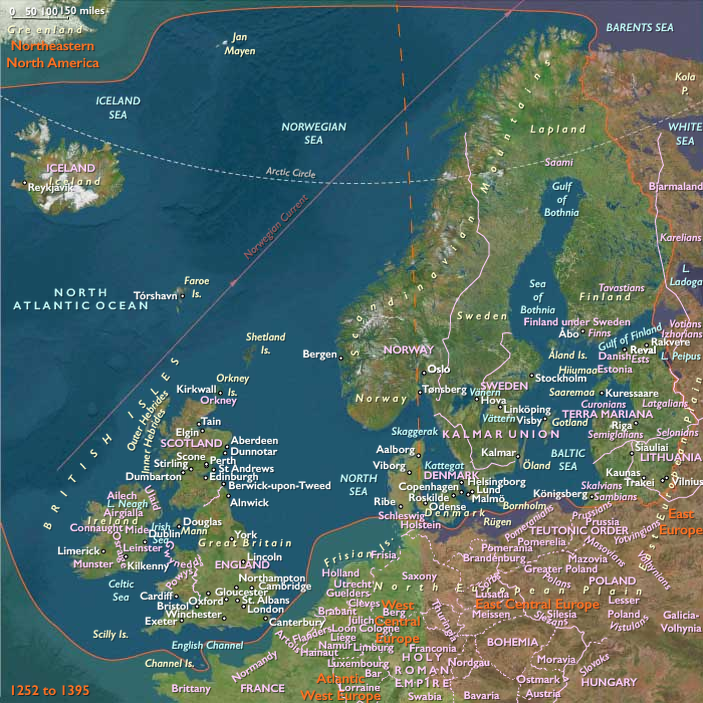
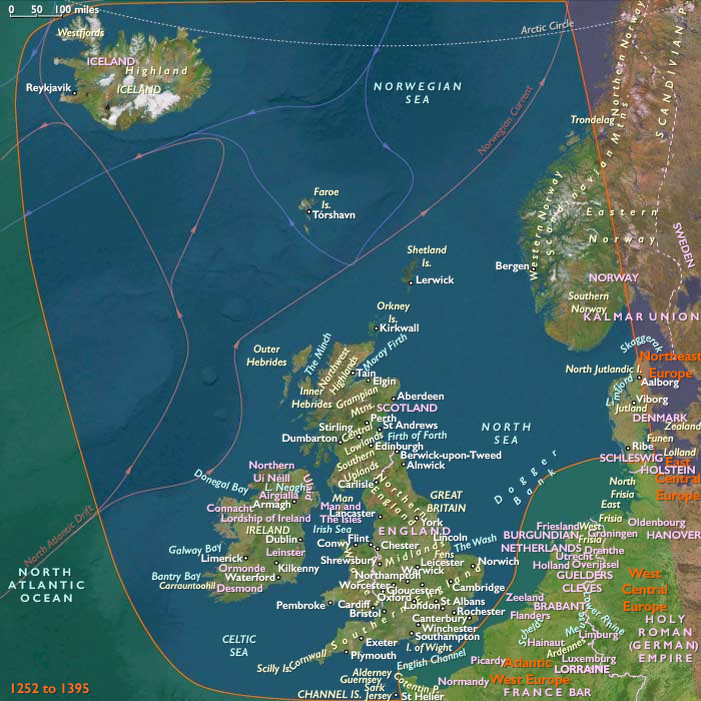
Northwest Europe includes Iceland, Ireland, the United Kingdom, the Faroe, Shetland, and Orkney Islands, the Channel Islands, and the western coastal zones of Norway and Denmark (west of 10°E).
-
Anchors: London–Westminster, Dublin–Cork–Waterford, Edinburgh–Stirling, Bergen, Reykjavík–Thingvellir, Channel ports (Dover, Southampton, Bristol), and North Sea ports (Hull, King’s Lynn).
Climate and Environmental Shifts
-
Little Ice Age onset (~1300): cooler, wetter conditions reduced yields; Great Famine (1315–1317) struck Britain and Ireland.
-
Black Death (1348–1350): decimated urban populations (London, Dublin, York, Edinburgh, Bergen).
-
Fisheries (herring, cod) thrived in colder seas.
Societies and Political Developments
-
England: Edward I’s conquest of Wales (1282); Wars of Scottish Independence (1296–1328, 1332–1357); Hundred Years’ War against France (from 1337).
-
Scotland: William Wallace, Robert the Bruce, and victory at Bannockburn (1314) secured independence, recognized in the Treaty of Edinburgh–Northampton (1328).
-
Ireland: Anglo-Norman lordship declined; Gaelic resurgence after 14th-century crises.
-
Norway: waning influence; Orkney, Shetland, Hebrides slipped toward Scottish control.
-
Iceland: under Norwegian crown (1262–64); Althing continued local governance.
Economy and Trade
-
English wool: critical for Flemish cloth industry; Calais staple (post-1347 English conquest) reorganized trade.
-
North Sea ports: Hull, King’s Lynn, Bristol handled wine, cloth, fish.
-
Hanseatic merchants entered London (Steelyard).
-
Norwegian stockfish trade (Bergen to Lübeck, London) flourished; Iceland supplied wool and fish.
Belief and Symbolism
-
Gothic architecture: Westminster Abbey, York Minster; Scottish abbeys; Norwegian stave churches persisted.
-
Saint cults: St. Thomas Becket in Canterbury, St. Magnus in Orkney.
-
Mysticism: English and Irish vernacular devotion expanded (Julian of Norwich).
Adaptation and Resilience
-
Maritime redundancy: trade shifted among ports during war or plague.
-
England’s parliamentary institutions matured (Model Parliament, 1295).
-
Scotland consolidated monarchy; Ireland fragmented between Gaelic and Anglo-Norman spheres.
Long-Term Significance
By 1395, Northwest Europe was a fractured but dynamic region: England locked in war with France, Scotland independent, Ireland divided, and the North Sea–North Atlantic fisheries increasingly central. It was a crucible for the late-medieval state and maritime economy.
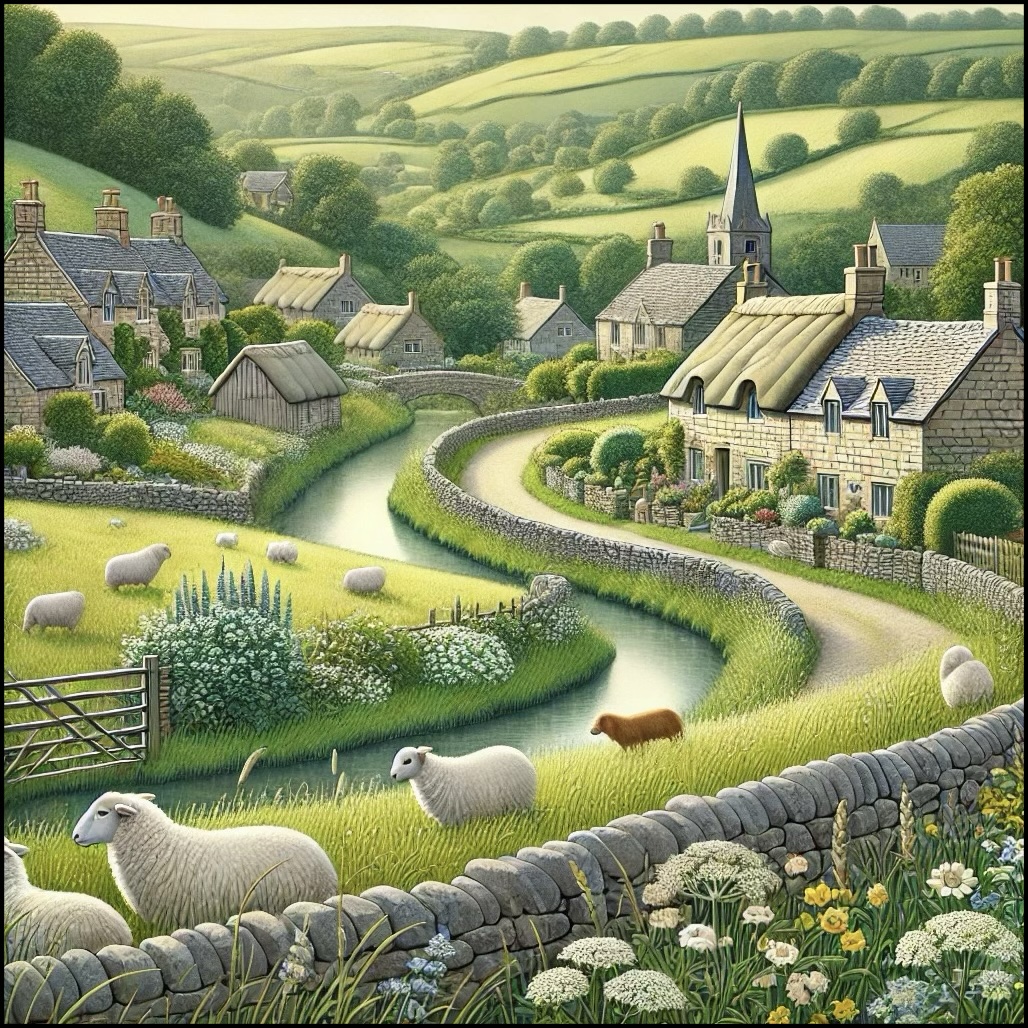
Northwest Europe (with civilization) ©2024-25 Electric Prism, Inc. All rights reserved.
People
- Edward I of England
- Edward II of England
- Edward III of England
- Geoffrey Chaucer
- Henry III of England
- Isabella of France
- Robert the Bruce
- Roger de Mortimer
- Simon de Montfort
- Wat Tyler
- William Wallace
Groups
- Britons (historical)
- Irish people
- Leinster (Laigin), Irish kingdom of
- Anglo-Saxons
- Denmark, Kingdom of
- Danes (Scandinavians)
- Scottish people
- Ireland, medieval
- Alba (Scotland), Scots Kingdom of
- England, (Anglo-Saxon) Kingdom of
- Icelandic Commonwealth, or Icelandic Free State
- Icelanders (Scandinavians)
- Hanseatic league (informally organized)
- Greenland, Norwegian Crown Colony of
- Norway, independent Kingdom of
- Christians, Roman Catholic
- Cistercians, Order of the (White Friars)
- Norwegians (Scandinavians)
- Anglo-Normans
- Angevin Empire
- Ireland, (English) Lordship of
- Portugal, Burgundian (Alfonsine) Kingdom of
- Iceland (Norwegian dependency)
- France, (Valois) Kingdom of
- Hanseatic League
- Portugal, Avizan (Joannine) Kingdom of
Topics
- Barons' War, Second
- Scottish Independence, First War of
- Stirling Bridge, Battle of
- Little Ice Age (LIA)
- Little Ice Age, Warm Phase I
- Bannockburn, Battle of
- Great Famine of 1315–1317
- Scottish Independence, Second War of
- Hundred Years' War
- Black Death, or Great Plague
- Crécy, Battle of
- Poitiers, Battle of
- Anglo-Scottish Wars
- Peasants' Revolt, English (Tyler's Revolt)
Subjects
- Commerce
- Writing
- Architecture
- Environment
- Public health
- Conflict
- Mayhem
- Faith
- Government
- Scholarship
- Custom and Law
- Catastrophe
Regions
Subregions
Years: 1252 - 1395
Northwest Europe (with civilization) ©2024-25 Electric Prism, Inc. All rights reserved.
People
- Edward I of England
- Edward II of England
- Edward III of England
- Geoffrey Chaucer
- Henry III of England
- Isabella of France
- Robert the Bruce
- Roger de Mortimer
- Simon de Montfort
- Wat Tyler
- William Wallace
Groups
- Britons (historical)
- Irish people
- Leinster (Laigin), Irish kingdom of
- Anglo-Saxons
- Denmark, Kingdom of
- Danes (Scandinavians)
- Scottish people
- Ireland, medieval
- Alba (Scotland), Scots Kingdom of
- England, (Anglo-Saxon) Kingdom of
- Icelandic Commonwealth, or Icelandic Free State
- Icelanders (Scandinavians)
- Hanseatic league (informally organized)
- Greenland, Norwegian Crown Colony of
- Norway, independent Kingdom of
- Christians, Roman Catholic
- Cistercians, Order of the (White Friars)
- Norwegians (Scandinavians)
- Anglo-Normans
- Angevin Empire
- Ireland, (English) Lordship of
- Portugal, Burgundian (Alfonsine) Kingdom of
- Iceland (Norwegian dependency)
- France, (Valois) Kingdom of
- Hanseatic League
- Portugal, Avizan (Joannine) Kingdom of
Topics
- Barons' War, Second
- Scottish Independence, First War of
- Stirling Bridge, Battle of
- Little Ice Age (LIA)
- Little Ice Age, Warm Phase I
- Bannockburn, Battle of
- Great Famine of 1315–1317
- Scottish Independence, Second War of
- Hundred Years' War
- Black Death, or Great Plague
- Crécy, Battle of
- Poitiers, Battle of
- Anglo-Scottish Wars
- Peasants' Revolt, English (Tyler's Revolt)
Subjects
- Commerce
- Writing
- Architecture
- Environment
- Public health
- Conflict
- Mayhem
- Faith
- Government
- Scholarship
- Custom and Law
- Catastrophe
Regions
Subregions