
Northwest Europe (964–975 CE): Edgar's Reign and …
Years: 964 - 975
Northwest Europe (964–975 CE): Edgar's Reign and Cultural Continuity
Edgar the Peaceful and the Consolidation of England
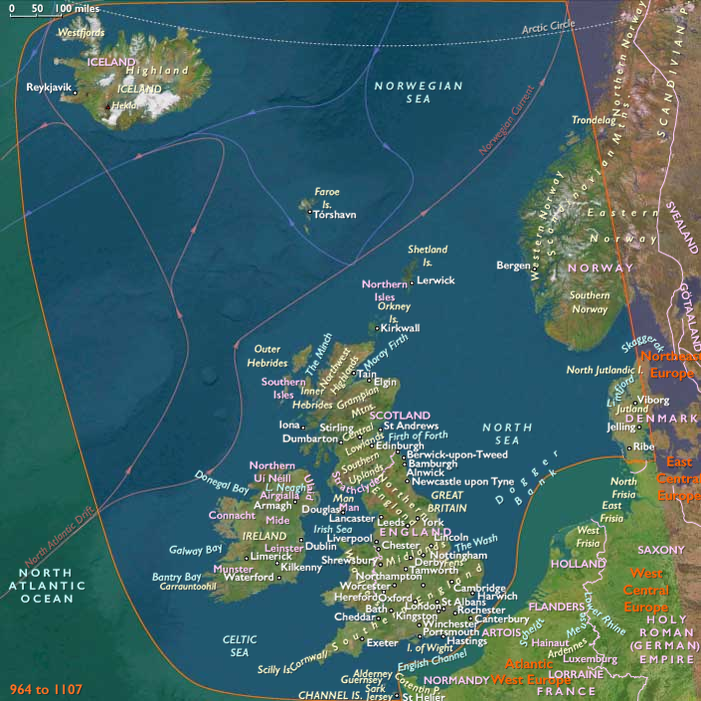
Between 964 and 975 CE, the rule of Edgar the Peaceful (r. 959–975 CE) brought remarkable stability to England. Edgar's reign is characterized by internal peace, effective administration, and legal reforms. He significantly strengthened royal authority through the establishment of a centralized administrative system, promoting uniform laws and coinage, and ensuring regular assemblies.
Benedictine Reform and Religious Renewal
Edgar strongly supported the Benedictine Reform movement, driven by key ecclesiastical figures such as Dunstan, Archbishop of Canterbury, Oswald, Archbishop of York, and Æthelwold, Bishop of Winchester. This reform aimed at renewing monastic discipline, reviving religious scholarship, and reinforcing ecclesiastical independence and morality. Monastic centers flourished, producing richly illuminated manuscripts and scholarly works.
Coronation at Bath (973 CE)
Edgar’s elaborate coronation in 973 CE at Bath (or possibly Chester, according to some chronicles) symbolized a powerful image of his royal authority and unity among England's diverse kingdoms. The ceremony was marked by elaborate rites and attended by numerous regional leaders, asserting Edgar’s dominance over both Anglo-Saxon and Scandinavian rulers.
Norse-Gaelic Dublin and Viking Power in Ireland
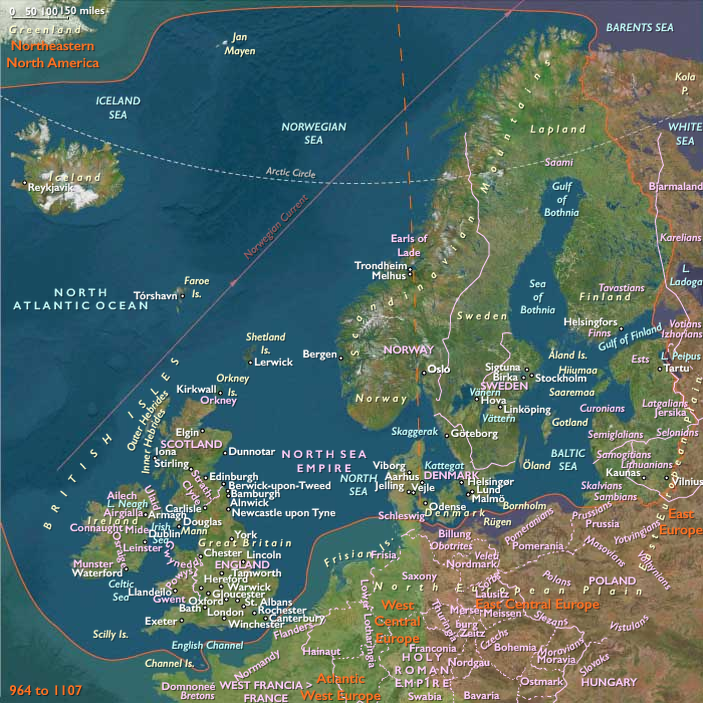
In Ireland, Olaf Cuaran, the Norse-Gaelic King of Dublin (r. 952–980 CE), maintained his rule and prominence. Dublin flourished economically as an essential trade hub connecting Scandinavia, the British Isles, and continental Europe. Olaf frequently engaged in alliances and conflicts with Irish and British leaders, securing his position while contributing to Dublin's ongoing cultural synthesis of Norse and Gaelic traditions.
Scotland Under Dub and Cuilén
After Indulf's death in 962 CE, his successors Dub (962–967 CE) and Cuilén (967–971 CE) faced internal challenges and external pressures from Viking raids. Dub sought to maintain the authority established by his predecessors but was eventually assassinated amid dynastic strife. His successor, Cuilén, faced similar difficulties, highlighting continuing instability in the Scottish kingdom of Alba during this period.
Stability and Maturation of the Icelandic Commonwealth
The Icelandic Commonwealth continued to mature during this era. The Althing, Iceland’s innovative parliamentary assembly, ensured stability by mediating disputes among chieftains. By 975 CE, Iceland had established robust local governance and legal institutions, fostering a distinctively stable and culturally vibrant Norse society.
Scandinavian Dynamics and Continuing Migration
In Scandinavia, ongoing dynastic conflicts, especially in Norway, continued prompting migrations westward. Settlers increasingly moved toward Iceland, the Orkney and Shetland Islands, and regions of northern Britain. These migrations sustained Scandinavian cultural connections throughout Northwest Europe.
Literary and Scholarly Achievements
Monastic centers across England, Scotland, and Ireland maintained vibrant intellectual and cultural activity. Manuscript production and scholarship flourished, preserving important ecclesiastical, literary, and historical texts. Notably, manuscripts such as the earlier Cædmon manuscript, continued to influence religious and cultural life in Anglo-Saxon England.
Legacy of the Era
By 975 CE, Northwest Europe had experienced significant political consolidation and cultural vitality. Edgar’s peaceful and prosperous reign in England established enduring administrative and legal frameworks. Benedictine reforms revitalized religious institutions and cultural scholarship, profoundly influencing Anglo-Saxon society. Concurrently, Norse-Gaelic Dublin thrived economically and culturally, Iceland’s Commonwealth matured, and Scotland navigated ongoing internal complexities. Collectively, these developments profoundly shaped Northwest Europe’s cultural, political, and historical trajectory, setting the stage for the significant changes of the coming decades.
People
- Amlaíb Cuarán
- Cuilén
- Dub
- Dunstan
- Edgar the Peaceful
- Indulf
- Oswald of Worcester
- Æthelwold of Winchester
Groups
- Gaels
- Anglo-Saxons
- Christianity, Chalcedonian
- Benedictines, or Order of St. Benedict
- Denmark, Kingdom of
- Vikings
- Dublin, Kingdom of
- Norway, independent Kingdom of
- Alba (Scotland), Scots Kingdom of
- England, (Anglo-Saxon) Kingdom of
- Icelandic Commonwealth, or Icelandic Free State
Topics
- Middle Subatlantic Period
- Subatlantic Period
- Viking Raids in Ireland
- Viking Raids
- Viking Raids in the North Sea
- Viking Raids in England, Later
Subjects
- Writing
- Painting and Drawing
- Conflict
- Mayhem
- Exploration
- Faith
- Government
- Custom and Law
- Human Migration
Regions
Subregions
Years: 964 - 975
People
- Amlaíb Cuarán
- Cuilén
- Dub
- Dunstan
- Edgar the Peaceful
- Indulf
- Oswald of Worcester
- Æthelwold of Winchester
Groups
- Gaels
- Anglo-Saxons
- Christianity, Chalcedonian
- Benedictines, or Order of St. Benedict
- Denmark, Kingdom of
- Vikings
- Dublin, Kingdom of
- Norway, independent Kingdom of
- Alba (Scotland), Scots Kingdom of
- England, (Anglo-Saxon) Kingdom of
- Icelandic Commonwealth, or Icelandic Free State
Topics
- Middle Subatlantic Period
- Subatlantic Period
- Viking Raids in Ireland
- Viking Raids
- Viking Raids in the North Sea
- Viking Raids in England, Later
Subjects
- Writing
- Painting and Drawing
- Conflict
- Mayhem
- Exploration
- Faith
- Government
- Custom and Law
- Human Migration
Regions
Subregions