
Northwest Europe (928–939 CE): Athelstan's Dominance and …
Years: 928 - 939
Northwest Europe (928–939 CE): Athelstan's Dominance and the Consolidation of Kingdoms
Athelstan’s Rule and Unification of England
Following his pivotal victory in 927 CE, King Athelstan (r. 924–939 CE) consolidated his position as the first king to rule over a unified English kingdom. His reign marked a turning point, characterized by the expansion of centralized governance and legal reforms. Athelstan convened assemblies to reinforce his authority, establishing codes of law that further united the diverse Anglo-Saxon and Danish communities within his realm.
Battle of Brunanburh (937 CE)
The most significant event of Athelstan’s reign occurred at the Battle of Brunanburh in 937 CE. A coalition of Norse, Scottish, and Strathclyde forces, led by King Olaf Guthfrithson of Dublin, King Constantine II of Scotland, and King Owain of Strathclyde, challenged Athelstan’s dominance. The resulting battle was one of the largest and bloodiest conflicts of early medieval Britain. Athelstan’s decisive victory solidified his control over England and established him as a dominant ruler across the British Isles.
Norse-Gaelic Dublin and Viking Stability
Despite the defeat at Brunanburh, the Norse-Gaelic Kingdom of Dublin persisted as a thriving cultural and economic hub. Under King Olaf Guthfrithson, Dublin continued to strengthen trade links with Scandinavia, Britain, and continental Europe. Though occasionally embroiled in regional conflicts, Dublin maintained stability and economic vitality, becoming a vital gateway between Norse territories and the wider Atlantic trade networks.
Kingdom of Alba under Constantine II
In Scotland, the reign of Constantine II (r. 900–943 CE) saw continued consolidation and resilience despite the setback at Brunanburh. Constantine retained his rule over Alba, reinforcing dynastic alliances and bolstering defenses against further external threats. His enduring authority laid crucial foundations for the emerging medieval Scottish state.
Iceland: Early Commonwealth Developments
The rapidly expanding Norse settlement in Iceland continued to thrive during this era. Local chieftains began forming regional assemblies, foreshadowing the establishment of the formal Althing in 930 CE at Þingvellir. This early parliamentary assembly represented a significant innovation in governance, providing a structured forum for dispute resolution and law-making, further distinguishing Icelandic society from its mainland counterparts.
End of Harald Fairhair’s Reign in Norway
In Norway, the long reign of Harald Fairhair concluded with his death around 930 CE. Harald’s decades-long rule profoundly shaped Norway’s political landscape, consolidating disparate regions into a centralized monarchy. His death triggered succession struggles among his many sons, notably Eric Bloodaxe, leading to instability and renewed emigration to Iceland and other Norse territories.
Cultural Continuity and Scholarly Traditions
Throughout this period, monastic communities and ecclesiastical centers in England, Ireland, and Scotland continued safeguarding religious, literary, and historical traditions. Manuscripts, including ecclesiastical texts and legendary accounts, were diligently preserved, maintaining cultural continuity amid political shifts.
Legacy of the Era
By 939 CE, Northwest Europe had witnessed remarkable political transformations. Athelstan’s reign established a unified English kingdom, while the decisive victory at Brunanburh reinforced Anglo-Saxon dominance. Simultaneously, Norse settlements in Dublin and Iceland flourished culturally and economically, and the consolidation of Alba under Constantine II strengthened early medieval Scotland. These developments collectively laid the foundation for the region’s subsequent historical trajectory.
People
- Constantine of Scotland
- Edward the Elder
- Eric Bloodaxe
- Harald Fairhair
- Olaf Guthfrithsson
- Owain ap Dyfnwal (fl. 934)
- Æthelstan
Groups
- Gaels
- Britons (historical)
- Anglo-Saxons
- Wessex, English Kingdom of
- Mercia, Kingdom of
- Northumbria, Kingdom of
- Denmark, Kingdom of
- Vikings
- Danes (Scandinavians)
- Norse
- Scottish people
- Dublin, Kingdom of
- Norway, independent Kingdom of
- Iceland, pre-Commomwealth
- York, Scandinavian (Danish)
- Alba (Scotland), Scots Kingdom of
- Strathclyde, British Kingdom of
Topics
- Middle Subatlantic Period
- Subatlantic Period
- Viking Raids in Ireland
- Viking Raids
- Viking Raids in the North Sea
- Viking Raids in England, Later
Subjects
Regions
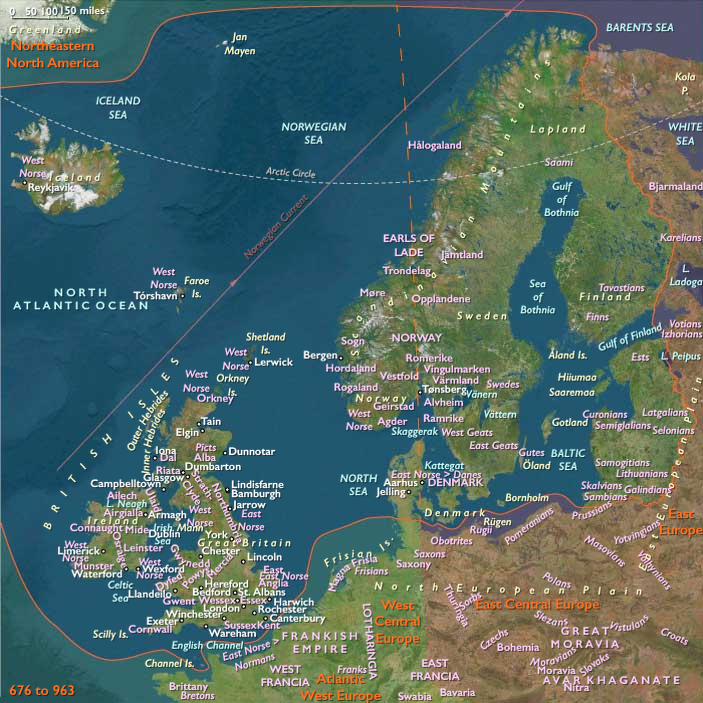
Subregions
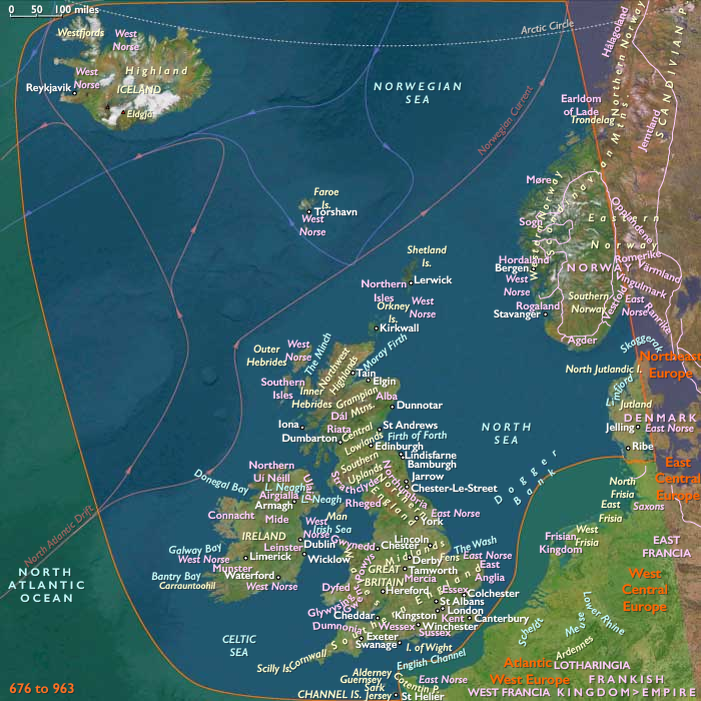
Years: 928 - 939
People
- Constantine of Scotland
- Edward the Elder
- Eric Bloodaxe
- Harald Fairhair
- Olaf Guthfrithsson
- Owain ap Dyfnwal (fl. 934)
- Æthelstan
Groups
- Gaels
- Britons (historical)
- Anglo-Saxons
- Wessex, English Kingdom of
- Mercia, Kingdom of
- Northumbria, Kingdom of
- Denmark, Kingdom of
- Vikings
- Danes (Scandinavians)
- Norse
- Scottish people
- Dublin, Kingdom of
- Norway, independent Kingdom of
- Iceland, pre-Commomwealth
- York, Scandinavian (Danish)
- Alba (Scotland), Scots Kingdom of
- Strathclyde, British Kingdom of
Topics
- Middle Subatlantic Period
- Subatlantic Period
- Viking Raids in Ireland
- Viking Raids
- Viking Raids in the North Sea
- Viking Raids in England, Later
Subjects
Regions
Subregions