
Northwest Europe (904–915 CE): Consolidation of Anglo-Saxon …
Years: 904 - 915
Northwest Europe (904–915 CE): Consolidation of Anglo-Saxon England and Norse Stability
Edward the Elder and the Reconquest of the Danelaw
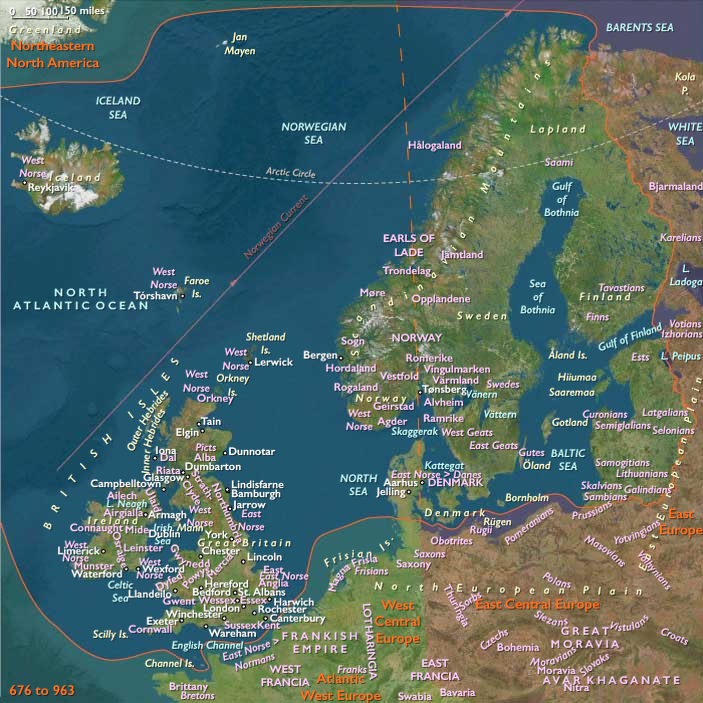
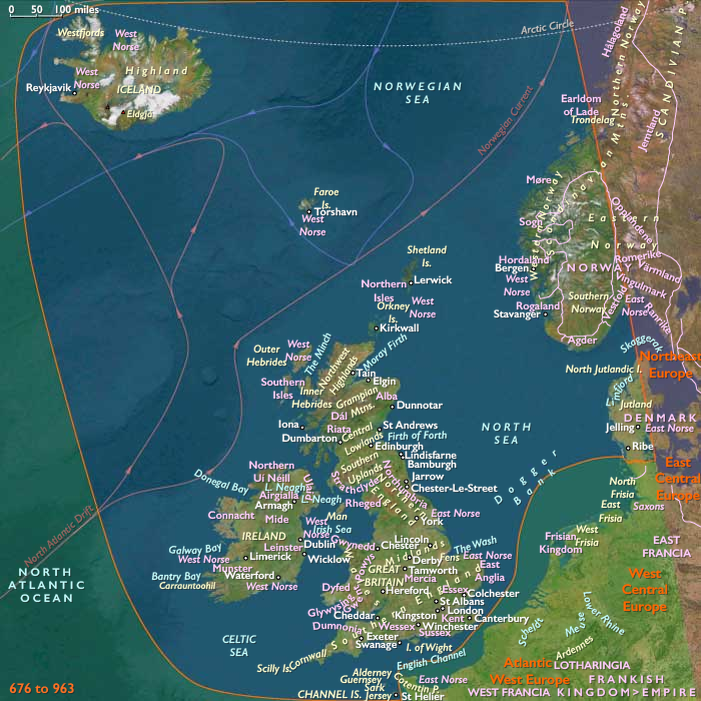
In 904 CE, Edward the Elder, son of Alfred the Great, pursued his father's ambition to reclaim Anglo-Saxon territories under Danish control, known as the Danelaw. Edward systematically expanded northward and eastward from his base in Wessex, capturing key strongholds and towns. The campaigns initiated during these years were part of a broader reconquest strategy that would significantly weaken Norse political dominance in England.
Edward fortified and settled captured towns, such as Chester in 907 CE, using them as strategic bases to challenge Viking control. His effective military leadership and administrative skills laid the groundwork for a more centralized Anglo-Saxon kingdom.
Æthelflæd and Mercian Leadership
Edward’s sister, Æthelflæd, known as the "Lady of the Mercians," played a crucial role during this period. In 911 CE, following the death of her husband Æthelred, she assumed sole rulership of Mercia, an unprecedented position for a woman in Anglo-Saxon England. Æthelflæd actively coordinated military and administrative strategies, fortifying Mercian territories against Danish threats and expanding English influence into the Midlands.
Stability and Cultural Flourishing in Norse Ireland
Meanwhile, Norse towns in Ireland, particularly Dublin, entered a relatively stable period of economic growth and cultural development. Dublin, under Norse-Gaelic influence, flourished as an essential trading hub linking Britain, Scandinavia, and continental Europe. Though occasional conflicts persisted with Gaelic kings, notably in Leinster, Dublin’s economy and population grew significantly.
Scottish Consolidation under Constantine II
In Scotland, Constantine II (r. 900–943 CE) strengthened the Kingdom of Alba, consolidating his rule over territories formerly occupied by Picts and Scots. He faced periodic threats from Vikings settled in the northern and western isles, yet managed to hold firm authority. Under his rule, Alba stabilized as a coherent political entity, gradually resisting further Norse incursions.
Icelandic Commonwealth
In Iceland, rapid settlement expansion that began decades earlier continued unabated. By 915 CE, the Norse community in Iceland had firmly established the Althing (founded officially in 930 CE, but with clear roots during this period), forming the foundations for Iceland’s unique governance system. Settlers, primarily from Norway and the Norse territories in the British Isles, developed a cohesive, independent society, relatively isolated from mainland politics.
Harald Fairhair’s Continued Rule in Norway
In Norway, King Harald Fairhair maintained authority following his consolidation of power after the Battle of Hafrsfjord. Despite ongoing regional tensions, his centralized kingship provided enough stability to curb large-scale rebellions. His authority, however, drove further emigration, notably to Iceland and other Norse-controlled islands, reshaping the demographics of Northwest Europe.
Religious and Monastic Preservation
Throughout this period, monastic centers in Britain and Ireland maintained critical roles in preserving intellectual traditions, despite occasional disruptions from Viking raids. Manuscripts and cultural heritage, including legendary traditions like those of King Arthur, were safeguarded, ensuring continuity amid political upheaval.
Legacy of the Era
By 915 CE, Northwest Europe witnessed a distinct transition toward political stabilization and territorial consolidation. Edward the Elder’s reconquest campaigns significantly weakened Viking influence in England, Æthelflæd’s rule strengthened Mercia, and Constantine II fortified Scottish sovereignty. Concurrently, Norse settlements in Ireland and Iceland solidified economically and culturally, embedding long-lasting Norse influence across the region.
People
Groups
- Gaels
- Britons (historical)
- Anglo-Saxons
- East Angles, Kingdom of the
- Fortriu, (Pictish) Kingdom of
- Wessex, English Kingdom of
- Mercia, Kingdom of
- Northumbria, Kingdom of
- Denmark, Kingdom of
- Vikings
- Norse
- Danes (Scandinavians)
- Scottish people
- Norway, independent Kingdom of
- Iceland, pre-Commomwealth
- York, Scandinavian (Danish)
- Alba (Scotland), Scots Kingdom of
Topics
- Middle Subatlantic Period
- Subatlantic Period
- Viking Raids in Ireland
- Viking Raids
- Viking Raids in the North Sea
- Viking Raids in England, Later
Subjects
Regions
Subregions
Related Events
Showing 10 events out of 53510 total
Years: 904 - 915
People
Groups
- Gaels
- Britons (historical)
- Anglo-Saxons
- East Angles, Kingdom of the
- Fortriu, (Pictish) Kingdom of
- Wessex, English Kingdom of
- Mercia, Kingdom of
- Northumbria, Kingdom of
- Denmark, Kingdom of
- Vikings
- Norse
- Danes (Scandinavians)
- Scottish people
- Norway, independent Kingdom of
- Iceland, pre-Commomwealth
- York, Scandinavian (Danish)
- Alba (Scotland), Scots Kingdom of
Topics
- Middle Subatlantic Period
- Subatlantic Period
- Viking Raids in Ireland
- Viking Raids
- Viking Raids in the North Sea
- Viking Raids in England, Later
Subjects
Regions
Subregions