
Northwest Europe (892–903 CE): Alfred's Defense, Norse …
Years: 892 - 903
Northwest Europe (892–903 CE): Alfred's Defense, Norse Migration, and the Strengthening of Kingdoms
Renewed Viking Attacks and Alfred’s Defense
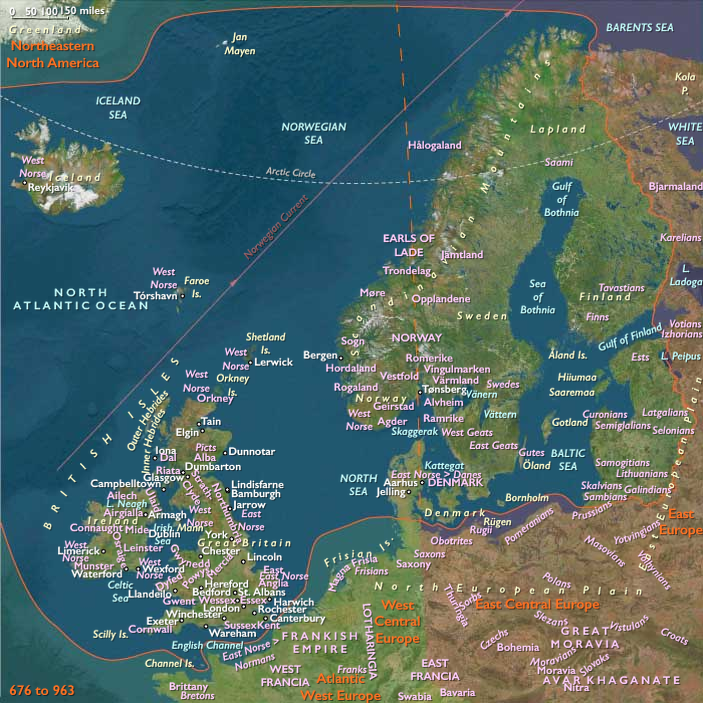
The period from 892 to 903 CE witnessed renewed and aggressive Viking incursions into Anglo-Saxon England. Following several years of relative calm under King Alfred the Great of Wessex, a formidable Viking force, led by the warrior chiefs Hæsten and others, arrived in Kent in 892 CE, signaling a fresh phase of hostilities. These raiders, who had recently departed the continent after failed campaigns in Francia, aimed to plunder and settle in fertile English territories.
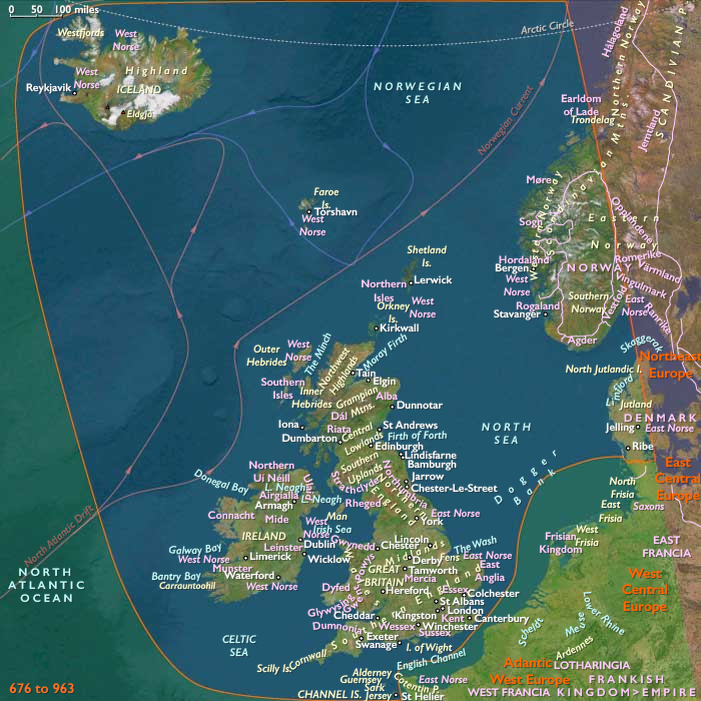
King Alfred quickly mobilized his defenses, capitalizing on previous strategic reforms. His established network of fortified towns, known as burhs, proved essential in resisting Viking incursions. Over the next several years, numerous skirmishes and sieges occurred across southern England, notably in Kent, Sussex, and Essex. Through skillful military strategy and improved naval forces, Alfred effectively contained the Viking threat, notably forcing the Vikings to abandon fortifications at Benfleet and Shoebury.
By 896 CE, persistent defeats and hardships caused many Vikings to disperse. Some joined pre-existing Norse communities in the Danelaw, while others retreated to mainland Europe, marking a significant triumph for Alfred’s resilient defenses.
Consolidation of the Danelaw
Meanwhile, in the regions under Danish control—known collectively as the Danelaw—Norse settlers consolidated their rule. Cultural and economic integration deepened between Norse and Anglo-Saxon communities, fostering a hybrid society marked by distinct legal traditions, linguistic influences, and robust trade networks. York (Jorvik), as the capital of the Viking kingdom of Northumbria, emerged as a vibrant urban center under Norse rule.
Irish and Scottish Dynamics
In Ireland, Viking settlements such as Dublin and Limerick remained influential trading centers. Increasingly, Norse-Irish interaction led to the growth of a uniquely blended culture. However, local Gaelic kingdoms frequently challenged Viking rule, resulting in intermittent conflicts and shifting alliances.
In Scotland, the kingdom of Alba, formed by the unification of the Scots and Picts under the descendants of Kenneth MacAlpin, continued to solidify its position, gradually resisting further Norse encroachment. Nonetheless, Norse territories persisted in Scotland's northern and western archipelagos, including the Orkneys, Shetland, and the Hebrides.
Harald Fairhair and Norwegian Expansion
The era following Harald Fairhair’s decisive victory at Hafrsfjord (circa late 880s) saw continued repercussions in Northwest Europe. Many defeated Norwegian chieftains and their followers emigrated, passing through Orkney and Shetland before settling in newly colonized Iceland. Harald, now recognized widely as the first legitimate King of Norway, consolidated his authority at home, facilitating Norway’s emergence as a unified monarchy.
Flourishing Settlement of Iceland
In Iceland, settlement accelerated significantly during this period, driven largely by refugees from Norway's internal conflicts and Harald’s expanding royal authority. By the early 890s, Icelandic communities had firmly established themselves, growing rapidly and beginning to develop local political structures. Ingólfur Arnarson’s pioneering settlement at Reykjavík expanded into thriving regional communities, as outlined in later Icelandic sources like Landnámabók.
Cultural and Religious Developments
Monastic institutions continued preserving learning, scholarship, and spiritual life across Britain and Ireland, despite ongoing pressures from Norse raids. They safeguarded cultural legacies, including traditions linked to legendary figures such as King Arthur, thus maintaining continuity amid the profound changes of the Viking Age.
Legacy of the Era
By 903 CE, Northwest Europe was undergoing significant transformation. Alfred’s successful defense against Viking incursions marked a turning point for Anglo-Saxon England, strengthening Wessex as the nucleus of future English unity. At the same time, Norse communities firmly entrenched in the Danelaw, Ireland, Scotland, and Iceland significantly reshaped the region's cultural and political landscape, setting the stage for developments in the following centuries.
People
Groups
- Gaels
- Britons (historical)
- Anglo-Saxons
- Picts, Kingdom of the
- East Angles, Kingdom of the
- Wessex, English Kingdom of
- Mercia, Kingdom of
- Northumbria, Kingdom of
- Denmark, Kingdom of
- Vikings
- Norse
- Danes (Scandinavians)
- Scottish people
- Norway, independent Kingdom of
- Iceland, pre-Commomwealth
- York, Scandinavian (Danish)
- Alba (Scotland), Scots Kingdom of
Topics
- Middle Subatlantic Period
- Subatlantic Period
- Viking Raids in Ireland
- Viking Raids
- Viking Raids in the North Sea
- Viking Raids against Alfred
- Hafrsfjord, Battle of
Subjects
Regions
Subregions
Years: 892 - 903
People
Groups
- Gaels
- Britons (historical)
- Anglo-Saxons
- Picts, Kingdom of the
- East Angles, Kingdom of the
- Wessex, English Kingdom of
- Mercia, Kingdom of
- Northumbria, Kingdom of
- Denmark, Kingdom of
- Vikings
- Norse
- Danes (Scandinavians)
- Scottish people
- Norway, independent Kingdom of
- Iceland, pre-Commomwealth
- York, Scandinavian (Danish)
- Alba (Scotland), Scots Kingdom of
Topics
- Middle Subatlantic Period
- Subatlantic Period
- Viking Raids in Ireland
- Viking Raids
- Viking Raids in the North Sea
- Viking Raids against Alfred
- Hafrsfjord, Battle of
Subjects
Regions
Subregions