
Northwest Europe (880–891 CE): Viking Consolidation and …
Years: 880 - 891
Northwest Europe (880–891 CE): Viking Consolidation and Expansion under Harald Fairhair
Viking Rule and the Danelaw
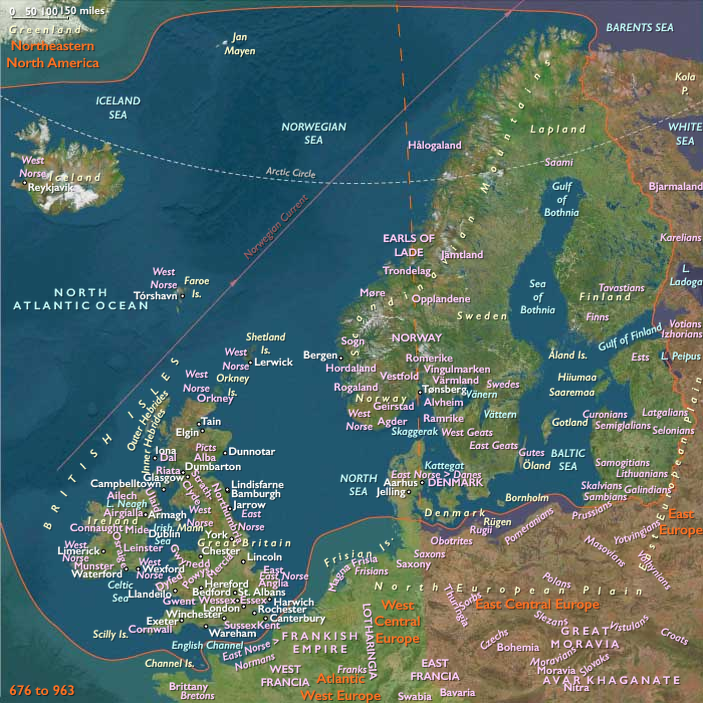
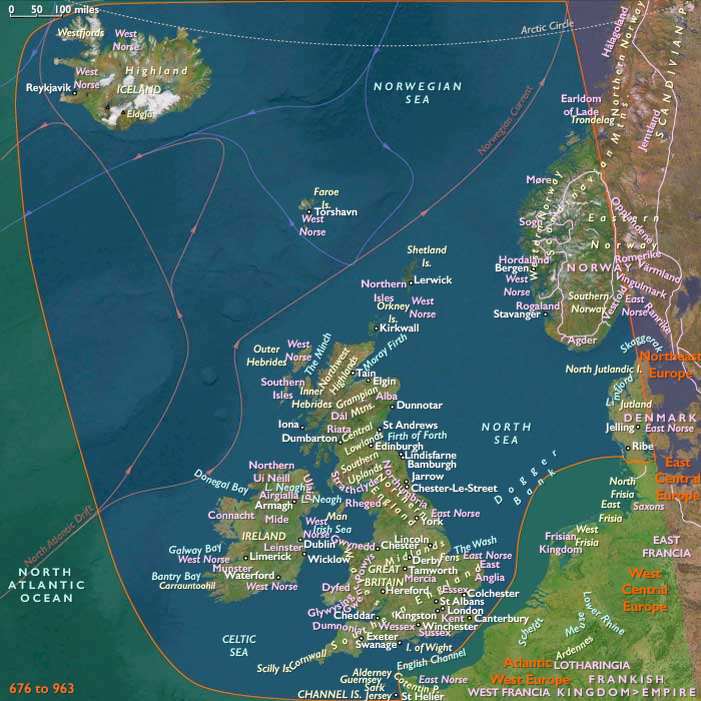
Between 880 and 891 CE, Norse control across Northwest Europe solidified further, especially in England. Following the establishment of the Danelaw under the Treaty of Wedmore (878 CE), Viking settlers secured extensive territories in northern and eastern England, including major areas of Mercia, East Anglia, and Northumbria. In Ireland, thriving Viking-founded towns such as Dublin, Waterford, and Limerick served as centers of trade and military power, shaping significant Norse-Gaelic cultural interactions.
Harald Fairhair and the Unification of Norway
This era marked a turning point in Norwegian history with the rise of the legendary Viking ruler Harald Fairhair (Harald Hårfagre), son of Halfdan the Black, who sought dominance over the fragmented Norwegian territories. Through strategic alliances, political maneuvering, and decisive military actions, Harald gradually expanded his influence, aiming to become the first king to unify Norway.
The pivotal moment was the Battle of Hafrsfjord, traditionally dated to the 880s CE. Located near present-day Stavanger, this major naval engagement pitted Harald’s forces against a coalition of chieftains primarily from southwestern Norway—especially Rogaland and regions around the Sognefjord. The scale and significance of this battle ensured its lasting resonance in Norse memory, symbolizing the emergence of a centralized Norwegian monarchy, even if modern historians regard unification as an extended process rather than a single decisive event.
Impact of the Battle of Hafrsfjord
Harald's victory at Hafrsfjord fundamentally reshaped the power structure of Norway, allowing him to consolidate rule, establish centralized authority, and institute systematic taxation across significant regions. Although historical and archaeological research indicates the battle was part of a longer process, its symbolic status endured as the origin story of a unified Norwegian state.
Following the battle, many defeated chieftains and their followers opted for exile rather than submission, fueling significant waves of emigration. Their migration routes passed through established Norse colonies in the Orkney and Shetland Islands, where many warriors integrated into local Norse communities, often taking island women as companions. From there, many proceeded onward to Iceland, significantly accelerating settlement there and reinforcing Iceland's role as a refuge from Scandinavian political turmoil.
Iceland: Rapid Settlement and Expansion
The settlement of Iceland, beginning officially in 874 CE with Ingólfur Arnarson near modern Reykjavík, saw significant growth during this era. Emigrants fleeing Norway’s centralization under Harald Fairhair rapidly populated Iceland’s previously uninhabited lands, establishing new communities free from direct royal oversight.
Texts like Landnámabók document approximately 435 initial settlers, many arriving between 880 and 891 CE, predominantly settling in northern and southwestern Iceland. This migration period significantly shaped Iceland’s social, political, and cultural landscape, laying the foundations for an independent Norse society distinct from mainland Scandinavia.
Alfred the Great’s Anglo-Saxon Resistance
Meanwhile, in southern England, King Alfred the Great continued strengthening Wessex against persistent Viking threats. Alfred fortified towns (burhs), improved military organization, and expanded naval defenses. His efforts maintained Wessex’s sovereignty, curbing Viking expansion southward and setting the groundwork for the eventual reconquest and unification of Anglo-Saxon England.
Cultural Exchange and Preservation
The intensification of Viking influence across Northwest Europe further accelerated cultural exchange. Norse, Anglo-Saxon, Gaelic, and Brittonic populations interacted extensively, reshaping linguistic, cultural, and religious traditions. Indigenous narratives like the legends surrounding King Arthur continued to resonate, representing cultural continuity amid widespread change.
Monastic communities, despite continuing threats, preserved knowledge and religious life, safeguarding important cultural and historical manuscripts.
Legacy of the Era
By 891 CE, Viking expansion, Harald Fairhair’s unification efforts, and extensive settlement migrations had profoundly transformed Northwest Europe. The events of this era—especially the pivotal Battle of Hafrsfjord and its aftermath—reshaped Norway’s political landscape, significantly accelerated Iceland’s colonization, and defined the evolving relationship between Norse settlers and indigenous populations across Britain, Ireland, and the North Atlantic islands. These dynamics firmly established political, cultural, and social foundations that would influence the region for centuries.
People
Groups
- Gaels
- Britons (historical)
- Anglo-Saxons
- Picts, Kingdom of the
- East Angles, Kingdom of the
- Wessex, English Kingdom of
- Mercia, Kingdom of
- Northumbria, Kingdom of
- Denmark, Kingdom of
- Vikings
- Danes (Scandinavians)
- Norse
- Norway, independent Kingdom of
- Iceland, pre-Commomwealth
- York, Scandinavian (Danish)
Topics
- Middle Subatlantic Period
- Subatlantic Period
- Viking Raids in Ireland
- Viking Raids
- Viking Raids in the North Sea
- Viking Raids against Alfred
- Hafrsfjord, Battle of
Subjects
Regions
Subregions
Years: 880 - 891
People
Groups
- Gaels
- Britons (historical)
- Anglo-Saxons
- Picts, Kingdom of the
- East Angles, Kingdom of the
- Wessex, English Kingdom of
- Mercia, Kingdom of
- Northumbria, Kingdom of
- Denmark, Kingdom of
- Vikings
- Danes (Scandinavians)
- Norse
- Norway, independent Kingdom of
- Iceland, pre-Commomwealth
- York, Scandinavian (Danish)
Topics
- Middle Subatlantic Period
- Subatlantic Period
- Viking Raids in Ireland
- Viking Raids
- Viking Raids in the North Sea
- Viking Raids against Alfred
- Hafrsfjord, Battle of
Subjects
Regions
Subregions