
Northwest Europe (964 – 1107 CE): Norman …
Years: 964 - 1107
Northwest Europe (964 – 1107 CE): Norman Conquest, Insular Kingdoms, and North Sea Networks
Geographic and Environmental Context
Northwest Europe includes Iceland, Ireland, the United Kingdom, the Faroe, Shetland, and Orkney Islands, the Channel Islands, and the western coastal zones of Norway and Denmark (west of 10°E).
-
Anchors: London–York–Winchester, Dublin–Waterford–Cork, Bergen–Trondheim, Orkney–Shetland–Faroe–Iceland, Channel ports (Southampton, Dover).
Climate and Environmental Shifts
-
Warm conditions supported population growth; herring shoals and cod grounds underpinned fisheries from North Sea to Iceland.
Societies and Political Developments
-
England: consolidation under Anglo-Saxon kings (Æthelred II, Cnut the Great, 1016–1035, Edward the Confessor).
-
Norman Conquest (1066): William seized England; castles, feudal estates, Domesday Book (1086).
-
Ireland: Norse towns remained semi-autonomous; Irish high-kings (Brian Boru, d. 1014 at Clontarf).
-
Scotland: Kings Malcolm II–III consolidated Lowlands; Norse jarls remained strong in Orkney/Hebrides.
-
Norway/Denmark: Cnut’s North Sea Empire (England–Denmark–Norway); later Norway consolidated under Olaf Haraldsson (St. Olaf, d. 1030).
-
Iceland: Christianization (c. 1000), Althing maintained self-rule under Norwegian overlordship by late 11th c.
Economy and Trade
-
London grew as a major European port.
-
Dublin, York thrived on slave trade, silver, and hides.
-
North Sea commerce: wool, cloth, salt, fish; Norwegian timber and iron traded south.
-
Flemish cloth towns (Ghent, Bruges, just across boundary in Atlantic West Europe) were key markets for English wool.
Belief and Symbolism
-
Christianization of Scandinavia; churches founded across Norway, Denmark, and Iceland.
-
Monastic expansion in England, Ireland, Scotland; Norman Romanesque architecture flourished.
Long-Term Significance
By 1107, the Norman monarchy dominated England; Scandinavia and Iceland were Christianized; the North Sea was a connected political and economic system.
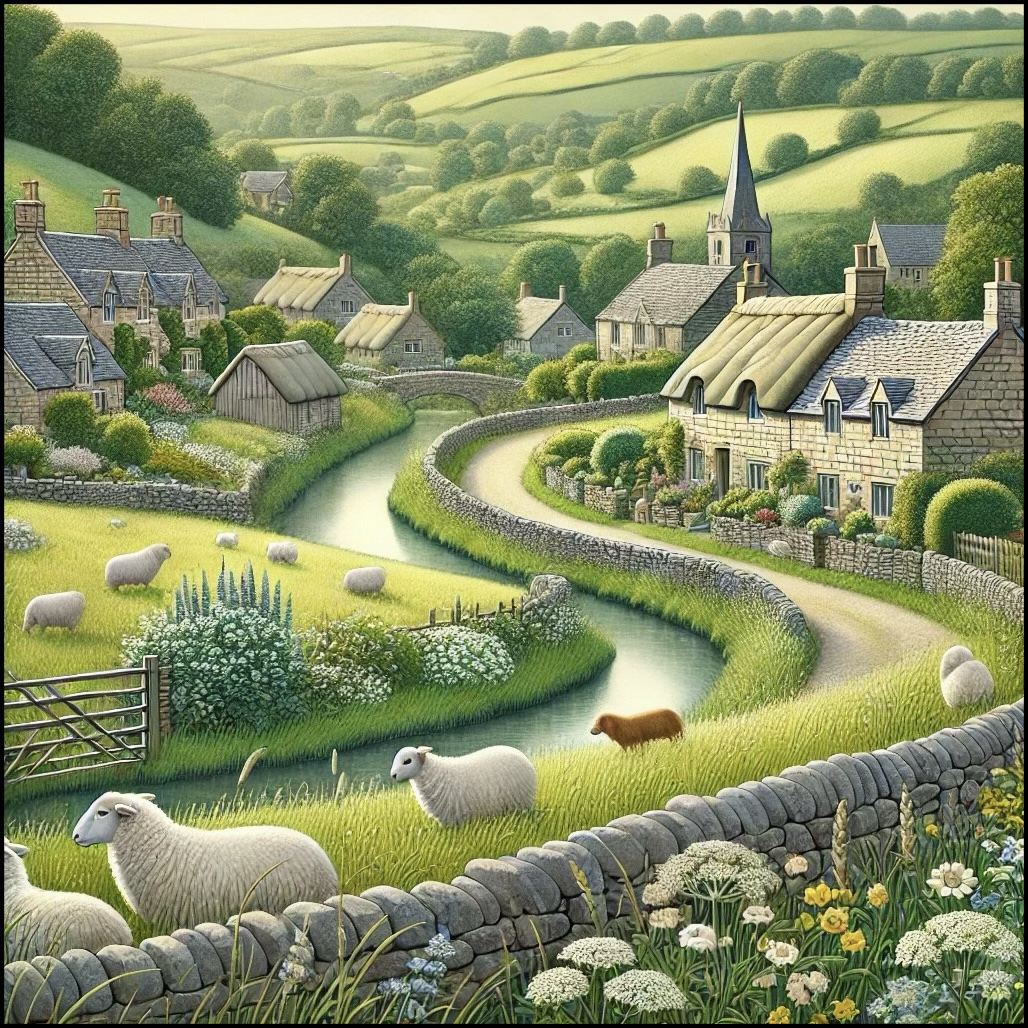
Northwest Europe (with civilization) ©2024-25 Electric Prism, Inc. All rights reserved.
People
- Brian Boru
- Cnut the Great
- Edgar the Peaceful
- Edward the Confessor
- Harald Hardrada
- Harold Godwinson
- Leif Ericsson
- Malcolm II of Scotland
- Malcolm III of Scotland
- Olaf Haraldsen
- Olaf Tryggvason
- Sweyn II of Denmark
- William the Conqueror
- Æthelred the Unready
Groups
- Ireland, ancient
- Celts
- Gaels
- Britons (historical)
- Irish people
- Anglo-Saxons
- Christianity, Chalcedonian
- Denmark, Kingdom of
- Norse
- Scottish people
- Norway, independent Kingdom of
- Alba (Scotland), Scots Kingdom of
- England, (Anglo-Saxon) Kingdom of
- Icelandic Commonwealth, or Icelandic Free State
- Greenland, Norwegian Crown Colony of
- Norway, Danish dependent Kingdom of
- North Sea Empire
- Norway, independent Kingdom of
- Christians, Roman Catholic
Topics
- Viking Raids in Ireland
- Viking Raids
- Viking Raids in the North Sea
- Viking Raids in England, Later
- Medieval Warm Period (MWP) or Medieval Climate Optimum
- Colonization of the Americas, Norse
- Clontarf, Battle of
- East–West Schism
- Norman Conquest of England
- Hastings, Battle of
- Stamford Bridge, Battle of
- Viking Conquest of Man
Commodoties
- Fish and game
- Weapons
- Gem materials
- Grains and produce
- Fibers
- Ceramics
- Strategic metals
- Salt
- Slaves
- Lumber
- Money
Subjects
- Commerce
- Writing
- Architecture
- Watercraft
- Environment
- Decorative arts
- Conflict
- Mayhem
- Exploration
- Faith
- Government
- Custom and Law
Regions

Subregions
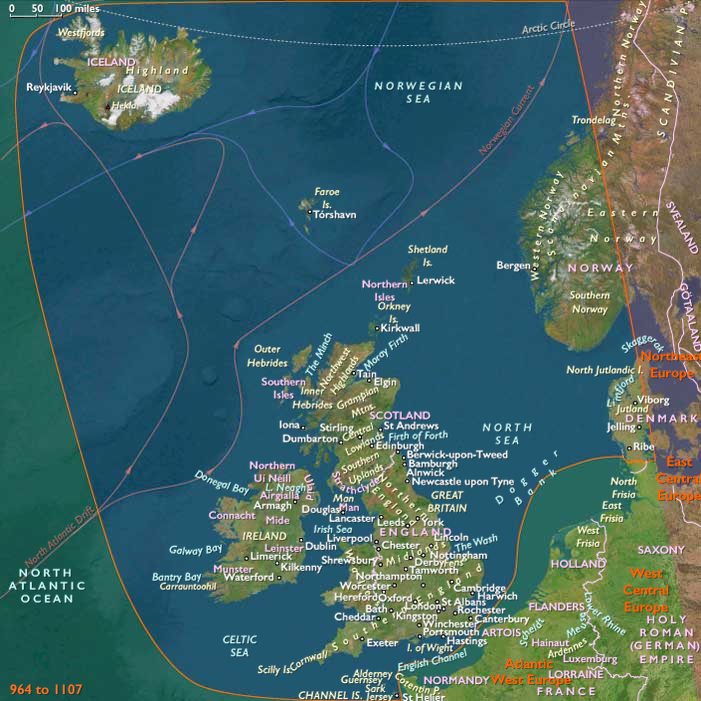
Years: 964 - 1107
Northwest Europe (with civilization) ©2024-25 Electric Prism, Inc. All rights reserved.
People
- Brian Boru
- Cnut the Great
- Edgar the Peaceful
- Edward the Confessor
- Harald Hardrada
- Harold Godwinson
- Leif Ericsson
- Malcolm II of Scotland
- Malcolm III of Scotland
- Olaf Haraldsen
- Olaf Tryggvason
- Sweyn II of Denmark
- William the Conqueror
- Æthelred the Unready
Groups
- Ireland, ancient
- Celts
- Gaels
- Britons (historical)
- Irish people
- Anglo-Saxons
- Christianity, Chalcedonian
- Denmark, Kingdom of
- Norse
- Scottish people
- Norway, independent Kingdom of
- Alba (Scotland), Scots Kingdom of
- England, (Anglo-Saxon) Kingdom of
- Icelandic Commonwealth, or Icelandic Free State
- Greenland, Norwegian Crown Colony of
- Norway, Danish dependent Kingdom of
- North Sea Empire
- Norway, independent Kingdom of
- Christians, Roman Catholic
Topics
- Viking Raids in Ireland
- Viking Raids
- Viking Raids in the North Sea
- Viking Raids in England, Later
- Medieval Warm Period (MWP) or Medieval Climate Optimum
- Colonization of the Americas, Norse
- Clontarf, Battle of
- East–West Schism
- Norman Conquest of England
- Hastings, Battle of
- Stamford Bridge, Battle of
- Viking Conquest of Man
Commodoties
- Fish and game
- Weapons
- Gem materials
- Grains and produce
- Fibers
- Ceramics
- Strategic metals
- Salt
- Slaves
- Lumber
- Money
Subjects
- Commerce
- Writing
- Architecture
- Watercraft
- Environment
- Decorative arts
- Conflict
- Mayhem
- Exploration
- Faith
- Government
- Custom and Law
Regions
Subregions